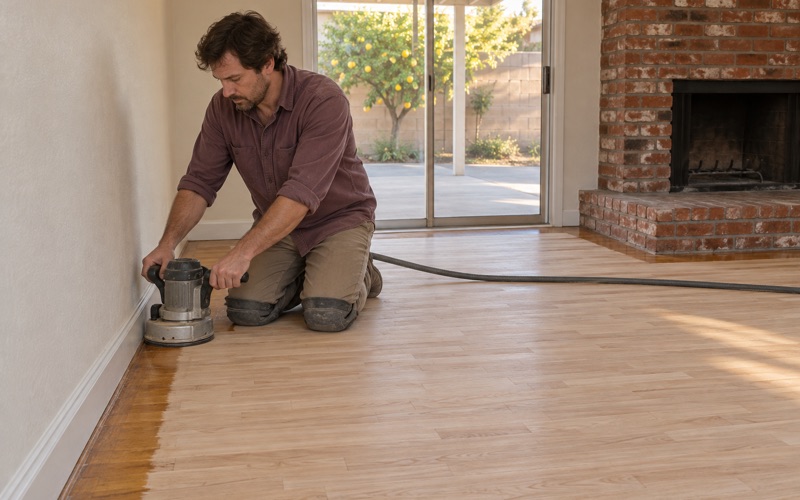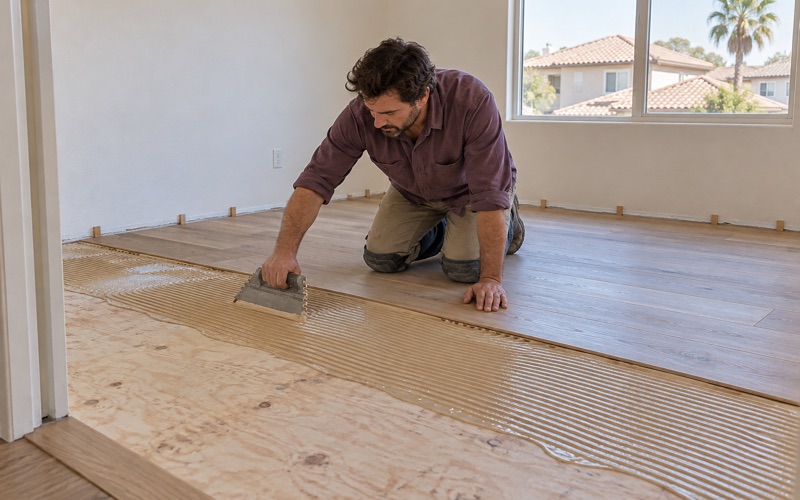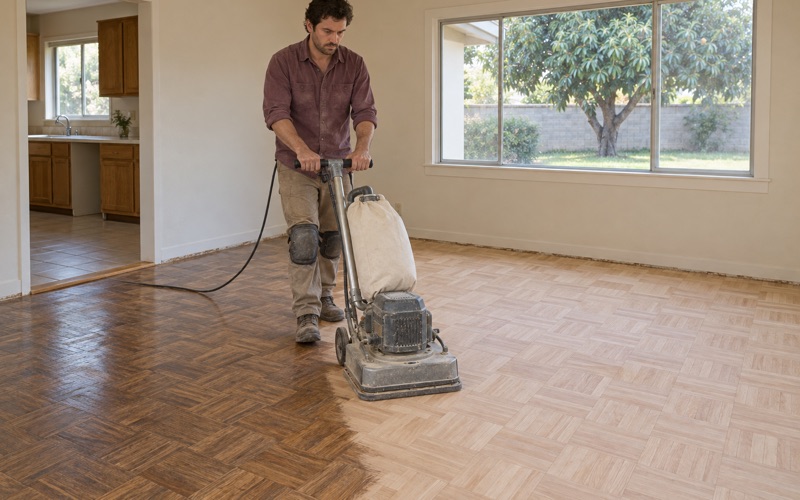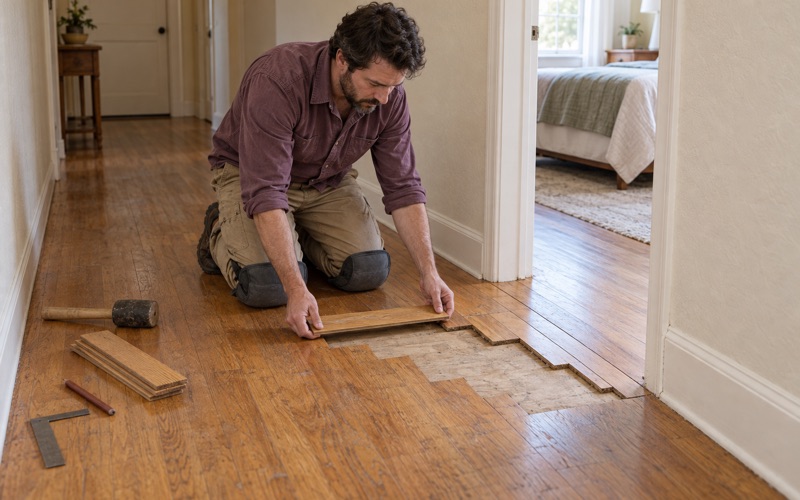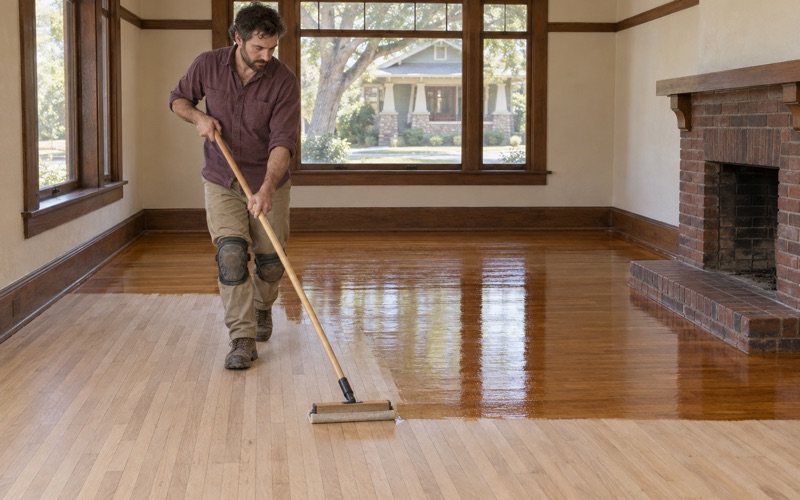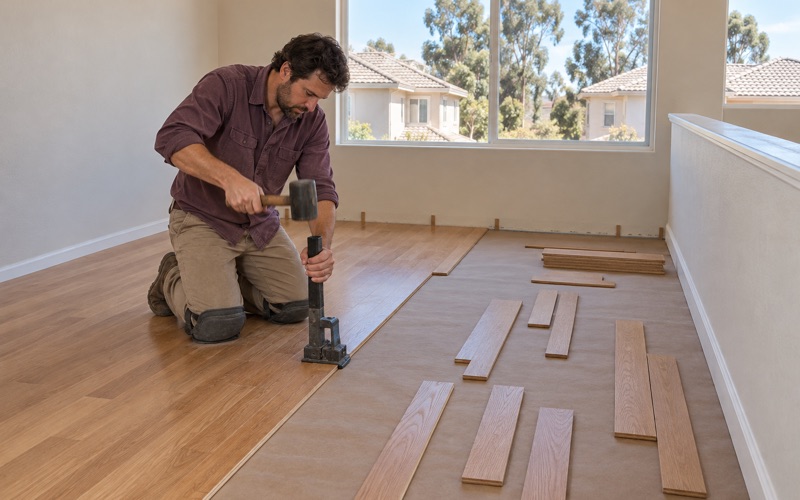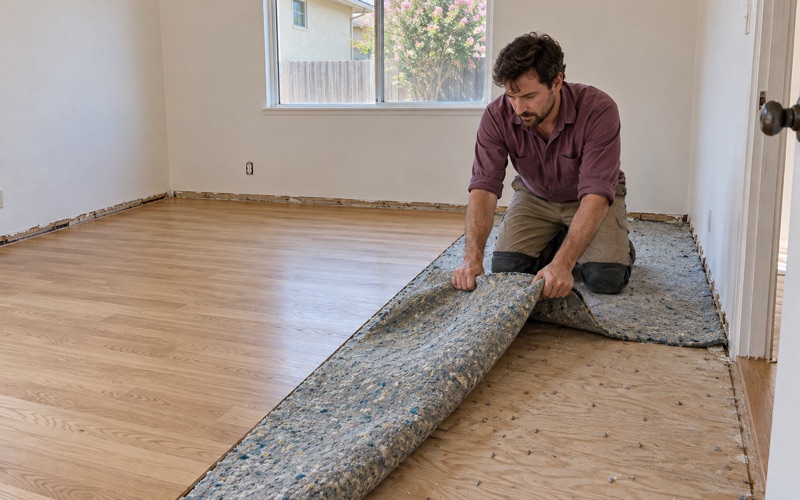
Upland Wood Flooring brings more than 20 years of hardwood experience to wood-flooring in Artesia, from refinishing tired red oak to replacing boards a leak has ruined. Our work here often sits inside a bigger repair plan, and we want that plan to hold together before the first board is lifted or the first pass of the sander touches the floor.
That is why we ask about the whole job at the first visit. A homeowner might be replacing a floor on its own, or the floor might be one item on a list that also covers a roof, a water heater and a termite treatment. The order of that list changes how we schedule sanding, coating and cure time around everything else.
Before we quote, we confirm the year the house was built, check what finish the floor can legally take under South Coast AQMD Rule 1113, and measure the wear layer if the floor is engineered. Those three answers decide whether a refinish is realistic, which products go down, and how the dust from the work is contained and cleaned.
Flooring in Artesia’s Rehabilitation Guidelines
Where the Word Flooring Appears
The City of Artesia adopted housing rehabilitation guidelines for its Community Development Block Grant program on November 5, 2018. Section 4.3 lists the essential improvements a program loan may fund, and flooring is named in that list alongside re-roofing, painting, weatherization, heating and cooling, gutters, driveways, fencing repairs, re-stucco, termiting, electrical and plumbing. Each item still has to be approved by the program operator.
For a homeowner, that single word matters. It means a worn, damaged or unsafe floor can be one line in a city-financed repair rather than a separate project paid out of pocket. The guidelines place administration with city staff. We cannot say whether the program is funded or accepting applications today, so the first call belongs to city staff, not to us.
Loans Versus Grants
The guidelines separate two kinds of help. Section 4.3 loans run up to $30,000 per property and are deferred-payment loans at zero interest. Under section 4.3.2, nothing is repaid for 30 years unless the borrower sells, transfers title or stops living in the home, which suits owners planning to stay put. Priority goes to seniors 62 and older, disabled occupants and veterans.
Grants under section 4.2 top out at $10,000, and the text is narrow. It says grant money may only be used for exterior painting, correcting code enforcement violations, accessibility improvements for the physically disabled, and health and safety concerns, unless otherwise approved. Flooring is not on that list, so a floor planned under this program is normally a loan item.
Where Our Part Begins
We are not a program contractor and we do not handle applications. The guidelines require contractors who bid program jobs to carry a CSLB license and bond, and that is a rule about the program, not a statement about us. What we can offer is a clear written scope of the floor itself, so a homeowner knows what the work involves.
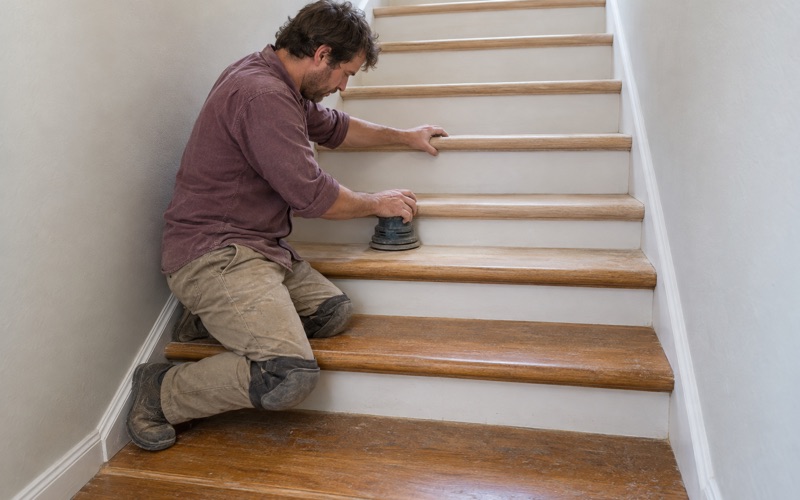
That scope separates what is structural from what is cosmetic: a subfloor soft enough to flex underfoot, boards lifted by an old leak, or a raised threshold that catches a walker, set apart from a dull finish or pet urine stains. Keeping the two apart helps anyone reviewing a repair list see which problem is which. Stairs are priced by the tread and riser on the same sheet.
Looking for wood-flooring closer to San Antonio Heights? See Wood-Flooring in San Antonio Heights.
Lead-Paint Testing Before Work in a Pre-1978 House
What the First Inspection Includes
Section 1.2.D of the Artesia guidelines says that when a home is a pre-1978 unit, the initial inspection also includes paint testing by a certified lead-based paint inspector or assessor, or a presumption that lead-based paint is present. Either way, the answer exists before any repair work begins, and it shapes how every trade on the list approaches the house.
A presumption is not a finding that the floor is contaminated. It means the work is planned as though lead is there, which is the safer assumption in a house of that age. For a floor job, the concern is less the boards than the painted baseboard, quarter round, door casings and stair risers that sanding and removal disturb.
Why the Build Year Comes First
We confirm a house’s build year before any sanding, whether or not a rehabilitation program is involved. The EPA RRP rule reaches renovation that disturbs paint in pre-1978 housing, and in Artesia that describes a large share of the stock. Census estimates put 76.2 percent of the city’s housing units as built before 1980. The 2024 five-year American Community Survey counts 3,601 of 4,727 units in that group.
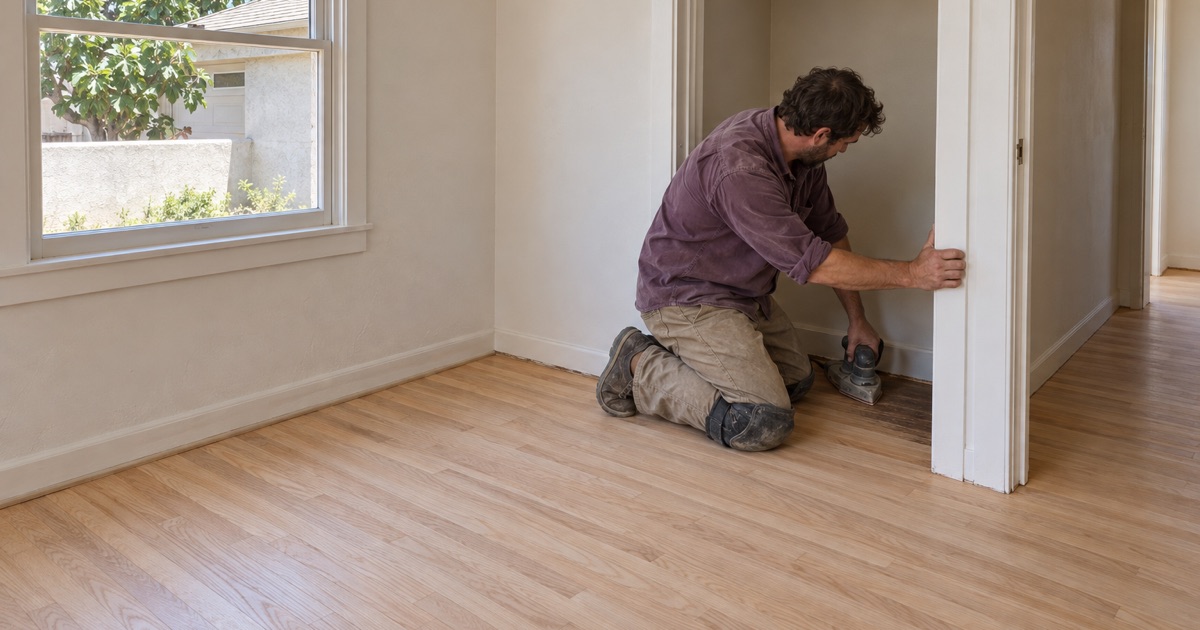
When the program has already tested or presumed lead, we plan around that result instead of guessing. Painted trim near the floor gets protected or handled with containment, and the dust from a drum sander or orbital sander is captured and cleaned rather than swept. A written cure schedule tells the household which rooms are off limits and for how long.
Scheduling Floor Work Around Paint Work
The loan list pairs flooring with interior painting, and the order of those two trades matters in an older house. We prefer to sand and finish before new paint goes on the walls, because sanding dust settles on fresh paint. Baseboard and quarter round are then reset or replaced once the floor finish has cured. Doing it the other way around means touching up the lower edge of every wall.
We select products that fit South Coast AQMD Rule 1113 limits for wood coatings, usually a waterborne polyurethane, and we tell the owner the sheen level and coat count in writing. That record helps when a later painter or inspector asks what went on the floor. Where an owner asks about oil-modified polyurethane or hardwax oil, we explain how drying time, odor and color change compare.
Floors Next to Termite, Plumbing and Electrical Repairs
Termiting and Damaged Boards
Termiting sits on the same loan list as flooring, and the two jobs often meet. Drywood termite frass near a baseboard, or small exit holes that point to powderpost beetle, can mean some boards are hollow inside. We probe suspect areas and listen for hollow spots before any refinish is promised on that part of the floor.
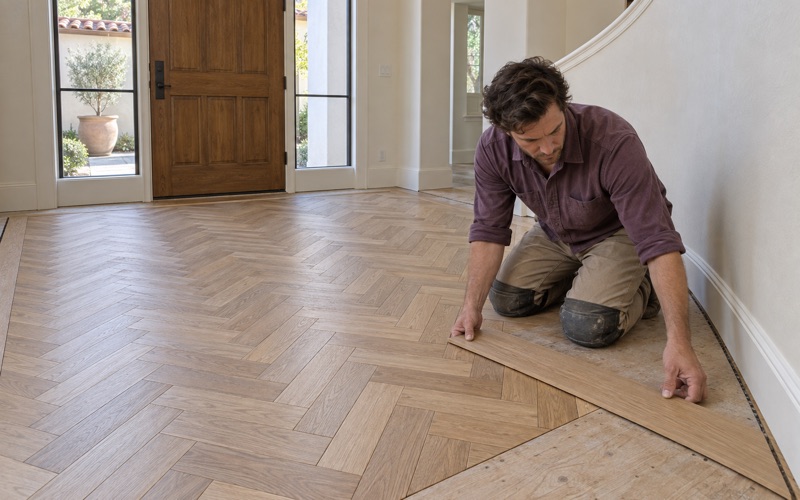
Treatment comes first and board replacement second. Once the termite work is done, we cut out weakened pieces and weave in replacement boards that match the species and width, which in mid-century houses is commonly red oak or white oak strip. Matching original boards keeps the rest of the floor in service instead of tearing out a whole room.
Plumbing Leaks and Water-Damaged Floors
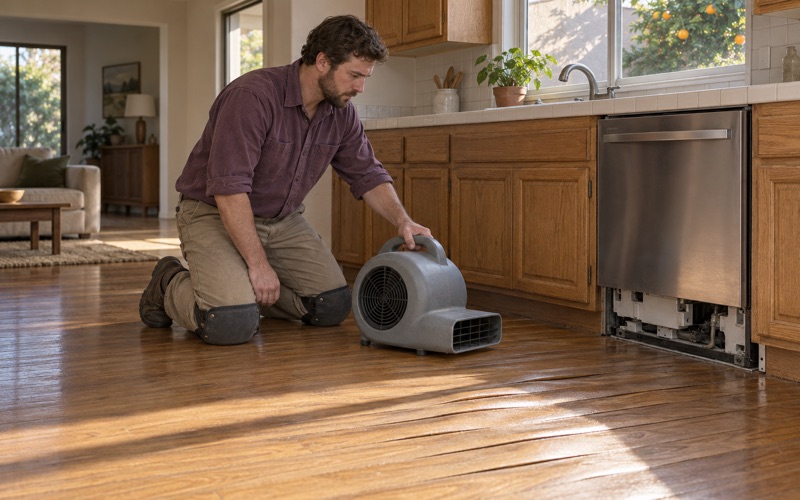
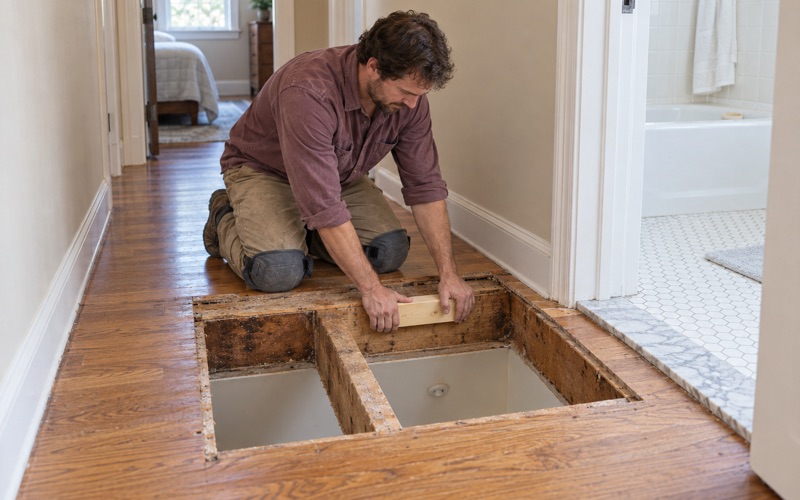
Plumbing repairs and floor repairs belong in a strict order. Cupping, crowning and buckling near a bathroom or kitchen usually trace back to water, and replacing boards before the leak is fixed only buys a second failure. We confirm the leak source and take moisture meter readings before any damaged board comes out. The readings are written down so everyone can see the floor has dried.
Where the leak was under a slab rather than in a wall, the plan changes again. A slab leak repair can leave a patched section of concrete that needs time and a moisture test before an engineered floor is glued down. We record those readings rather than estimating, and we match adhesive and moisture membrane to what the test shows.
Electrical Work Under and Beside the Floor
Electrical upgrades in older houses can mean new floor outlets, rerouted wiring or an electrician working from below where there is access. We coordinate so that any cutting through the subfloor happens before new boards or a fresh finish go down. A patched opening under a finished floor is harder to hide than one made while the room is still bare.
Heating and cooling work raises similar questions when registers sit in the floor. We measure and fit new boards around floor vents with matching register covers, and we leave the expansion gap the product calls for at walls and fixed openings. Settling these details early keeps the last trade in the house from undoing the first one.
Owner-Occupied Artesia Houses From the 1950s Through the 1970s
A City of Mid-Century Detached Homes
Artesia was incorporated on May 29, 1959, and covers just 1.62 square miles of southeastern Los Angeles County. Census estimates count 1,121 housing units built in the 1950s, 1,149 in the 1960s and 802 in the 1970s, which together make up most of the city’s homes. That concentration means many Artesia floors share a similar age.
Most owners here live in the kind of house the program is written for. Of 2,235 owner households, 2,034, or 91.0 percent, live in detached houses. Because the loan terms depend on the borrower living in the home, the person planning the floor is also the person living with the dust, the cure time and the result.
Original Boards Worth Keeping
Houses of this era were commonly finished with solid hardwood strip, and plenty of it has since disappeared under carpet, tack strip and sheet goods. When those layers come up, the boards are often sound enough to sand, and staple holes and tack strip damage can be handled with wood filler and a few replacement pieces. Black mastic left from old tile gets identified before anyone scrapes it.
We would rather repair and match original boards than replace a floor wholesale. Refinishing keeps the existing tongue and groove, avoids new material and usually costs less than a tear-out, which can matter when a loan ceiling of $30,000 has to stretch across a roof, plumbing and several other items. The floor then takes a site-finished coat chosen for the room’s traffic.
Houses Needing More Than a Refinish
Some floors are past a sanding. An engineered floor installed in a later remodel may have a wear layer too thin for a full refinish, so we measure it before promising one, and delamination or a worn-through veneer points toward replacement. In that case we walk through species, Janka hardness and plank width with the owner.
Solid floors can reach that point too, after decades of sanding or a subfloor problem that let boards move. When replacement is the answer, we plan it room by room so the household keeps a usable kitchen, bath and bedroom while each section cures. Any floor work that is part of a program repair still follows the program’s own inspection and approval steps.
- 20+ Years in Wood Floors
- Build Year Checked First
- Written Cure Schedules