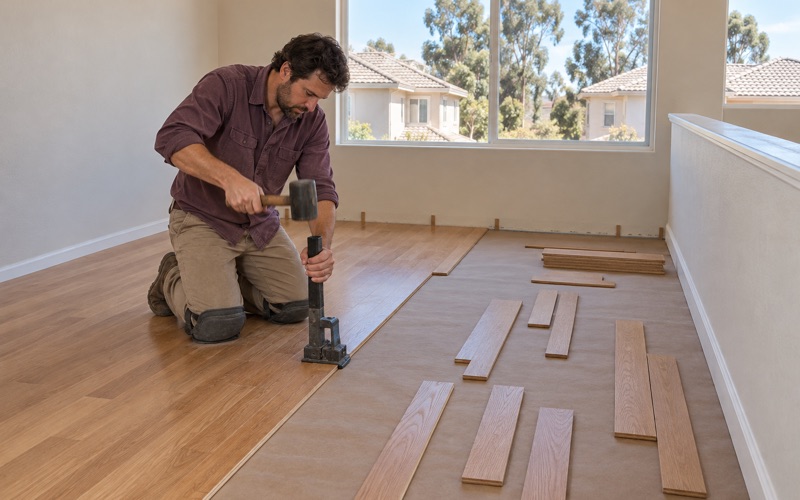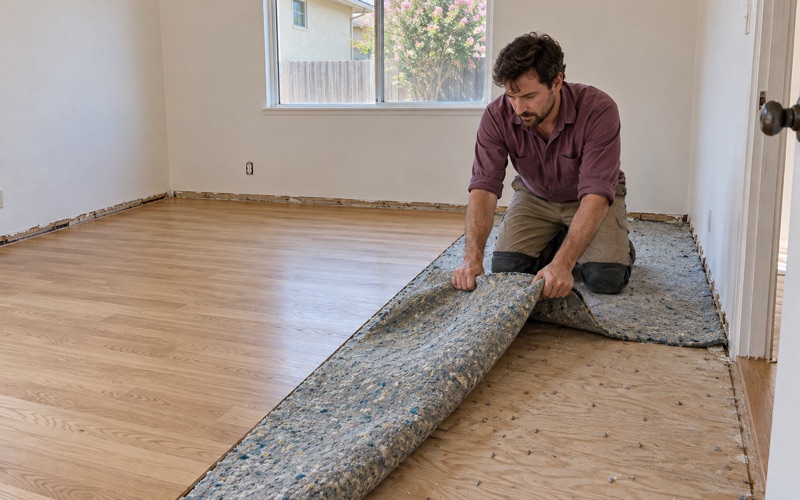
Upland Wood Flooring brings more than 20 years of wood-flooring in Azusa homes to every job, and here the work often starts when an owner decides to sell. We refinish worn hardwood, repair damaged boards and install new solid and engineered floors, and we plan each job around the house’s age, its subfloor and the calendar the owner is working to.
Azusa asks something specific of sellers. Before a sale agreement on an older single-family house, the owner has to get a report from the city, and that step tends to set the schedule for everything else, floors included. We work backward from that date so sanding, staining and curing are finished before photos and showings begin.
Every job begins with the basics we refuse to guess at: the year the house was built, the thickness of any engineered wear layer, and the moisture in whatever sits under the boards. Those answers decide whether a floor can be sanded, patched or has to come up, and they go into a written plan with a cure schedule the household can live around.
The Azusa Presale Report and Where Floors Fit
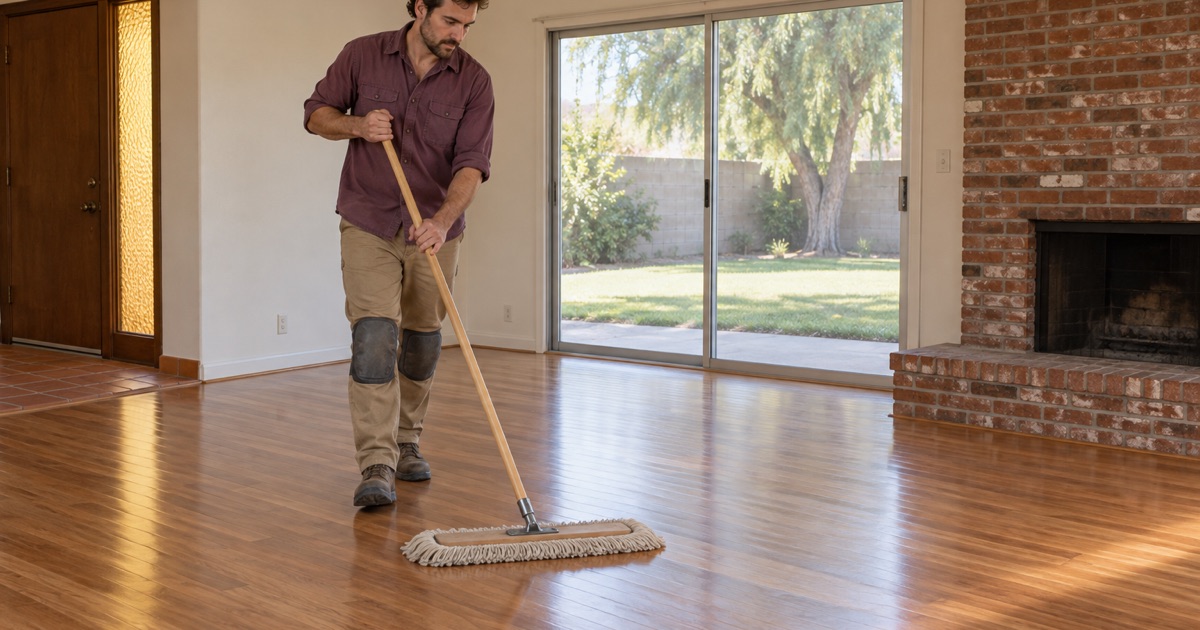
What Municipal Code 14-326 Asks of a Seller
Azusa Municipal Code 14-326 says that before entering into an agreement of sale, the owner or an authorized representative must obtain a Real Property Records Report from the city. The completed report goes to the buyer before the agreement is signed. For a single-family dwelling the fee is $263, and the city allows up to 10 business days to process it.
That processing window matters to anyone planning floor work at the same time. We suggest owners file with the Community Improvement Division at 213 E. Foothill Blvd. early, then let us schedule refinishing inside those 10 days instead of after them. Nothing about the report depends on the floors, so the two tasks can run side by side without either one holding up the other.
Yards and Exterior, Not Hardwood
The city’s application describes an inspection of yard areas and the building exterior: rear and side yards, garages, accessory buildings and common areas. Interior rooms are not on that list. A seller should not expect the inspector to look at a scratched living room or a cupped kitchen floor, and nothing on the form ties the report to flooring.
So why do floor calls cluster around a sale? Because buyers walk the interior even when the city does not. Worn traffic lanes, gray boards near a patio door and pet urine stains show up in listing photos, and a refinish is one of the few interior projects that can fit between filing the report and opening the house.
Refinishing an Empty House
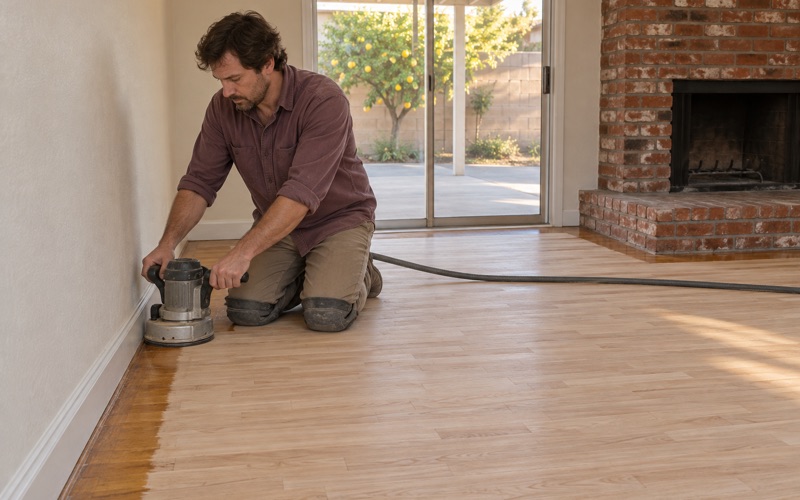
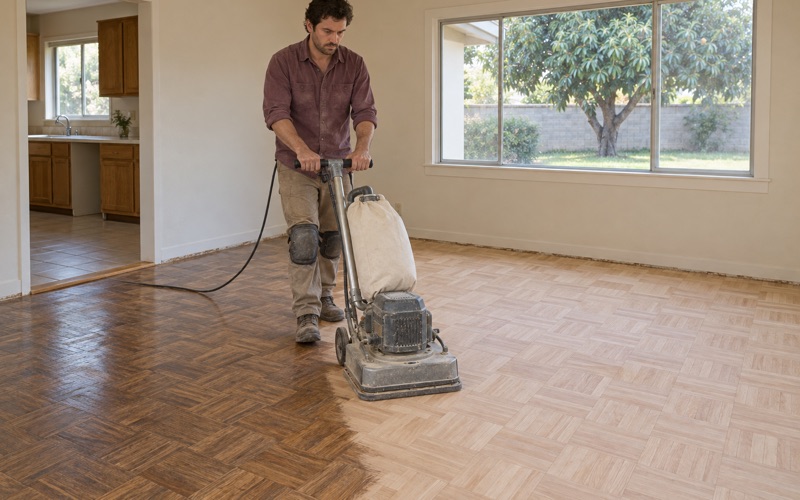
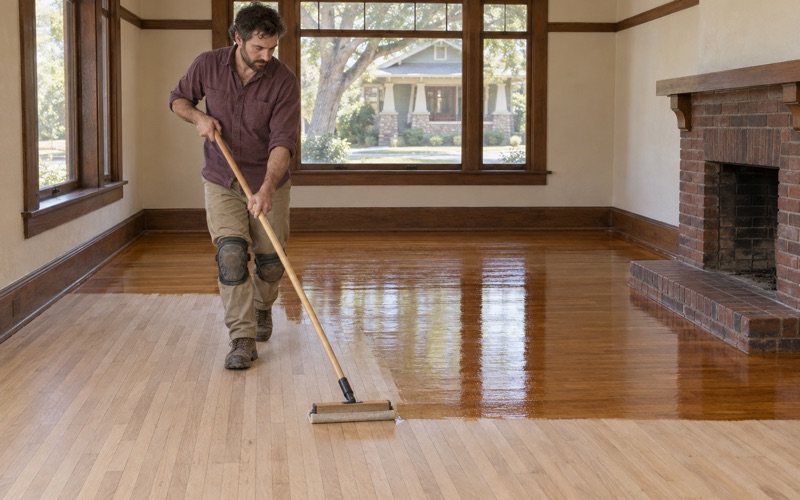
Many sellers move out before listing, and an empty house is the easiest place to sand. With no furniture to shift, we can run the big sander wall to wall, fill gaps with wood filler or trowel filling, and water pop the grain before staining so the color takes evenly across every room. An occupied house gets the same result, just in stages.
Vacancy also changes the cure. Without rugs and dining chairs coming back the next day, a finish can harden fully before buyers walk through, and we leave the owner a short care note for the agent covering felt pads, damp mopping and what cleaners to keep off the new coat, since a hazed finish in the second week of a listing undoes the work.
Looking for wood-flooring closer to Norco? See Wood-Flooring in Norco.
Getting a Pre-2000 Azusa House Ready to List
Refinish, Recoat or Leave It Alone
No rule says a floor has to be redone before a sale, and some floors are better left as they are. When the finish is dull but the wood underneath is sound, a screen and recoat with the buffer adds a fresh coat in a day or so. That is often enough to lift a listing without the dust or downtime of a full sanding.
Deeper damage calls for sanding through a grit sequence with a drum sander and orbital sander, then stain and finish. We look for board gapping, hollow spots and drywood termite frass before quoting, since a house sitting on the market with an unexplained soft spot raises more questions for buyers than a scuffed floor ever would.
Finishes That Cure Before the First Showing
Timing a sale means choosing a finish by its cure time as much as its look. Waterborne polyurethane dries clear and lets furniture back sooner than most oil-modified polyurethane, which ambers and needs longer before rugs go down. Either way, we pick products that meet South Coast AQMD Rule 1113, which sets the wood coatings limits for this air basin.
Sheen level matters in listing photos too. A satin or matte finish hides the fine scratches that high gloss exaggerates under a photographer’s lights. Sanding runs under dust containment, and every job ends with a schedule showing when light foot traffic, furniture and area rugs can return, so a seller and an agent can book the photographer without guessing.
Stairs, Thresholds and Trim
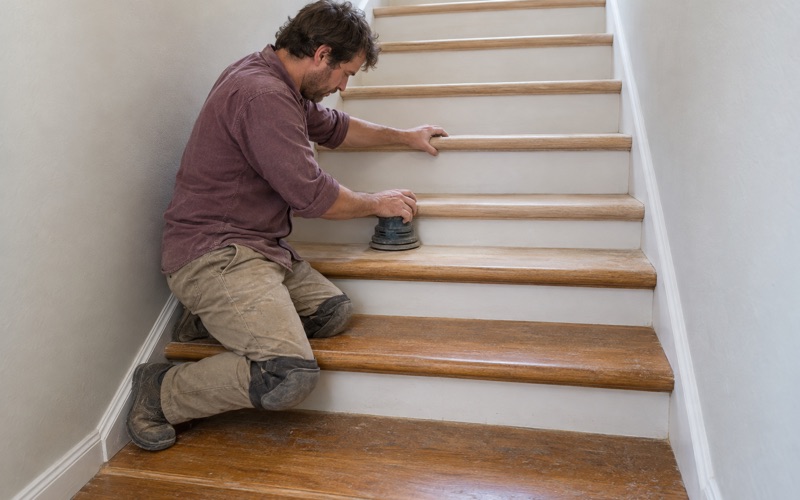
Stairs take a beating and often sit in plain view of the front door. We quote them by the tread and riser rather than folding them into a square-foot figure, because each stair tread and its nosing get sanded and finished by hand. That line item lets a seller decide whether the stairs are worth doing this time.
Small transitions matter in photos as much as big rooms. A lifted reducer at the kitchen, a loose T-molding in a doorway or gapped quarter round along the baseboard reads as neglect, and each is a short fix we fold into the same visit instead of leaving for a buyer’s repair list.
Rosedale, Condos and HOA Homes Follow a Different Path
Who Ordinance 2023-03 Exempts
Ordinance 2023-03, effective October 19, 2023, narrowed who needs the report. Condominiums, townhouses, planned unit development dwellings, units inside a homeowners association and single-family houses built after 2000 no longer fall under the presale article. For an owner in one of those homes, the report drops out of the timeline and the floor schedule follows the listing date.
That takes in Rosedale, entitled in 2003 under the Monrovia Nursery Specific Plan, where the city reports 1,227 of 1,250 authorized homes completed, sold and occupied. It also takes in attached condos and townhouses across the city, whatever their age. We still ask every owner for the year built, because the exemption and the federal lead rule turn on different dates.
Association Approvals Come First
An HOA unit skips the city report but often carries its own rules. Many associations restrict hard flooring over living space in stacked units or require an approved underlayment, so we check the governing documents and get any sign-off before a single box of flooring is ordered. That avoids buying material the board later refuses.
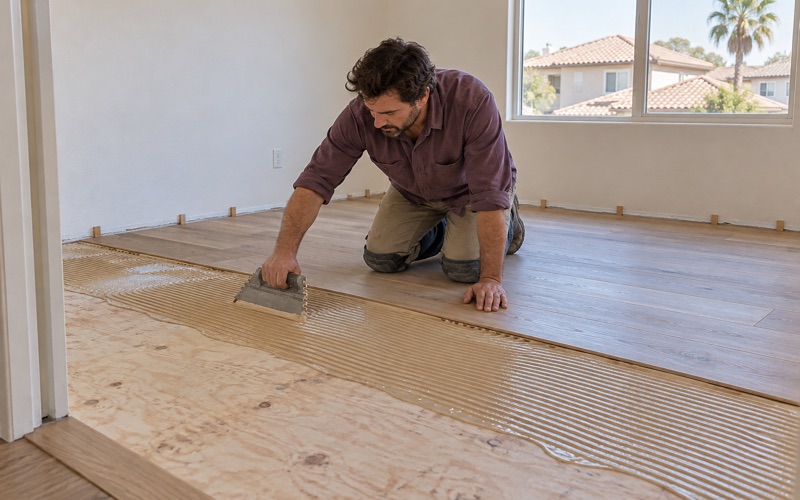
Where a unit sits on a concrete slab, we test it for moisture before gluing an engineered floor down and write the reading on the job sheet. A glue-down installation with urethane flooring adhesive and a moisture membrane holds up well over a slab, while a floating installation over acoustic underlayment suits units where the association asks for sound control.
Houses Built After 2000
Only 15.1 percent of Azusa units date from 2000 or later, and single-family houses built after 2000 sit outside the report too. Where one of them has engineered flooring, the wear layer decides what is possible. We measure it at a floor vent or transition before promising a sanding, because a thin layer may only take a screen and recoat.
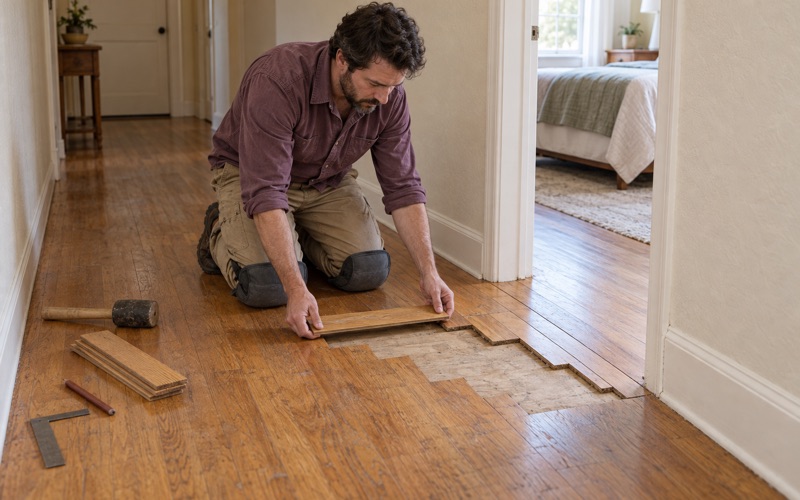
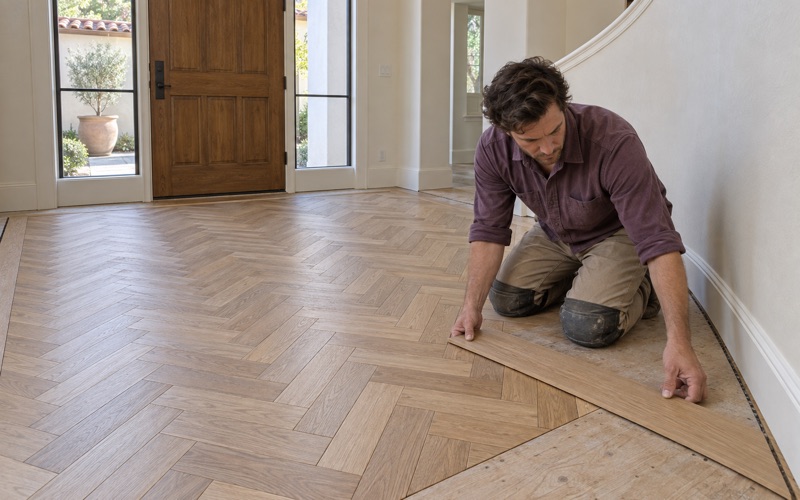
Engineered boards also differ by core. A plywood core tolerates a bit more moisture swing than an HDF core, which matters when choosing a replacement board to patch into an existing floor. We match core, width and finish as closely as the market allows, then blend the repair so it does not read as a patch.
Floors in Azusa’s 1950s Through 1970s Houses
A Housing Stock Mostly Built Before 1980
Azusa sits at the foot of the San Gabriel Mountains, about 20 miles east of downtown Los Angeles, and much of its housing went up in the postwar decades. The 2024 American Community Survey five-year estimates put 66.7 percent of the city’s units as built before 1980, and the 1950s alone account for 3,412 units, the largest single decade.
Houses from those decades commonly carry solid hardwood strip, often red oak or white oak laid tongue and groove, and some of it has spent years under carpet. We repair and match original boards instead of tearing out whole rooms, and we watch for black mastic or old tack strip holes that change how a sanding or patch goes.
Lead-Safe Prep in Pre-1978 Rooms
Refinishing rarely stops at the floor. Pulling quarter round, removing baseboard or sanding along painted trim disturbs paint, and in a house built before 1978 the EPA RRP rule governs how that work is done. We check the build year on the property record before sanding, not after the first pass has already raised dust.
The census bucket ends at 1980, so the share of Azusa houses built before 1978 is somewhat below 66.7 percent, but it is still a large part of the city. In those houses we contain dust at the work area, protect adjoining rooms and clean up to the standard the rule sets, whether or not a sale is coming.
Water Damage in an Older House
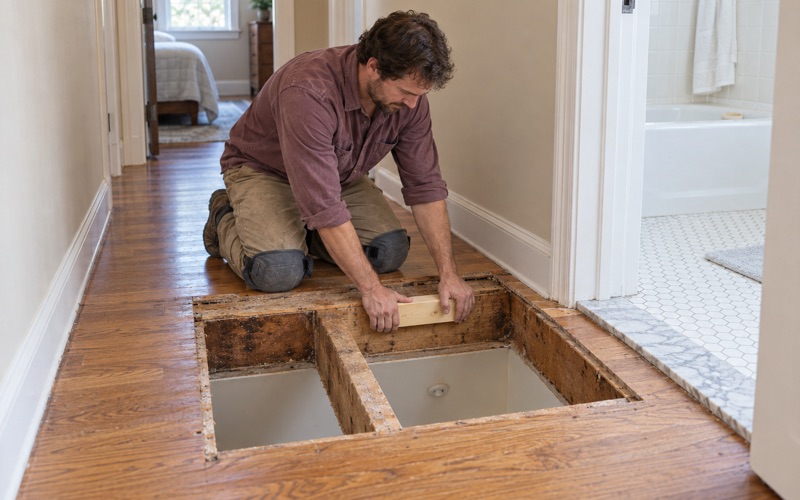
Older supply lines fail, and a slow leak under a floor shows up as cupping, crowning or buckling long before anyone sees water. Before we replace a single water-damaged board, we confirm the leak source has been fixed and take moisture meter readings across the area, because new wood laid over a wet subfloor fails the same way the old wood did.
For a seller, that sequence also produces a paper trail. We document the damage room by room with photos and readings, which is useful when an insurance adjuster is involved and gives a buyer’s inspector something concrete to read instead of a patched spot with no history behind it. The same readings tell us whether a board can be patched in or whether the damage runs wider.
- 20+ Years in Wood Floors
- Build Year Checked First
- Written Cure Schedules