Upland Wood Flooring brings more than 20 years of experience to wood-flooring in Chino Hills, and this page is written for owners of the city’s older houses rather than its newer tracts. In those homes the structure has often held up well, while the hardwood underfoot shows every decade of foot traffic, sun and spilled water.
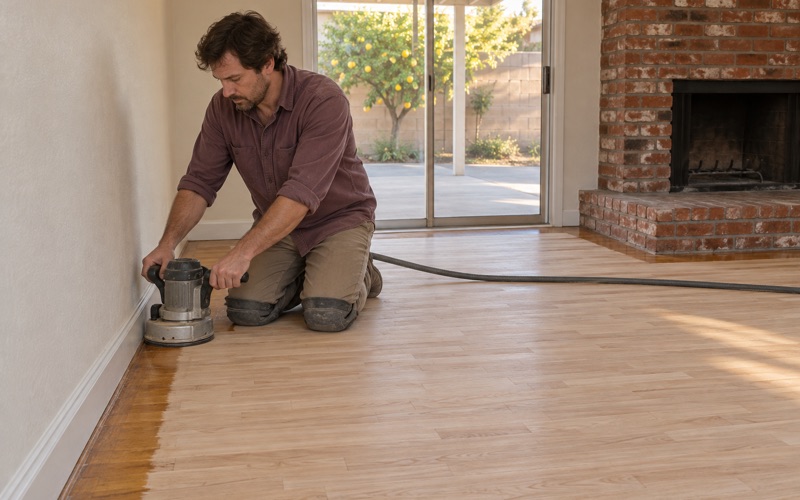
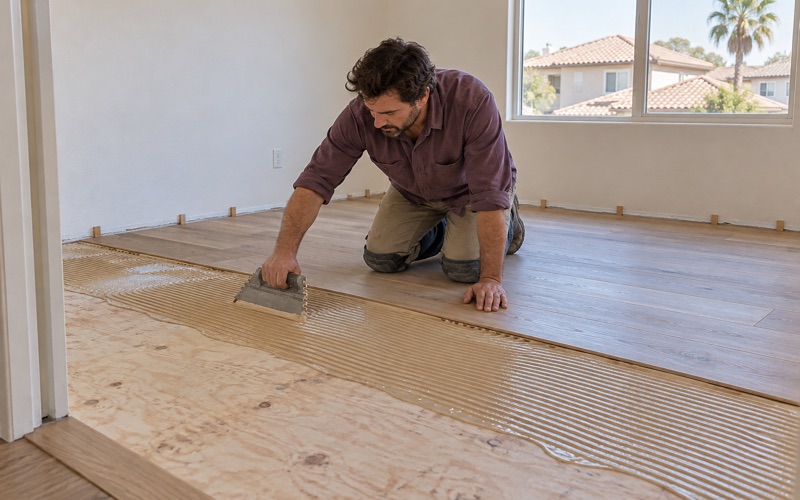
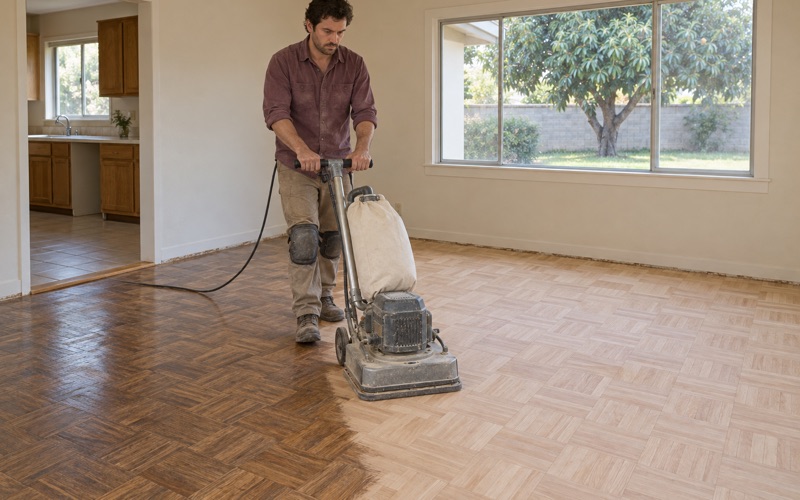
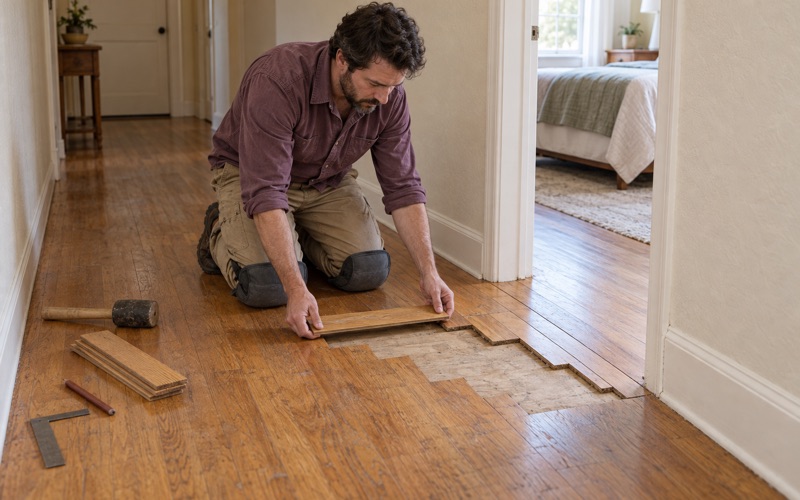
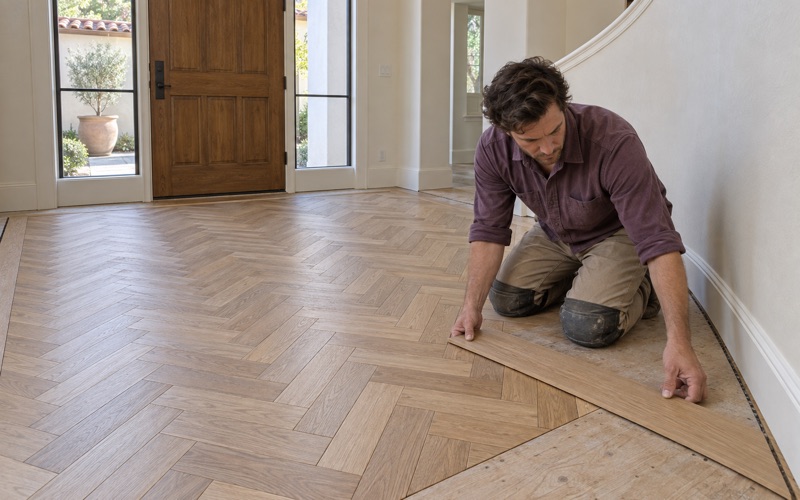
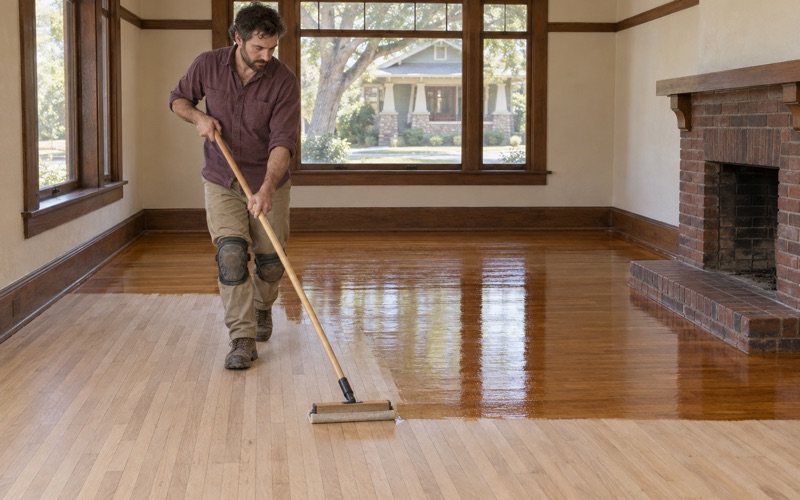
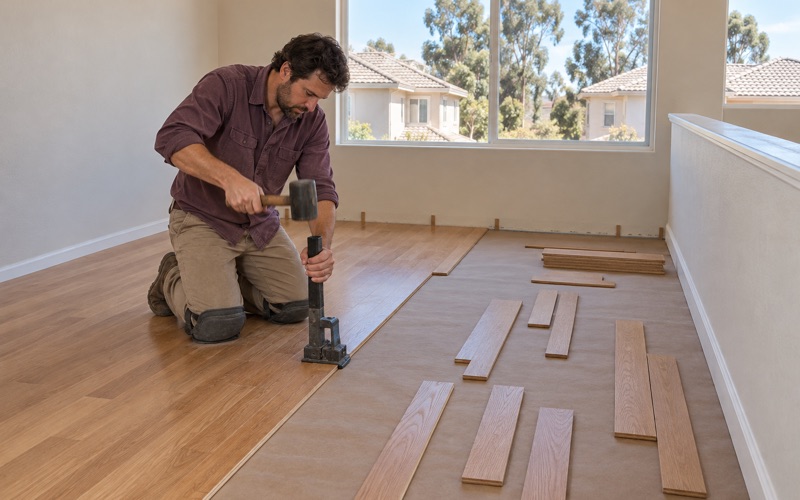
We handle the full range of floor work in those houses: screen and recoat for a finish that is dull but intact, full sanding with a drum sander and a planned grit sequence for boards that have gone gray or scratched, and board-by-board repair where cupping, gapping or pet urine stains have taken a section past saving. New solid hardwood and engineered floors are part of it too.
Before any of that begins, we confirm the year the house was built and walk the rooms with a moisture meter. The build year decides how we treat old paint on baseboards and trim, and the readings decide whether a board is simply worn or is sitting over a moisture problem that a new finish would only hide.
Where Chino Hills keeps its older houses
Chino Hills incorporated on December 1, 1991, and 60.3 percent of its housing units date from 1980 through 1999. The city’s own 2021-2029 Housing Element, dated August 2022, still names the places where older homes cluster, and that is where a floor laid before 1970 is most likely to turn up.
Los Serranos and Sleepy Hollow in Carbon Canyon
According to the Housing Element, the majority of units built before 1970 sit in Los Serranos and in the Sleepy Hollow area of Carbon Canyon. Carbon Canyon was historically known as Sleepy Hollow, and it once held La Vida Mineral Springs. These are the corners of a young city where a floor more than fifty years old is ordinary rather than rare.
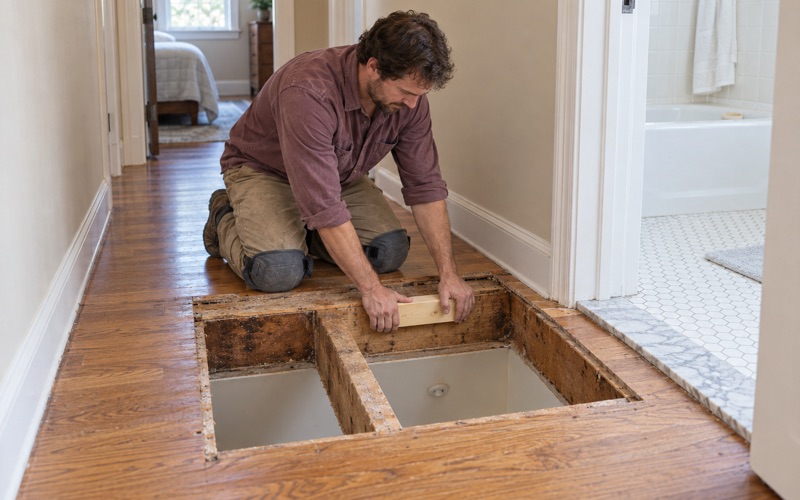
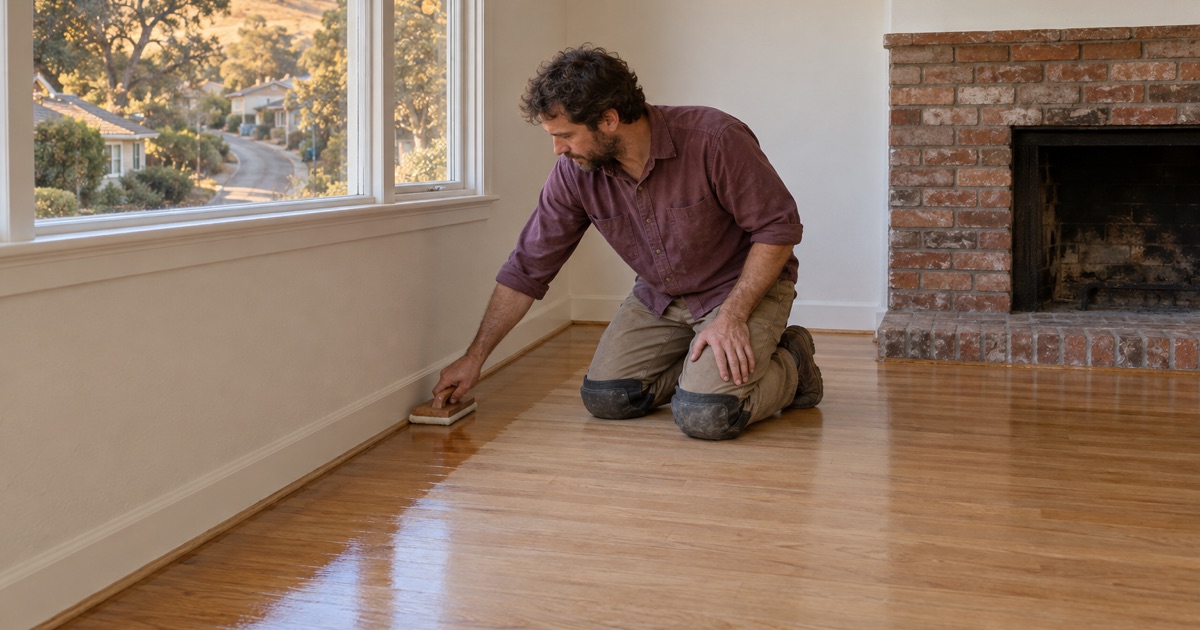
In a house of that age we check whether the floor is solid strip hardwood, commonly red oak or white oak in tongue and groove, and whether earlier owners patched it in a mismatched species. We lift a floor register or look at a closet threshold first to see how much wood remains above the tongue for another sanding.
Bayberry homes
Bayberry is the other neighborhood the city singled out. The Housing Element pairs Bayberry with Los Serranos as the two areas drawing the most code-violation reports about housing condition, and Policy H-2-2 commits the city to exploring an expansion of its minor home improvement program to other neighborhoods, Bayberry included.
The element does not describe Bayberry floors, and we do not assume anything about them from the report. What we do on a Bayberry job is the same as in any older house: confirm the build year, read moisture in several rooms, and measure what is left of the existing boards or the engineered wear layer before recommending a sanding.
A small slice of the city’s housing
Older houses are genuinely scarce here. Census figures from the ACS 2024 five-year estimates count 1,092 units built in the 1960s and 927 built before 1960, and that pre-1960 group is only 3.6 percent of the city’s 25,885 housing units. Only 166 units date from 1939 or earlier. That rarity is why an original floor in one of them is worth a careful look before anyone pulls it out.
Because so few houses in Chino Hills carry that kind of age, we lean toward repairing and matching original boards rather than replacing whole rooms. We weave in reclaimed or newly milled strips of the same species and width, then sand the patched area together with the rest so the repair disappears into one continuous floor.
Looking for wood-flooring closer to Covina? See Wood-Flooring Services in Covina.
Sound houses, worn floors
Between October and December 2021, city staff drove Los Serranos and Bayberry and rated 2,189 houses from the street. Of those, 2,116, or 96.6 percent, were rated sound, 72 were rated moderate (52 in Los Serranos and 20 in Bayberry), and one house in Bayberry was rated substantial. It was a windshield survey, so it judged what could be seen from outside.
What the survey measured and what it did not
The survey says nothing about floors, and we would never read it as a verdict on them. What it does show is useful all the same: in the two neighborhoods with the most condition complaints, nearly every house was rated sound from the street, so the open question for most owners there is the rooms inside, not the shell.
It is also a familiar shape for an older house. The walls and roof have been kept up, while the oak floor carries a finish worn through in the traffic lanes, board gapping that opens and closes with the seasons, and gray patches where water or pet urine soaked past the coating. Each of those has its own fix, and not all of them need a full sanding.
Refinish, repair or replace
A floor with an intact finish and light scuffs usually needs only a screen and recoat with a buffer, which leaves the wood alone. Deep scratches, gray wood and old stain call for a full sand, and on solid oak we can often work down to clean wood and choose a new floor stain, sheen level and topcoat.
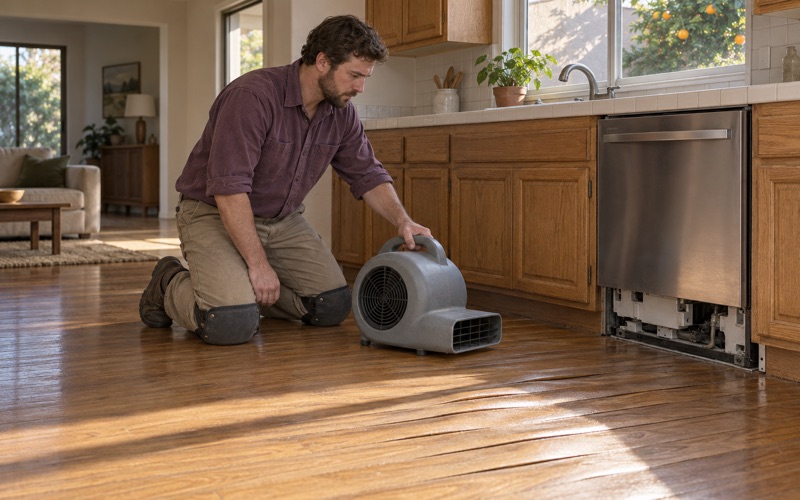
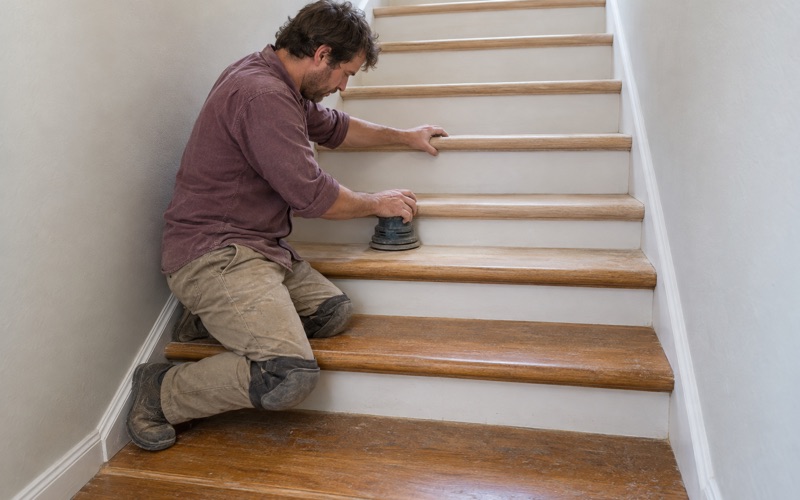
Replacement is the answer only where the boards themselves have failed: cupping or crowning that will not settle, delamination on an engineered plank, hollow spots, or drywood termite frass and powderpost beetle holes in the wood. Stairs are priced separately by the tread and riser, because a staircase takes far more hand work than its square footage suggests.
Build year and old paint
With 17.2 percent of Chino Hills housing built before 1980, a share of the older homes falls under the EPA RRP rule, which applies to renovation that disturbs paint in houses built before 1978. Sanding floors can mean pulling baseboard, quarter round and shoe molding coated in decades of paint, so the date on the house shapes the setup.
We confirm the build year from records before the first sander comes off the truck, then set up dust containment and give the household a written cure schedule. That schedule tells you which rooms are closed, when furniture can return and when rugs can go back down, so an older house stays livable while the floor is out of service.
What changes about floor work in Chino Hills
Finishes that fit the air district
Chino Hills sits inside the South Coast Air Quality Management District, even though San Bernardino County is split and its desert portion answers to a different district. That places every floor finish we apply here under SCAQMD Rule 1113, the rule that sets which wood coatings are legal to use in this air basin.
In practice we choose from compliant waterborne polyurethane, oil-modified and hardwax oil products, matching the product to how each room is used. A kitchen with a dog wants a harder, more forgiving topcoat than a formal living room, and we talk through sheen level too, since a lower sheen hides wear on an older floor.
Seasons, moisture and concrete
Chino Hills falls in the National Weather Service forecast zone for the San Bernardino and Riverside County Valleys, served by the San Diego office. Dry stretches and damper months move wood in and out of its comfortable range, so we let new boards acclimate in the house and leave a proper expansion gap at every wall.
Where a house sits on concrete, we test the slab before any engineered floor is glued down, using in-situ relative humidity testing or a calcium chloride test, and we write the reading down. Where water damage started the project, we find and confirm the leak source first, whether a slab leak or a supply line, so new boards are not laid over an active problem.
Townhomes and insurance claims
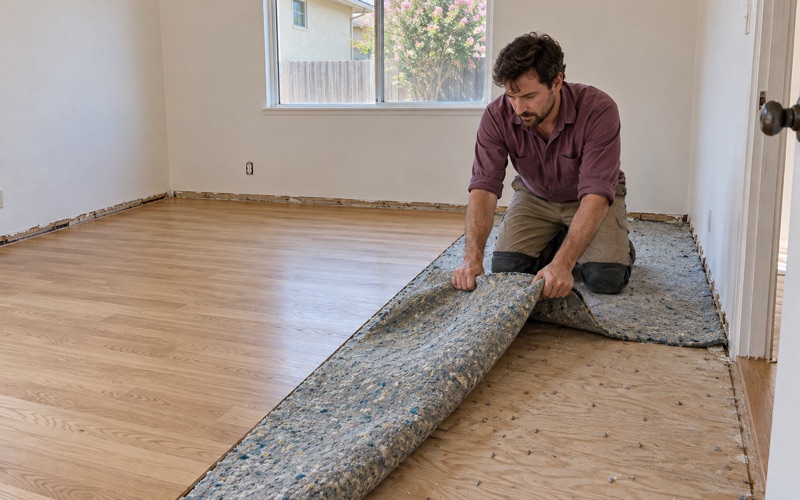
Chino Hills is mostly detached houses, 75.1 percent of units, but 5.8 percent are single-family attached. Where an association governs a townhome or condo, we check its flooring rules and approvals before anything is ordered, since some associations limit hard surfaces over living space below. We can add an acoustic underlayment where the rules call for one.
When an insurer is involved, we document water, smoke or ash damage room by room so the adjuster has photos, moisture readings and measurements for each space. Claims in California are handled under the state’s fair claims regulations, including 10 CCR 2695.9, and a clear room-level record keeps that process moving for the homeowner.
Working with the city’s home improvement programs
A fair question in the older neighborhoods is whether the city can help. The Housing Element describes a Home Improvement Grant Program, funded through CDBG, that is citywide and offers grants of up to $5,000 to qualified low and moderate income households. The same document also lists infrastructure projects in the older Los Serranos neighborhood.
What the element says about eligible work
The element does not list which repairs the grant pays for, so we cannot tell you whether a floor qualifies, and we will not quote a job as if it does. If the program interests you, the right step is to ask the city directly about eligibility and timing before signing anything with a contractor, including us.
What we can do is give you a written, itemized scope that separates floor repair, sanding, stairs and finish, so whatever the city tells you, the numbers are already broken out. An itemized quote also helps if you decide to phase the work, starting with the rooms that see the most traffic.
Code cases and the city counter
The city’s Code Enforcement Division handles about 1,200 cases a year. Nothing in the Housing Element ties those cases to floors, and we do not suggest otherwise. Our part is narrower: the floor inside a sound house, and whether a careful sanding and new finish can carry it for years more before new wood is needed.
Questions about paperwork for a project belong with the City of Chino Hills Building & Safety Division at 14000 City Center Drive, whose public counter is open Monday through Thursday from 8:00 a.m. to 5:00 p.m. and Friday from 7:30 a.m. to 4:00 p.m. We point owners there rather than guess at what a particular job needs.
- 20+ Years in Wood Floors
- Build Year Checked First
- Written Cure Schedules