Upland Wood Flooring handles wood-flooring in Citrus with more than 20 years behind the work, and nearly every call we take here starts the same way: a floor already exists, and the owner wants it renewed, repaired or replaced. We rarely walk into a bare subfloor waiting for its first boards. That shapes how we inspect, quote and schedule.
Renewal work rewards patience at the start. Before a sander touches anything, we confirm the year the house was built, because the EPA lead-safe rule reaches paint disturbed in homes built before 1978, and trim, thresholds and baseboard can carry old coatings. We also measure what is actually left to work with, whether that is solid hardwood thickness or an engineered wear layer.
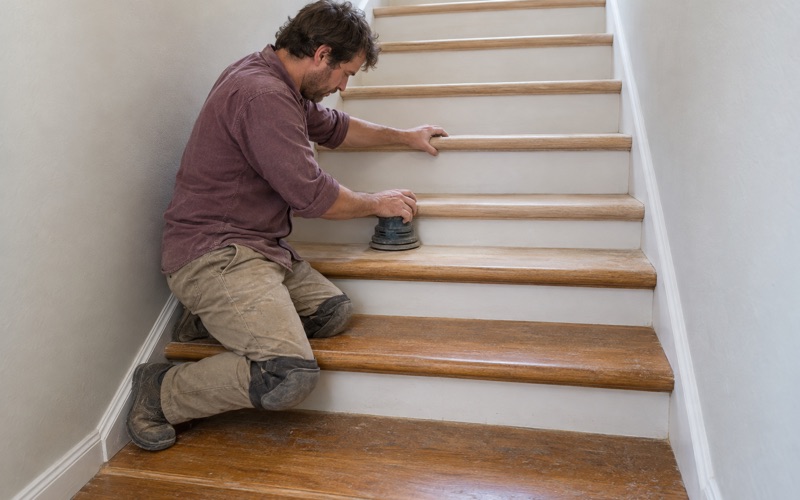
From there the job becomes a set of written steps: dust containment set up room by room, a finish chosen for the local air rules, and a cure schedule the household can plan meals, pets and work-from-home days around. Stairs get priced by the tread and riser rather than buried inside a square-foot figure.
A Community That Stopped Adding Houses After 2010
What the housing count shows
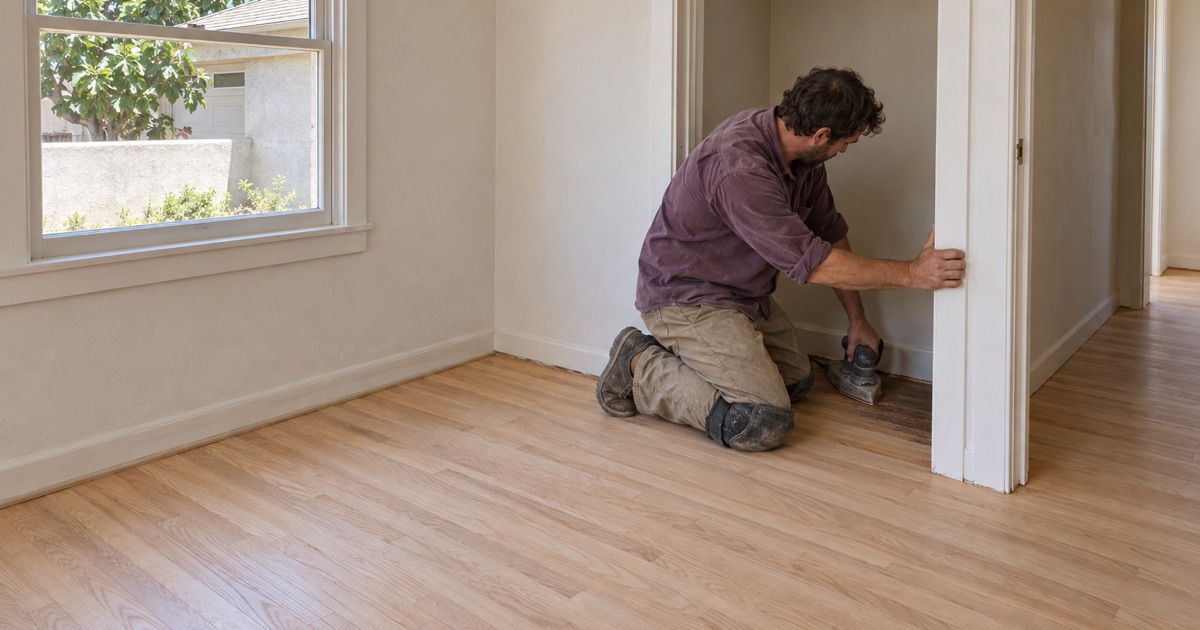
Citrus is an unincorporated community in Los Angeles County with no municipal government of its own, and its housing stock has barely moved in a generation. The Census Bureau’s 2024 five-year American Community Survey counts 2,740 housing units here and records none built in 2010 or later, zero in the 2010s and zero from 2020 on.
The decade before that added little as well. Only 44 units, 1.6 percent of the total, date from 2000 through 2009, and 97.0 percent of the housing was standing before 1990. Any floor put down here in recent years, in other words, went into a house that was already standing. That is the starting point for every estimate we write.
Mostly detached houses, mostly owned
Of those 2,740 units, 2,426 are detached houses, or 88.5 percent, with a thin mix of attached homes, multi-unit apartment buildings and 20 mobile homes making up the rest. And 71.4 percent of occupied units are owner-occupied, so the typical question we hear is how to treat a floor the owner will keep living on.
A detached house also means the flooring decisions belong to the owner alone. There is usually no association to approve a product and no neighbor below to hear footsteps, so the choice between solid and engineered, or site-finished and prefinished, turns on the house itself. For the attached homes and apartment units in the mix, we check any association rules before flooring is ordered.
Why no new construction changes the work
New construction lets an installer control everything from the subfloor up. Renewal work does not. In Citrus we inherit whatever earlier owners chose, whatever repairs they made and whatever finish went on last, and our first visit is spent finding out what those choices were rather than assuming them. Nothing about an old floor should be guessed from its surface.
That is why we pull moisture readings, check for hollow spots underfoot, and look at transitions, reducers and quarter round before quoting. A house with a room added decades ago, a later kitchen remodel and a hallway patched after a leak can hold three different floors that only look like one. We map each one on a sketch of the house.
Looking for wood-flooring closer to Jurupa Valley? See Wood-Flooring Services in Jurupa Valley.
Refinishing Floors Earlier Owners Already Refinished
Measuring what is left before sanding
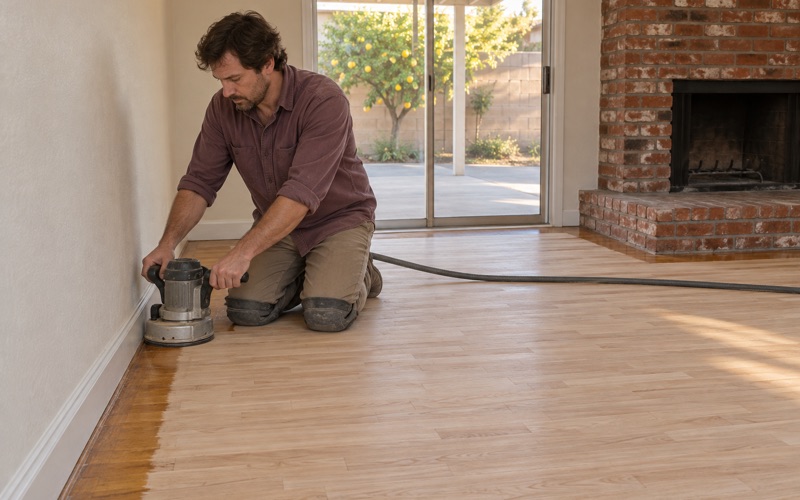
A solid hardwood floor can be sanded several times over its life, but each full sanding removes wood above the tongue and groove, and a homeowner rarely knows how many passes an older floor has already taken. We look at exposed edges at vents and thresholds and check for nail heads or tongues showing through.
Engineered floors get the same scrutiny. If a previous owner installed engineered planks, we measure the wear layer before promising a sanding, because a thin veneer that has been sanded once already may have nothing left for a second full refinish. Sometimes the honest answer is a screen and recoat, which renews the topcoat without cutting into the wood.
Old finishes, old stains and old repairs
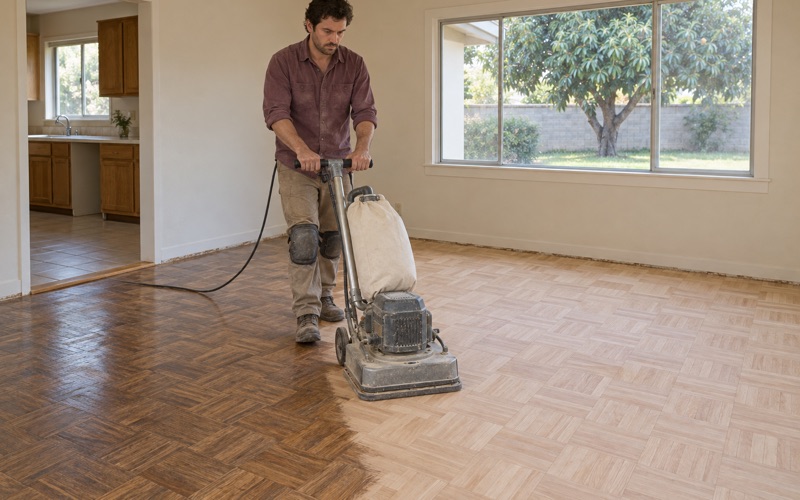
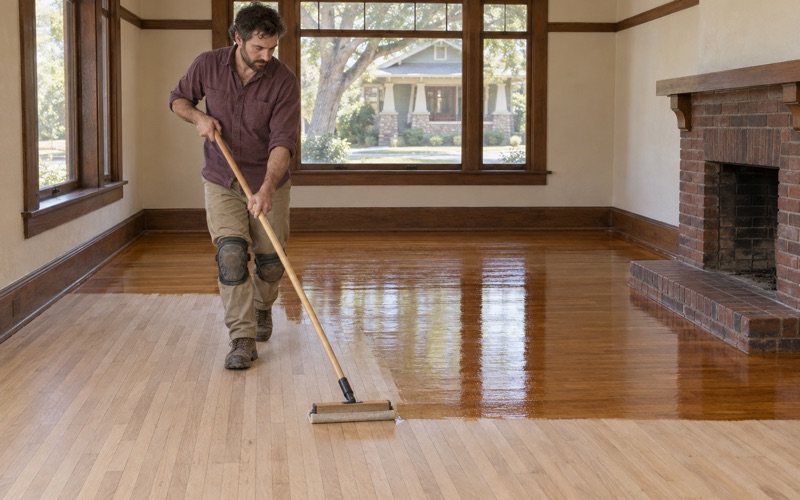
Layers of earlier work show up once the drum sander opens the surface. Oil-modified polyurethane from one decade, a waterborne coat from another, patches of wood filler, pet urine stains that went dark under the finish: each needs its own decision, and some stains in red oak or white oak will not sand out. Those boards get cut out.
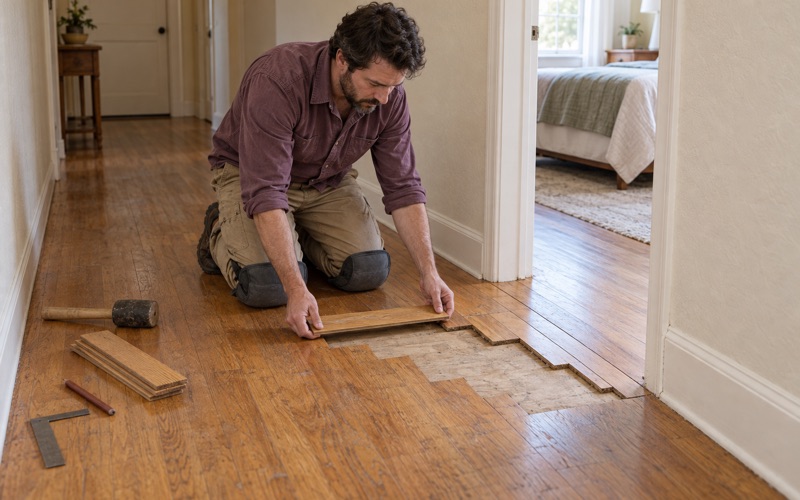
We would rather repair and weave in matching boards than tear out a sound floor, so a stained section near a back door or under a former pet bed is usually handled board by board. The grit sequence, water popping before stain, and the choice of floor stain all follow once the repairs are settled.
Choosing a finish that fits the air basin
Citrus sits in the South Coast Air Quality Management District, where Rule 1113 limits the VOC content of wood coatings. We choose finishes that fit that limit, such as a waterborne polyurethane or a hardwax oil, and match sheen level to how the room is used. A matte or satin sheen hides the scuffs of a busy hallway better than gloss.
Cure time is written into the schedule before we start. A waterborne finish lets light foot traffic back sooner than an oil-modified one, but rugs and heavy furniture wait longer, and we give the household those dates in writing so nobody guesses when the dining table can return. Every room gets its own date.
Replacing a Floor Someone Else Installed
Finding out what is underneath
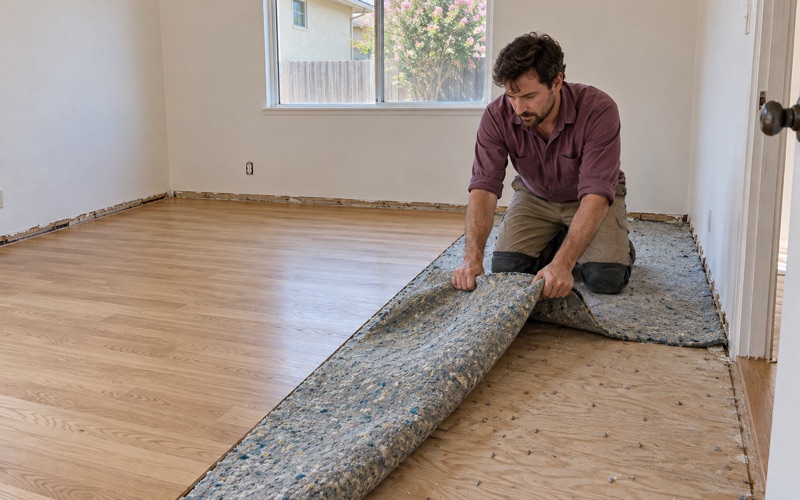
When a floor is past saving, the first job is learning what sits beneath it. We do not assume a covering, an adhesive or a subfloor type in any Citrus house; we lift a corner, pull a vent cover or open a closet edge and look. Black mastic, tack strip, staples and old glue each change the removal plan.
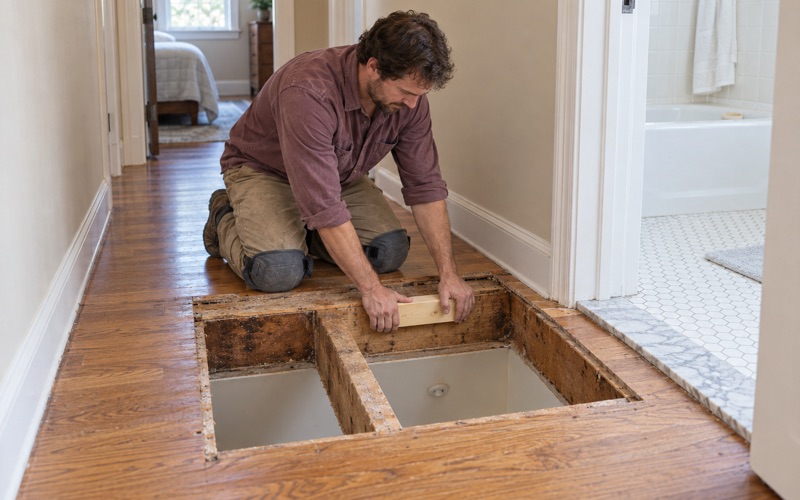
The subfloor gets the same attention, whether it turns out to be plywood, planking or concrete. Soft spots, squeaks and board gapping in an older house can point to movement or past moisture, and we would rather find an old plumbing leak during the estimate than after new boards are down. Where water damage is involved, we confirm the source is fixed before any board is replaced.
Solid, engineered or a match to what stays
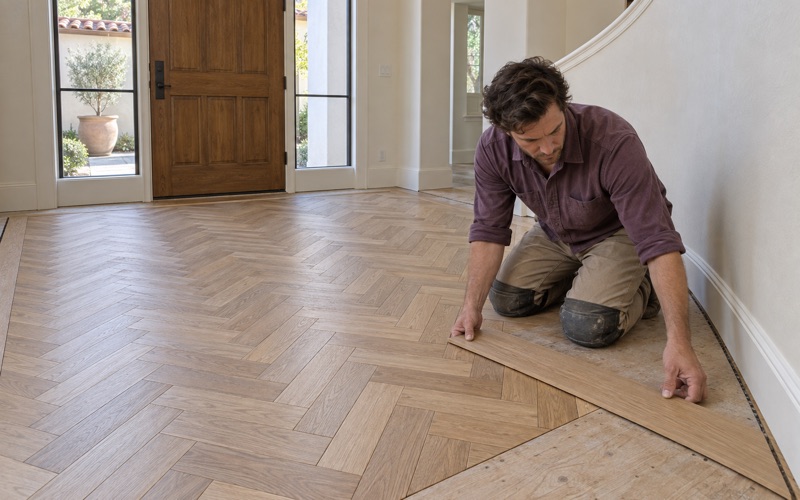
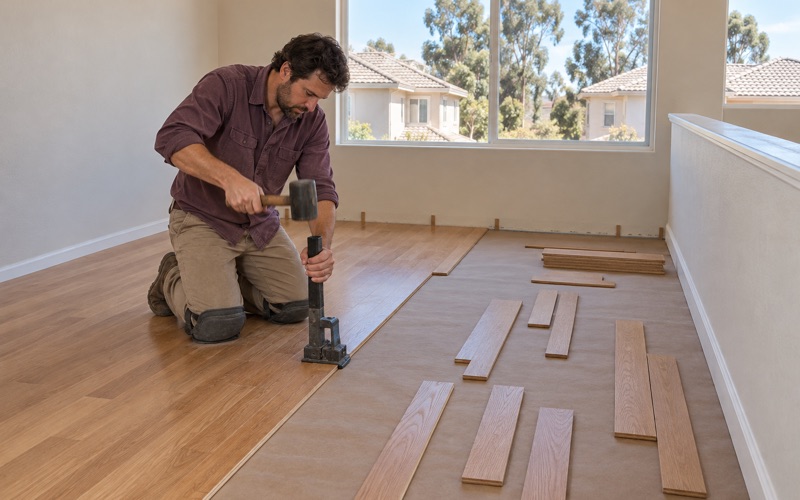
Replacement in an existing house often means tying new wood into old. If the living room keeps its boards and the bedrooms get new ones, we match species, width and cut, whether that is plain sawn red oak or rift sawn white oak. Where nothing has to match, hickory’s higher Janka hardness suits a household with large dogs.
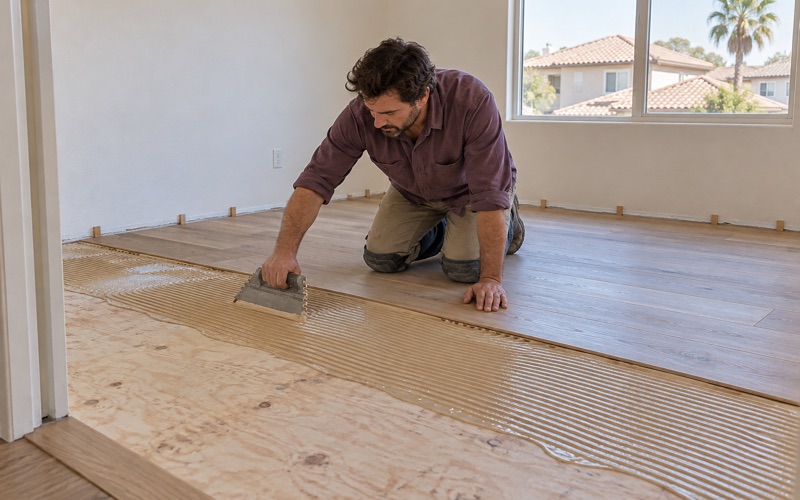
Engineered flooring with a plywood core suits rooms over concrete or where moisture readings run higher, and we test any slab for moisture and write the reading down before a glue-down installation. Over a wood subfloor, a nail-down solid hardwood floor with flooring cleats remains the long-lived choice, because it can be refinished for decades.
Water, smoke and insect damage
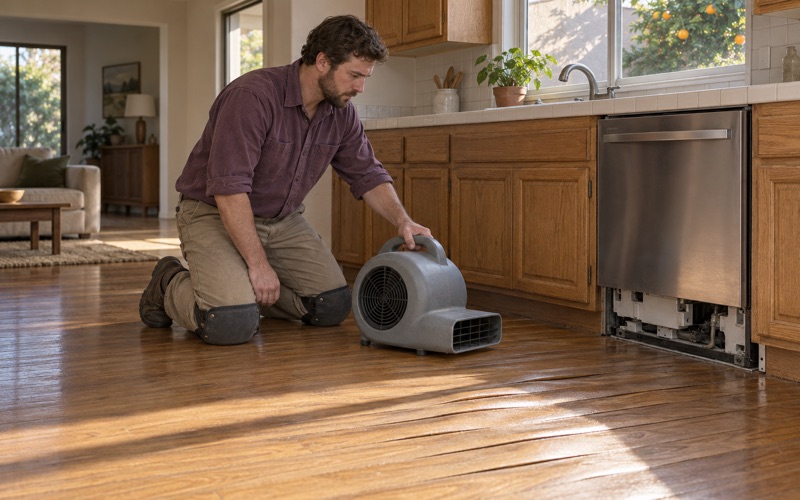
Some replacements start with a loss rather than a preference. When a floor has cupped, crowned or buckled after a leak, or carries smoke and ash from a fire, we document the damage room by room with photos and moisture readings so the adjuster sees the same floor we do. A cupped floor that is still wet is not ready to sand flat.
Insect damage is its own case. Drywood termite frass near a baseboard or powderpost beetle holes in a board mean we stop and bring in the right specialist before any wood is replaced, since new boards laid near an active infestation are at risk too. We note it for the claim or the pest report as well.
Planning Around County Rules in Unincorporated Citrus
No city hall, so the county answers
Because Citrus has no city government, the questions a city would normally answer go to Los Angeles County. Building & Safety at Los Angeles County Public Works serves the unincorporated areas and references Title 26 of the County Code, and its Service Locator tells a homeowner which district office handles a given address. We check with that office on scope rather than guessing for a client.
Seismic work sits outside a flooring job, but it is worth knowing that ZIP codes 91702 and 91722, the two that serve Citrus, both appear on the 2025 Earthquake Brace + Bolt list. Eligibility there runs on ZIP code alone, so an owner weighing a retrofit can check it before booking floor work.
Repair grants and the Mills Act
The Los Angeles County Development Authority runs a Handyworker Program offering minor-repair grants of up to $9,000 for owner-occupied homes in unincorporated parts of three supervisorial districts. Its First District list of communities does not name Citrus, so whether a particular house qualifies has to be confirmed by address with LACDA rather than assumed. We point owners to the agency and leave that answer to it.
The county’s Mills Act program applies to qualified historical properties in unincorporated areas, and the Department of Regional Planning is working on a broader preservation ordinance for those areas. We have not found a designated historic property in Citrus, but an owner pursuing that route should ask how interior floors are treated before choosing materials.
Sequencing a whole-house job
In a detached Citrus house, a whole-house refinish or replacement usually runs in zones. We start with bedrooms or the rooms farthest from the kitchen, keep one path open to a bathroom, and finish the main living area last, so a family can often stay in the house through most of the job.
Transitions get settled early. Where a refinished oak hallway meets new engineered planks, or wood meets tile at a kitchen doorway, we plan the reducer, T-molding or flush joint before the first board is sanded, and baseboard and quarter round are reset as each zone closes. That keeps the thresholds from turning into trip points.
- 20+ Years in Wood Floors
- Build Year Checked First
- Written Cure Schedules