Upland Wood Flooring brings more than 20 years of work to wood flooring in Commerce, and we start every job by learning which house we are standing in before we quote anything. Refinishing, board repair, stairs, water-damage replacement and new installation all begin the same way here: confirm the build year, measure what the existing floor can still take, and write down what we find.
That habit matters because no two homes in the city came from the same plan. A living room with original strip oak under carpet, a hallway patched with a different species, a bedroom where an earlier owner floated laminate over the boards: we plan for each, sometimes in one house. Our first visit sorts out which layer is which and what each one needs.
We also keep the practical side plain. Finishes are chosen to meet the wood coatings limits in SCAQMD Rule 1113, dust is contained at the doorways, and every household gets a written cure schedule so the rooms can be planned around the work instead of guessed at.
Eleven Neighborhoods, Eleven Separate Developments
Commerce’s housing element, adopted in 2013, lists eleven residential neighborhoods: Ayers, Bandini, Bristow, Northwest, Darwell, Ferguson, Lanto Pacific, Rosewood, Rosini, The Village and Veterans Park. The city notes that each name typically reflects the housing development inside it. For a floor job, that framing is more useful than any citywide average, because houses built as one development often share materials and details, while the next development over may not.
Reading a Floor by Its Development
When we walk a house, the neighborhood name tells us which development it belongs to and which of its neighbors to compare it with. If the homes on a street went in as one development, the board width and species we found in one are a reasonable first guess for the next. We still confirm it by lifting a vent cover or threshold rather than assuming.
That check decides the repair plan. Red oak and white oak take stain differently, a quartersawn board shows a different grain face than a plain sawn one, and a patch that ignores either stands out the moment the finish goes on. We would rather repair and match original boards than replace a whole room, and matching starts with knowing what was laid.
A Mid-Century Housing Stock
Census estimates put 52.2 percent of Commerce’s housing units in the 1940 to 1959 window, and the same estimates show no units built in 2010 or later. Most houses we enter here are therefore decades old, and many of their floors have been sanded before, with thresholds, heat registers and door casings fitted around the original boards.
Age sets two limits before any sanding. A house from that era predates 1978, so we confirm the build year and plan lead-safe work practices under the EPA RRP rule wherever old paint on baseboard, stair risers or trim could be disturbed. And a solid hardwood floor that has been sanded several times has less wood above the tongue and groove, which we measure first.
Looking for wood-flooring closer to Artesia? See Wood-Flooring Services in Artesia.
The Northern Neighborhoods and the Center of Town
The element places four neighborhoods at the city’s northern end. Ayers and Bandini sit in the northwestern portion, Bristow occupies the northern tip where the I-710 meets the I-5, and Northwest lies at that same tip, west of Bristow. Ferguson runs through the northern half along the railroad tracks, and three more fill the middle of the city.
Ayers, Bandini, Bristow, Northwest and Ferguson
Homes this close to busy freeways and a rail corridor tend to see fine grit carried in on shoes. On a floor it shows up as a dull traffic lane from the entry to the kitchen, with scratches cut through the finish but not yet into the wood. Caught at that stage, a screen and recoat can often restore the lane without a full sanding.
Northwest carries its own note from the city, covered in the survey section below. Here it is enough to say we treat every house in these five neighborhoods on its own terms. Two homes a short walk apart can be in very different shape, and the plan for each floor comes from what we measure inside, not from the name on the map.
Rosewood, Rosini and The Village
Rosewood sits at the center of the city beside the I-5, Rosini lies east of Atlantic Boulevard, and The Village is south of Atlantic and Eastern Avenues. The element gives each a place but not a date, so we never assume one neighborhood’s floors are older than another’s. The build year comes from the house itself and its property records.
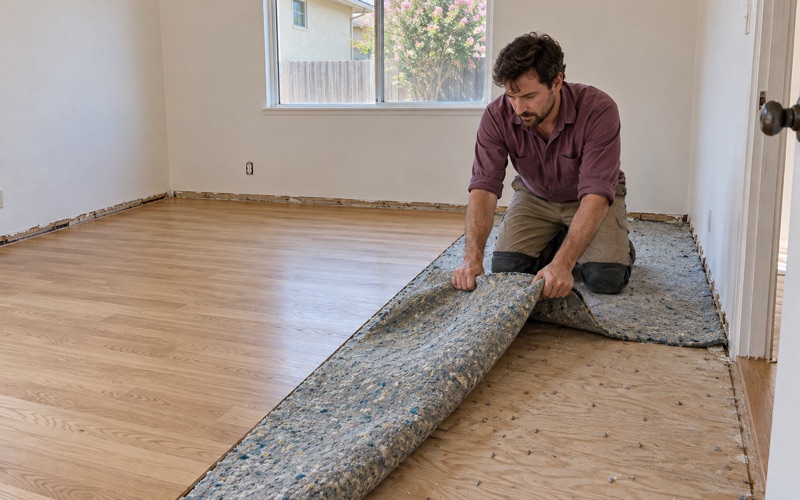
In an older house anywhere in the center of town, the hardwood may have been covered rather than refinished. Carpet over tack strip, vinyl over black mastic, or a floating floor laid across old boards can each hide a sound surface. We test black mastic before anyone scrapes it, and tack strip holes get wood filler matched to the species.
Attached Homes and Apartments
Not every Commerce home is a detached house. Census estimates count 411 attached units and several hundred more in buildings of five units or larger. Where a building has an association or a landlord with rules about flooring, we check those rules and any approval before ordering material, since a floor chosen first and approved second can mean a return trip.
The Southern Edge: Darwell, Lanto Pacific and Veterans Park
Along the south side of the city, the element places Darwell on the southwestern border, Lanto Pacific on the southern boundary and Veterans Park at the southern tip. What we learn about any one house there comes from walking it, starting at the entry and working room by room.
Testing Before Anything Is Glued Down
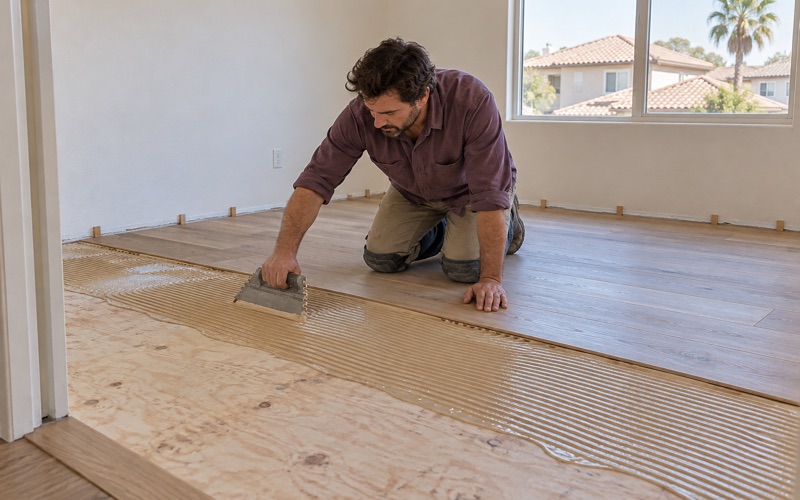
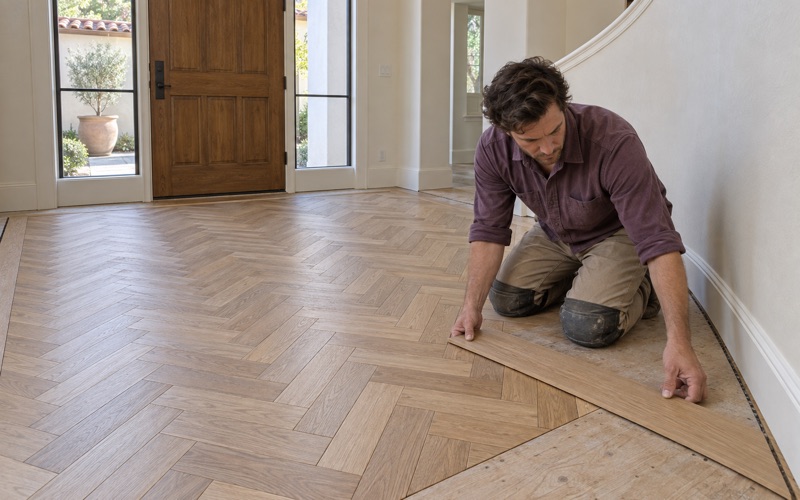
Where a house or an addition sits on a concrete slab, we test that slab for moisture before gluing down an engineered floor, using in-situ relative humidity testing or a calcium chloride test and writing the reading down. A reading over the adhesive maker’s limit means a moisture membrane or a urethane flooring adhesive rated as a vapor retarder, not a hopeful install.
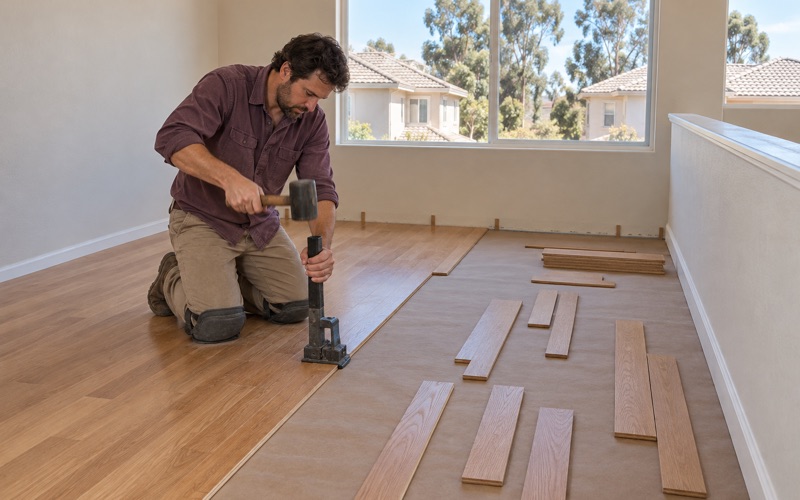
Over a wood subfloor the checks change. We read the subfloor and the new boards with a moisture meter, let solid hardwood acclimate, and leave the expansion gap the NWFA Installation Guidelines call for at walls and thresholds. A nail-down installation with flooring cleats suits most solid strip, while an engineered plank may float or glue depending on the room.
Water Damage and Replacement Boards
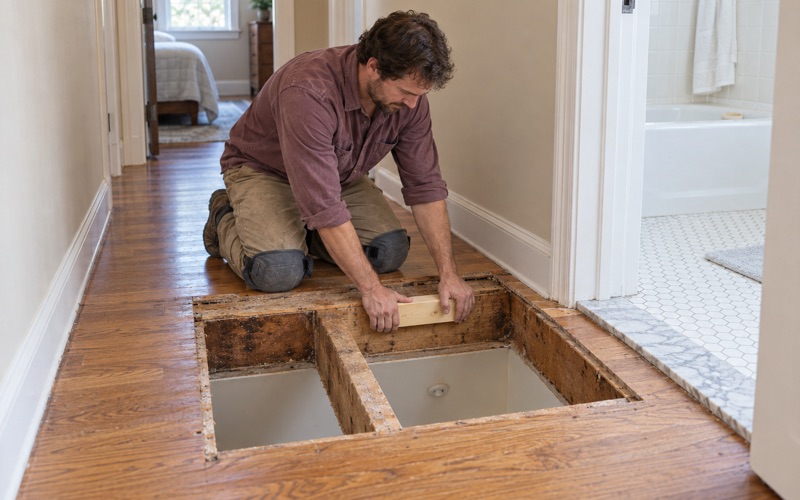
Cupping, crowning and buckling tell us water got under or into a floor, but not where it came from. Before we replace a single board, we find the leak source, whether a supply line, a slab leak or a failed seal at a tub, and confirm with a moisture reading that the area has dried. Replacing boards over an active leak just repeats the damage.
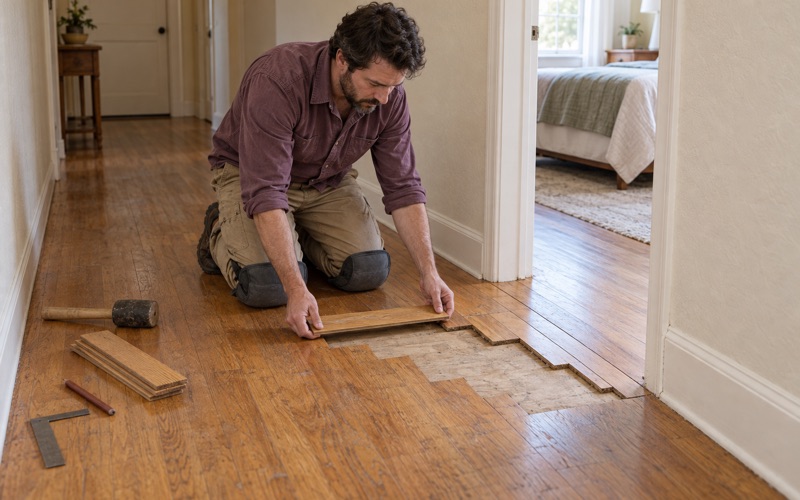
When an insurance claim is involved, we document water, smoke or ash damage room by room so the adjuster sees each space separately rather than one lump figure. Replacement boards are then woven into the existing field, staggered across the joints, and sanded and finished with the surrounding floor so the repair reads as one surface.
Stairs and Transitions
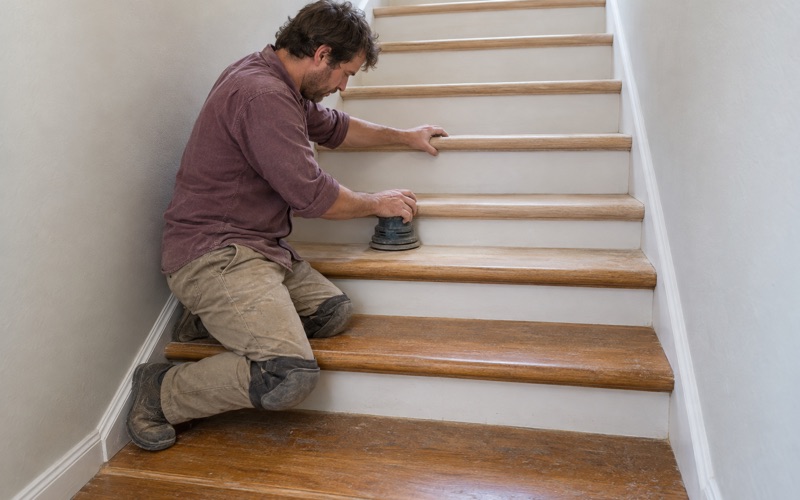
A staircase takes more hand work per foot than any open room. We price stairs by the tread and riser, since each stair nosing, return and skirt edge needs sanding and finishing that a square-foot rate would hide. Transitions get the same care, with a reducer, T-molding or quarter round fitted so a refinished room meets the next one cleanly.
What the City’s Condition Survey Found
The housing element reports that a condition survey, carried out during the planning period before 2014, identified approximately 74 units needing rehabilitation and 10 needing replacement. The Northwest neighborhood held the highest percentage of substandard and dilapidated units, with over 20 percent in some state of disrepair. The same document says the city’s housing stock is, in general, in good shape.
A Dated Survey, Not a Floor Finding
We read those figures carefully. The survey rated whole housing units, its method is not described, and it predates the 2014-2021 element, so it says nothing about any floor today. The city also reports addressing a number of units through its Substantial Rehabilitation Program and smaller grant programs, which means some of the houses counted then may look very different now.
What the survey does tell us is that repair work in Commerce was already a city concern more than a decade ago, and that the element flags units built before 1969 as the ones of general concern. For a floor, that points us toward the order of work rather than toward any conclusion about a particular street.
Repair First, Then Finish
In a house that needs rehabilitation work, the floor should usually come last. Plumbing, roof or window repairs can all put water on boards, so we schedule refinishing after that work is done. Before then, we can repair damaged sections, stabilize hollow spots and replace boards where drywood termite frass or powderpost beetle holes show damage.
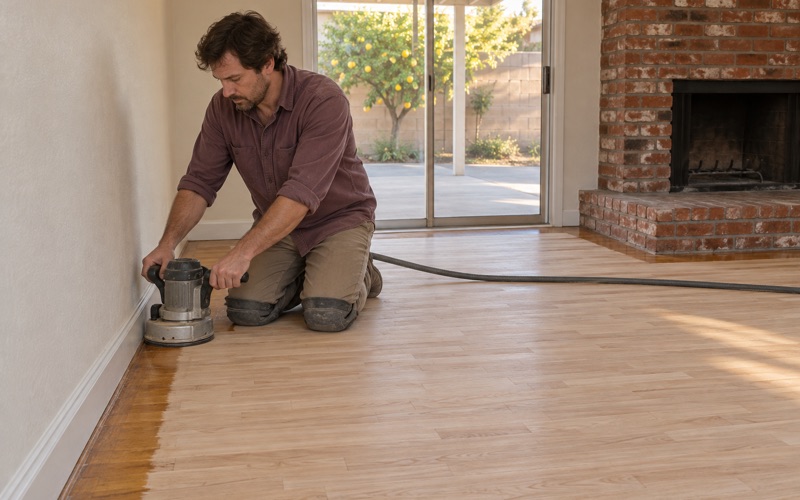
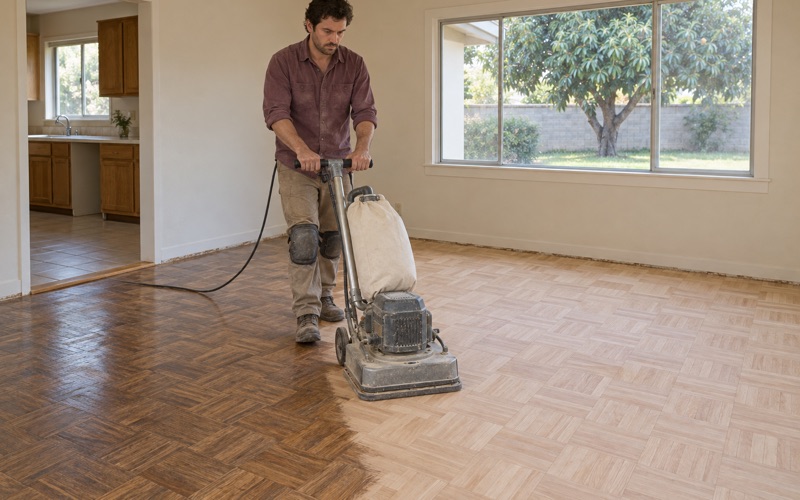
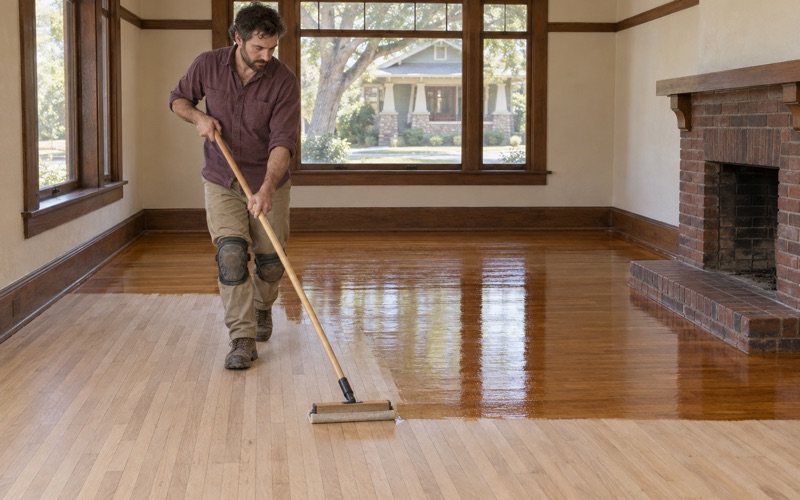
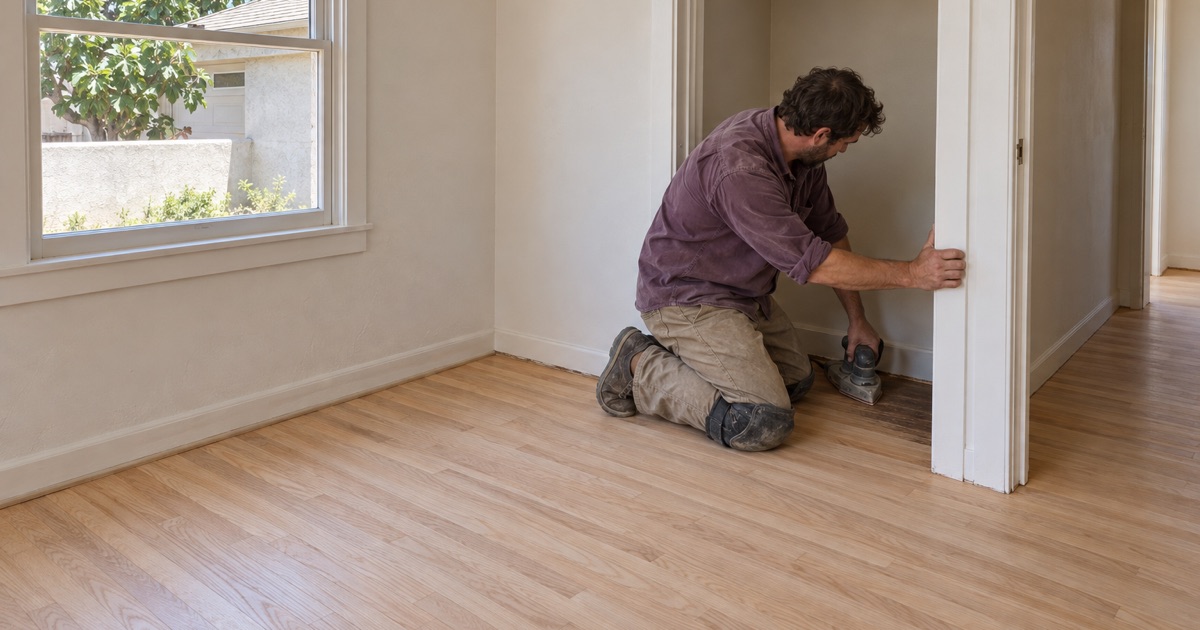
Once the house around it is sound, the refinish itself follows a steady path. We check the engineered wear layer or remaining solid wood first, run a grit sequence with a drum sander and orbital sander, trowel fill open joints, and water pop the surface if a floor stain is chosen. The finish, whether waterborne polyurethane or hardwax oil, then goes down at the sheen level the household picks.
Pet Stains, Gaps and Worn Finish
Not every older floor needs rehabilitation-level work. Pet urine stains that have gone gray or black in the wood usually mean replacing those boards, while board gapping that opens in dry months and closes in damp ones is seasonal movement we usually leave alone. Delamination on an engineered plank is different: a peeling top layer cannot be sanded back, so the answer there is replacing the affected planks.
Species decides how much abuse a floor shrugs off. Red oak and white oak rate close together on the Janka hardness scale, hickory rates well above both, and maple is hard but shows stain unevenly. When a room needs new boards rather than a refinish, we walk through those tradeoffs with the household before anything is ordered.
- 20+ Years in Wood Floors
- Build Year Checked First
- Written Cure Schedules