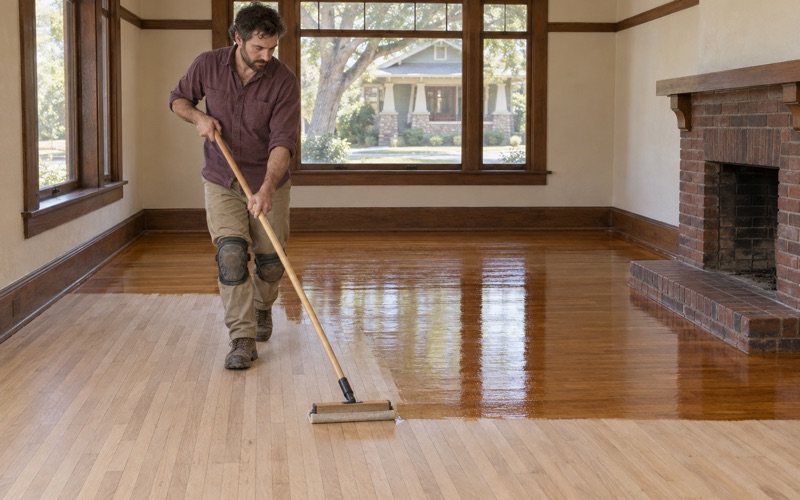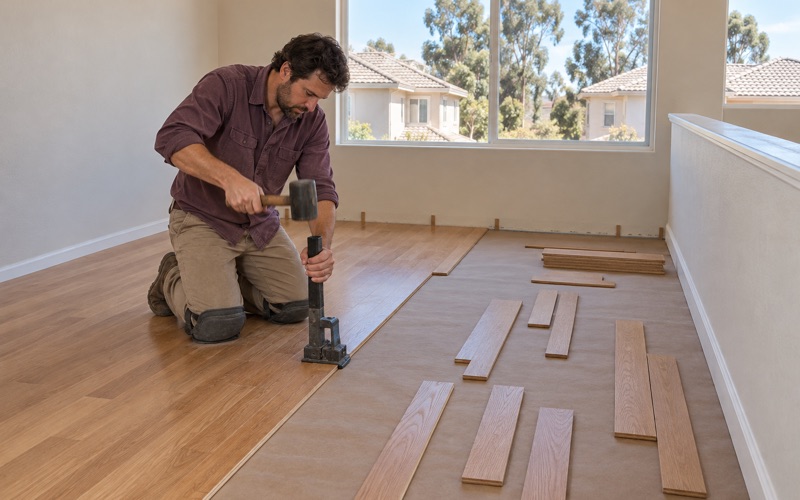
Upland Wood Flooring brings more than 20 years of experience to wood-flooring in Fontana, where the work centers on detached houses built in the last four decades and the owners now renewing them room by room. We refinish solid hardwood, install engineered and solid boards, repair damaged sections, and rebuild worn stairs, and every room is priced only after we have walked it.
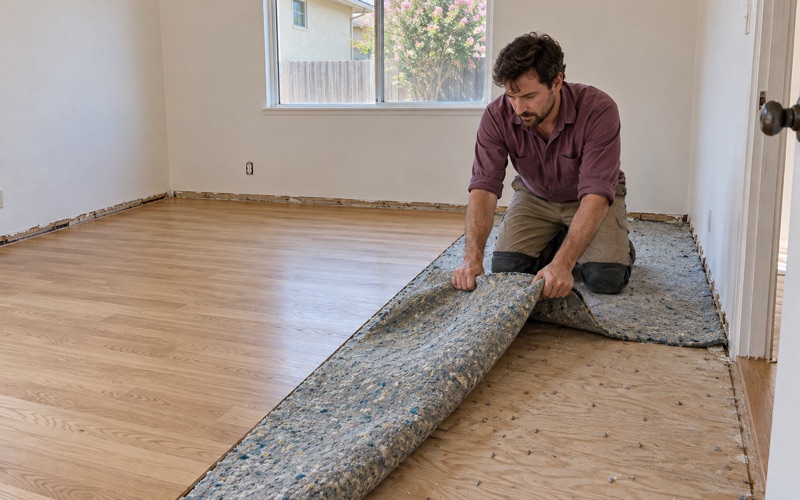
A floor project in a house this age usually starts with a question about what is already down. It may be oak hidden under an older covering, engineered planks from an earlier remodel, or a bare subfloor waiting for wood. We sort that out on the first visit, measure what the existing material can take, and write the plan down before anyone orders boards.
Households here also plan around the work itself. We keep sanding dust contained, hand over a written cure schedule so the family knows which rooms open on which day, and choose finishes that meet South Coast AQMD Rule 1113’s limit for wood coatings, the rule that governs what can legally be applied in this air basin.
Floors in Fontana’s 1980s, 1990s and 2000s Houses
What the Census Counts Show
Census figures show how young Fontana’s housing stock is. The American Community Survey 2024 five-year estimates count 59,522 housing units in the city, and 42,770 of them, 71.9 percent, were built in 1980 or later. The single largest decade is the 1980s, with 14,452 units, and another 12,249 were added from 2000 through 2009.
Put another way, 32.0 percent of all units date from 2000 or later. That places a typical Fontana floor job in a house old enough for its first flooring to have worn through, yet new enough that the work is usually a renewal rather than a restoration of original boards. Knowing which one we are facing shapes the whole estimate.
Detached Houses, Room by Room
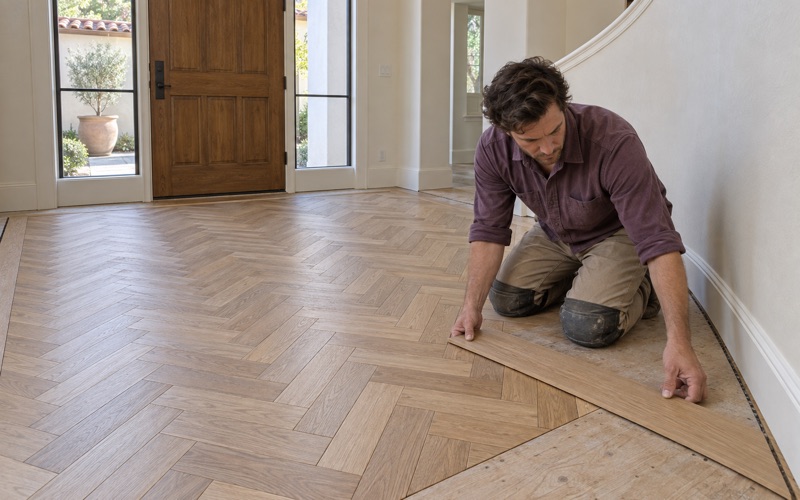
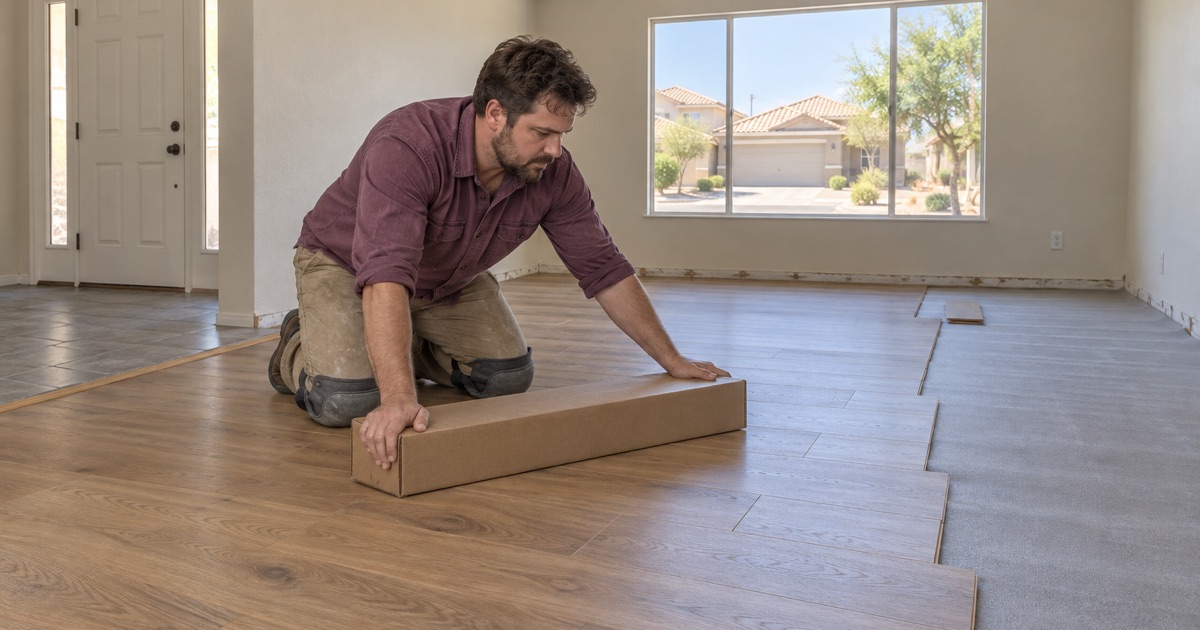
Ownership here is overwhelmingly single-family. Of 38,997 owner households, 36,119, or 92.6 percent, live in a detached house, so most owners decide every room, hallway and staircase for themselves. That freedom can turn a one-room refinish into a plan for continuous wood from the entry through the living areas, with reducers only where the floor meets tile.
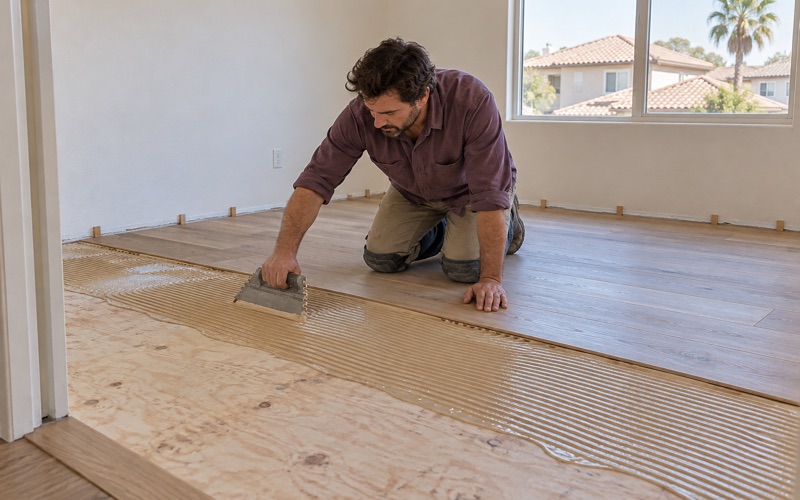
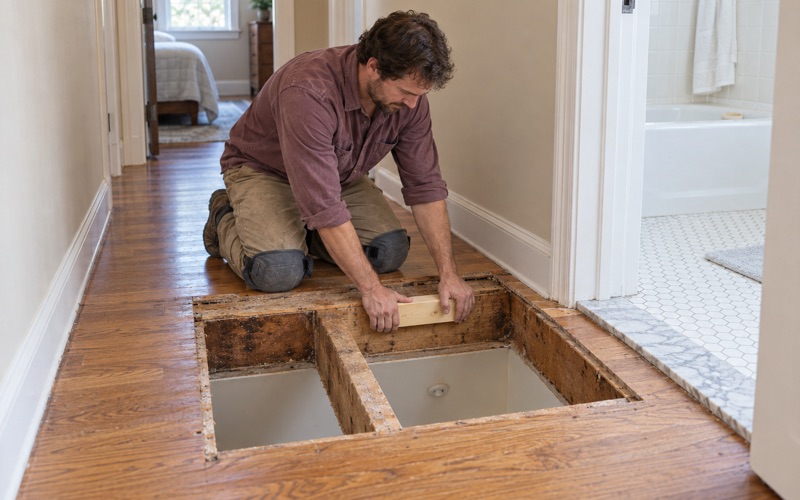
A continuous run changes the preparation. Before we lay one board we check the subfloor for flatness across every room it will cross, and where the house sits on concrete, we take a moisture reading on the slab and record it before any engineered floor is glued down. Where it sits on wood framing, we look at the floor joists and the subfloor for movement first.
Choosing Wood for a Newer House
Owners renewing a house from this period usually weigh solid hardwood against engineered planks. Solid tongue and groove boards can be sanded many times over their life, while an engineered floor with a plywood core stays more stable across seasonal swings. Red oak and white oak remain the common choices, and hickory or maple suit busy households where Janka hardness matters.
Fontana falls in the National Weather Service forecast zone covering the San Bernardino and Riverside County valleys, the Inland Empire, and wood here still swells and shrinks with seasonal humidity. We acclimate boards inside the house before installation, leave a proper expansion gap at the walls, and explain how dry-season board gapping differs from cupping caused by trapped moisture.
Looking for wood-flooring closer to Eastvale? See Wood-Flooring in Eastvale.
The City’s Home Repair Program and New Flooring
What the Program Lists
The City of Fontana Housing Department runs a Housing Rehabilitation Program for owner-occupied single-family dwellings, and its published list of eligible repairs includes new flooring, with the examples given as carpet, tile, etc. The same list names paint, window replacement, kitchen cabinets, bathroom remodels, roof replacement and electrical repairs, so flooring sits among the ordinary work of keeping a house livable.
We want to be plain about what that line does and does not say. It names carpet and tile as examples; it does not say the program pays for hardwood, and homeowner reimbursements are not allowed. We are not a program contractor, and the Housing Department, not us, decides what qualifies under its guidelines for any given house.
Grants, Loans and Who Qualifies
The program offers a one-time grant of $5,000 and loans of up to $20,000 at 0 percent interest, repaid when the house is sold, refinanced or transferred. Seniors 62 and older and very low-income households can receive a $10,000 grant instead. Eligibility follows HUD income limits at 80 percent of area median income, which for 2026 run from $68,900 for one person to $129,900 for eight.
If an owner qualifies and the city approves flooring, the material choice still sits inside the program’s rules, not ours. Where an owner plans wood elsewhere in the house with their own money, we price that work separately and in writing, so nobody confuses what the city funds with what the household is paying for itself.
Rental Houses and Older Fontana Homes
Whole Houses for Rent
A large share of Fontana’s renters live in a whole house rather than an apartment. Of 19,365 renter households, 8,807, or 45.5 percent, rent a detached house, so many landlords here own property with the same hallways, bedrooms and stairs an owner-occupied home has. Those floors take tenant wear, and they tend to come due at one moment: between leases.
Turnover work runs on a calendar the owner does not fully control. We scope a vacant rental house quickly, separate what a screen and recoat can save from boards that need sanding or replacing, and put the cure time in writing so the owner can set the next move-in date. Pet urine stains, deep scratches and gouges near entries usually decide which rooms need more than a fresh coat.
Houses From the 1940s Through the 1970s
Not every Fontana house is recent. The same Census tables put 28.1 percent of units before 1980, and the 1950s alone account for 5,209 of them. The city was founded in 1913 as a farming community, Henry J. Kaiser built his steel plant in 1942, and Fontana incorporated on June 25, 1952, a decade that still shows plainly in the housing count.
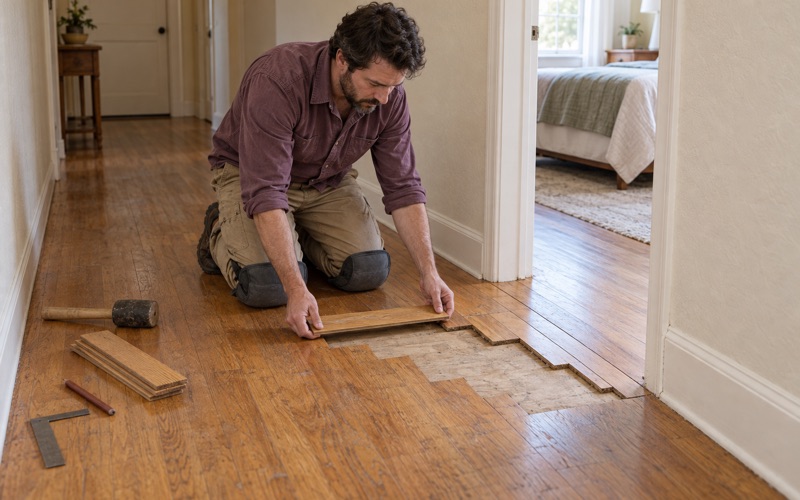
In these older houses we slow down. Original oak strip or parquet may survive under carpet or vinyl, and where it does, we repair and match boards rather than tearing the whole floor out. We also check for black mastic from older tile, hollow spots where boards have loosened, and the fine pellets of drywood termite frass before quoting any sanding.
Lead and the Build Year
Any house built before 1978 may carry lead paint on baseboards, stair risers or door casings that a floor job disturbs. We confirm the build year before sanding begins, because the EPA’s RRP rule reaches paint disturbed in those homes, and we plan the trim work and dust containment around that answer rather than discovering it halfway through a room.
Owners worried about lead in an older house have a separate city resource. Fontana’s Lead Hazard Reduction program offers grants of up to $30,000, and unlike the rehabilitation program it covers owner-occupied and renter-occupied properties alike. That makes it relevant to a landlord preparing an older rental house between tenants as much as to a family living in one.
Planning a Floor Project in a Fontana House
Refinish, Recoat or Replace
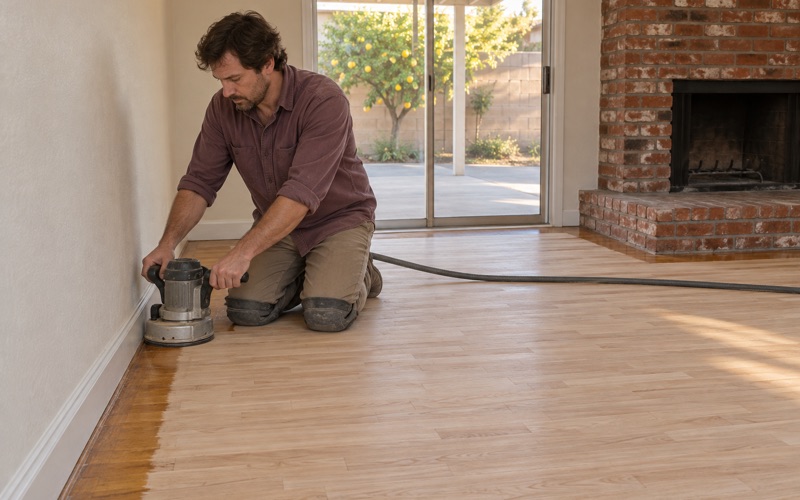
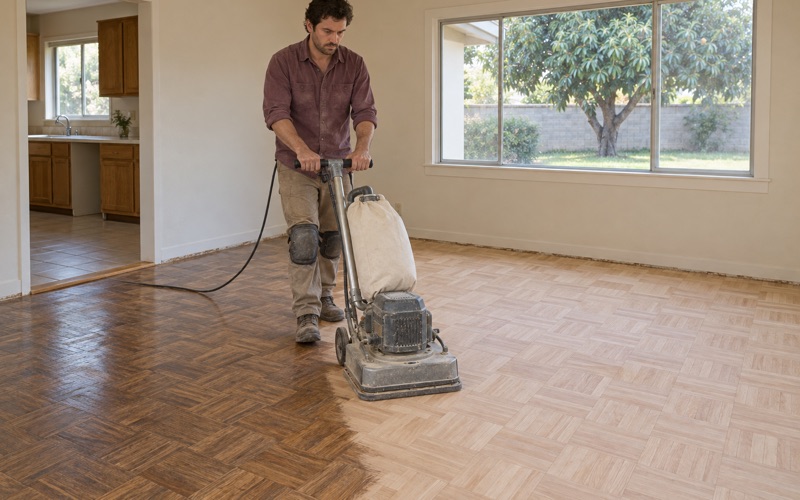
The first decision is how much the existing floor can give. A solid floor with sound boards can usually be sanded through a full grit sequence with a drum sander and finished again, while a floor that is only dull may need nothing more than a screen and recoat. For engineered planks, we measure the wear layer before promising any sanding at all.
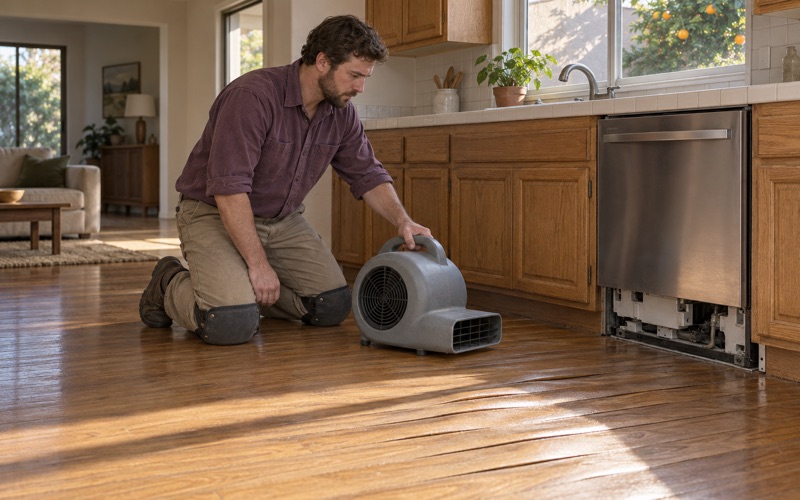
Replacement makes sense when boards are cupped, crowned or buckled past recovery, or when an engineered floor shows delamination. If water caused the damage, we find the leak source and take a moisture reading before new boards go in, because a slab leak or a plumbing drip left unresolved will ruin the replacement just as quickly as it ruined the original.
When a floor is damaged by water, smoke or ash, we document the condition room by room, with photos and moisture readings, so the adjuster sees the same evidence we do. That record also protects the owner later, because it shows which boards were affected and which were sound before any replacement began.
Finishes, Stairs and Scheduling
Finish choice shapes both the look and the timeline. Waterborne polyurethane dries clear and cures faster, oil-modified polyurethane warms the color of oak, and hardwax oil gives a low sheen that is simple to spot repair. We talk through sheen level with each household, since a satin finish hides the dust and scuffs of a busy house better than a gloss.
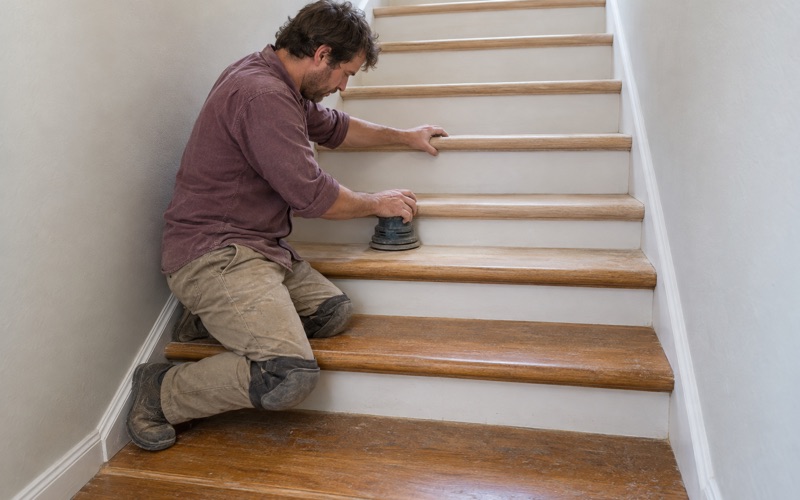
Where a house has a staircase, we quote stairs by the tread and riser rather than hiding them in a square-foot figure. Each tread gets its own nosing detail, and risers are finished or painted to suit the trim. Quarter round, baseboard and T-molding at doorways are listed separately so the estimate reads line by line.
Before Work Begins
Permits, inspections and code questions belong to the City of Fontana Building and Safety Division at 8353 Sierra Avenue, which takes applications at its counter or through the Build Fontana public portal. We point owners there for any question about their specific project rather than guessing at an answer the city is responsible for giving.
On the first visit we walk every room, note the build year, and take moisture readings where they matter. The written estimate that follows names the wood, the finish, the stair count and the cure time, so a Fontana household knows which rooms close, for how long, and when furniture can come back. A phased job gets each phase priced on its own.
- 20+ Years in Wood Floors
- Build Year Checked First
- Written Cure Schedules