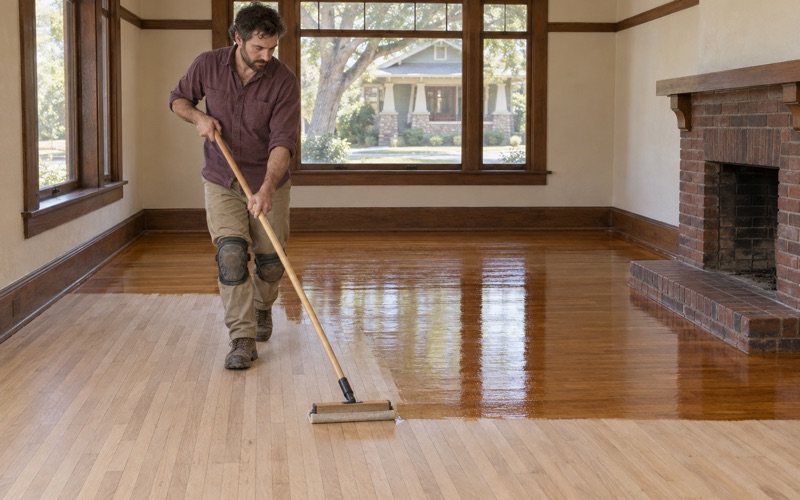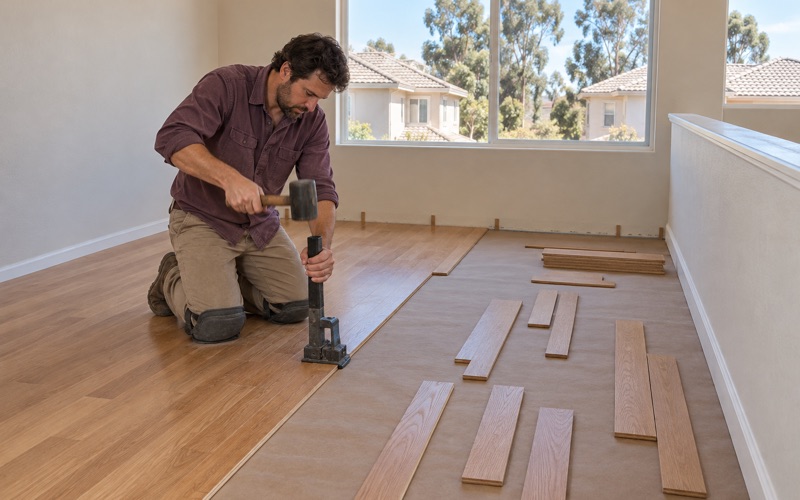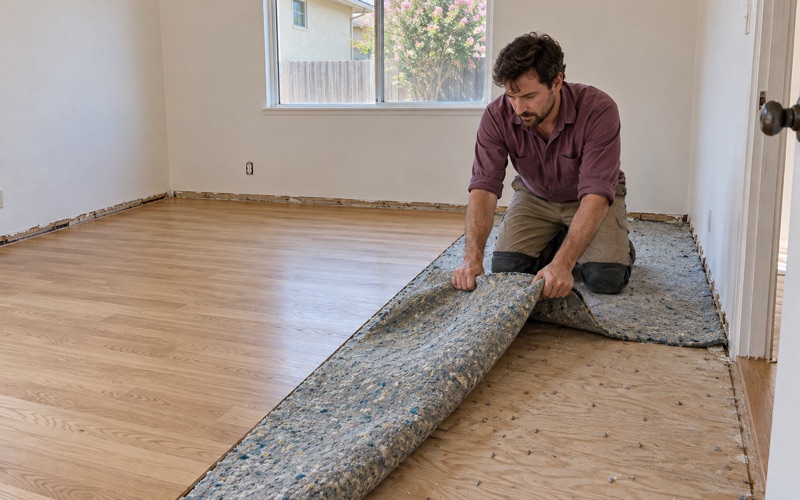
Upland Wood Flooring handles wood-flooring in Glendora with more than 20 years of work behind us, and most of what we see here is renewal rather than first installation. The typical job is an original floor that has been walked on for decades, sanded a few times, and now needs someone to decide how much of it can still be saved.
We start every Glendora visit by confirming the year the house was built, because that answer shapes the whole plan. It tells us whether older paint on baseboards and trim needs lead-safe handling, what species and cut the original boards are likely to be, and how many sandings a floor may already have absorbed before we arrived.
From there the work follows a clear order. We repair and match original boards where they are sound, measure the wear layer before promising a refinish on any engineered floor, and choose finishes that are legal to use in this air basin. Dust containment and a written cure schedule let a household know which rooms are off limits and for how long.
Renewing Floors in Glendora’s 1950s and 1960s Houses
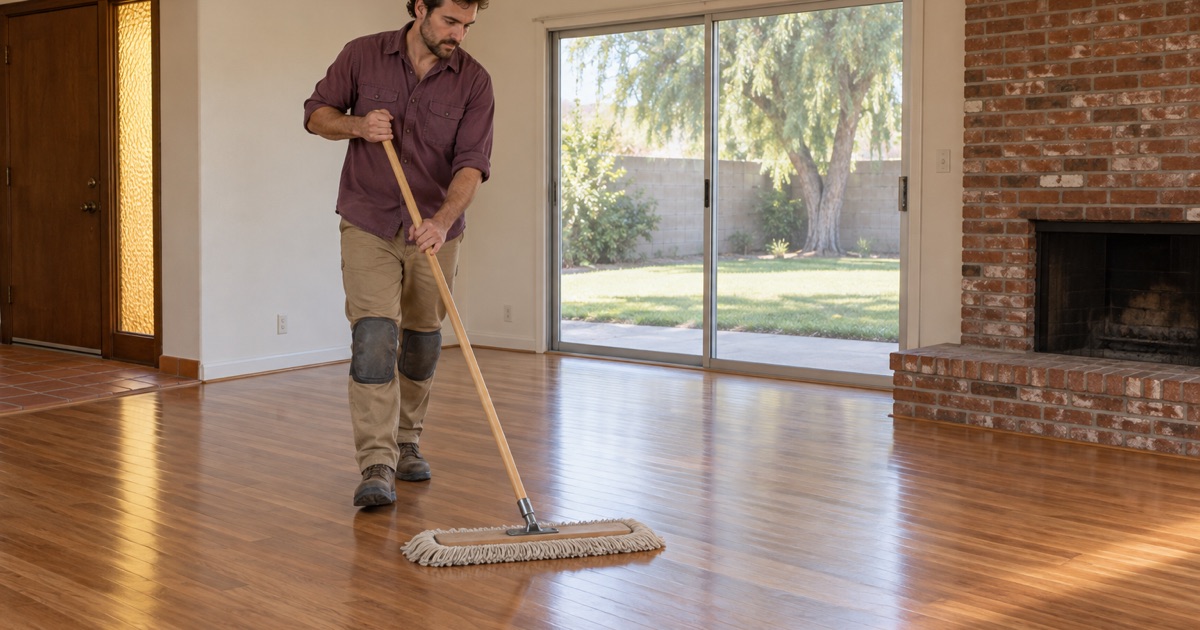
Glendora’s housing stock has a very specific center of gravity. Census figures from the ACS 2024 five-year estimates count 5,499 homes built in the 1950s and 4,270 built in the 1960s, which together make up 56.5 percent of the city’s 17,302 housing units. That two-decade window is where much of the floor work in Glendora sits.
What Mid-Century Floors Are Usually Made Of
Houses from this era were commonly finished with solid hardwood, very often plain sawn red oak or white oak in narrow tongue and groove strips. Some rooms were later covered with carpet over tack strip, or with tile set in black mastic, so the original boards may be hiding under a newer layer. Lifting one carpet corner in a closet is often our first test.
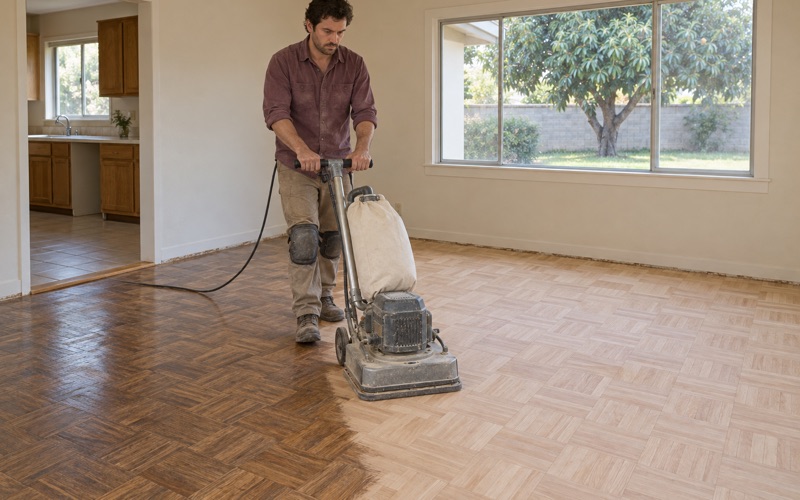
Once the boards are exposed, we look for the marks of past sandings, face nails showing through, and board gapping near exterior walls. A strip floor that has been sanded two or three times can usually take another, but we check the thickness above the tongue at a floor vent or threshold before we say so.
Repair and Match Before Replace
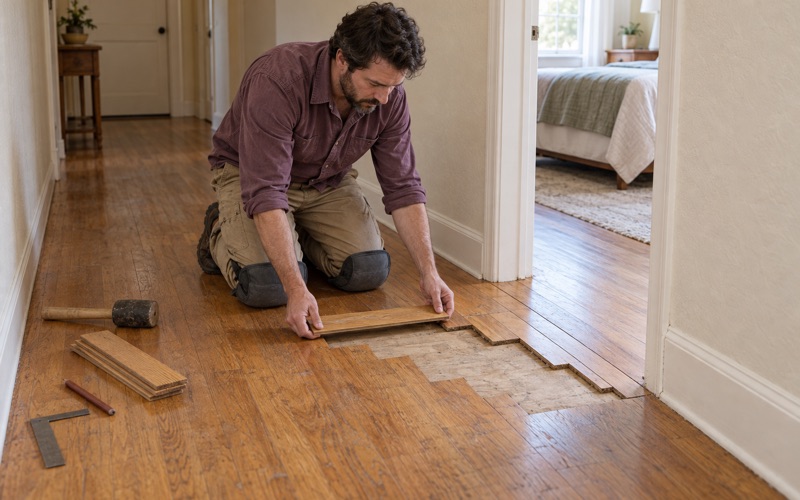
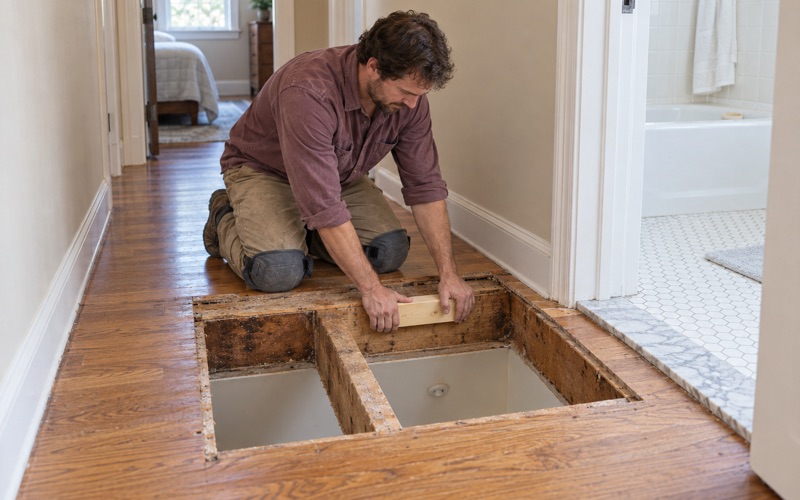
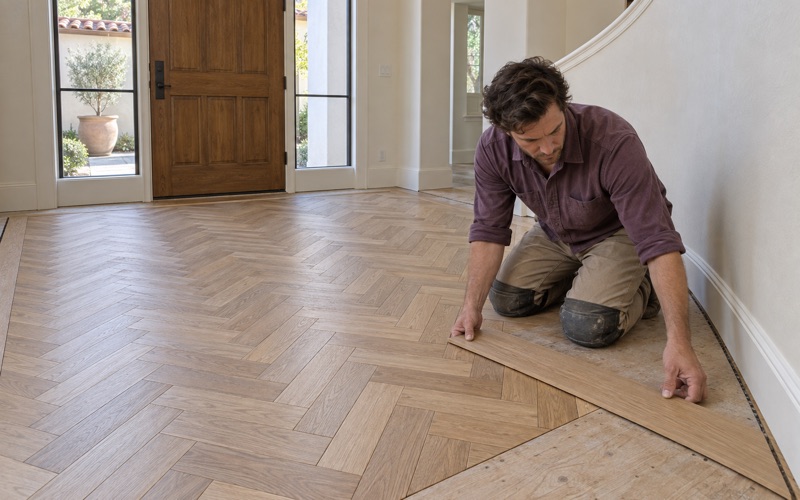
Original boards in a 1950s house are worth keeping when they can be kept. We cut out damaged pieces, weave in reclaimed or new stock of the same species and width, and blend the patch during sanding so it reads as one floor rather than a repair sitting in the middle of the room. Pet urine stains that have blackened the grain are a common reason for a cut-out.
Matching also matters for color. Red oak and white oak take floor stain differently, and a 60-year-old board has aged in a way new lumber has not. Water popping before stain helps the grain take an even, deeper tone. We test stain on sample boards in the room itself, under that room’s light, before the whole floor is committed to one color.
Engineered Floors Added in Later Remodels
Not every floor in a Glendora house is original. Kitchens and family rooms may have been redone decades later with engineered planks, and those need a different approach. We measure the engineered wear layer before we quote a sanding, because a thin veneer over a plywood core or HDF core cannot survive a full refinish and may only take a screen and recoat.
Looking for wood-flooring closer to Charter Oak? See Wood-Flooring Services in Charter Oak.
When a Floor Has Been Down for Over Fifty Years
The City of Glendora’s own 2021-2029 Housing Element puts numbers on how old the housing here has become. As of 2018, it counted about 89 percent of homes as over 30 years old and roughly 65 percent as over 50 years old, and it notes that homes older than 50 years, unless properly maintained, require major renovations.
What the City’s Language Does and Does Not Say
That renovation language is about houses as a whole, not floors specifically, and we do not read it as a floor finding. What it does confirm is the age of the building a floor sits in. A house past 50 years has had time for plumbing, roof, and window problems to reach the boards underneath.
The same document estimates that 2 to 3 percent of Glendora’s housing is substandard and needs replacement, which frames the rest of the aging stock as a matter of upkeep. That fits what an older floor usually needs: not a teardown, but careful diagnosis, targeted repair, and a finish chosen for a house expected to keep standing.
Reading an Old Floor Before Sanding
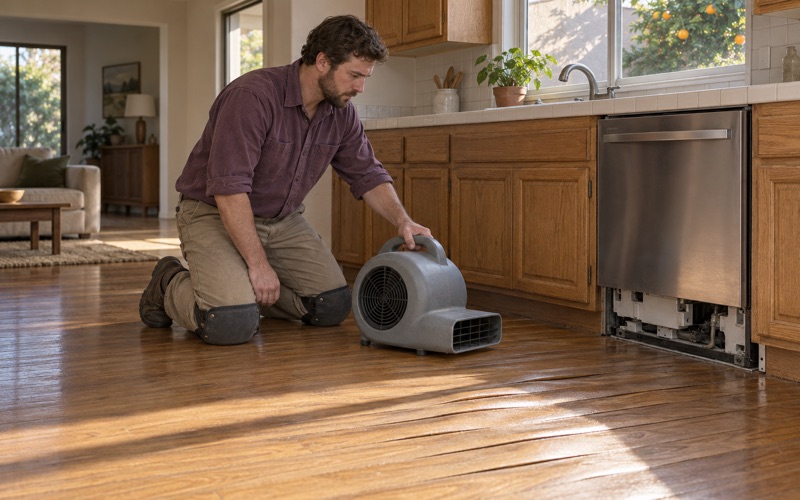
On a floor this old we walk every room listening for hollow spots and looking for cupping, crowning, or buckling. Each tells a different story. Cupping points to moisture below the boards, crowning often follows a floor that was sanded flat while still cupped, and buckling usually means the floor took on water or lost its expansion gap.
We also check for drywood termite frass, the small pellets that collect along baseboards, and for the pinholes powderpost beetles leave in older hardwood. A moisture meter reading on the boards and subfloor goes into our notes before any drum sander touches the floor, so the plan rests on numbers rather than guesses. If a leak turns up, the source is fixed before any board is replaced.
Lead Paint and the Build Year
With 79.9 percent of Glendora’s housing built before 1980, many floors here sit in rooms whose trim may carry paint from before 1978, the cutoff the EPA RRP rule uses. Sanding beside painted baseboards, stair risers, and door casings can disturb that paint, so we confirm the build year first and plan prep and containment around the answer.
Older Homes Near the Glendora Village
Glendora was founded on April 1, 1887, during the Southern California real estate boom of the 1880s, and incorporated on November 13, 1911. George Dexter Whitcomb named it by combining glen with the name of his wife, Leadora. Housing from before 1940 is scarce now, making up only 5.0 percent of units, so we never assume a Village-area floor is that old without looking.
What the Historic District Covers
The city has one designated historic district, a residential neighborhood in the vicinity of the Glendora Village, where alterations need a Certificate of Appropriateness reviewed by the Planning Commission. That commission took on the role in 2012, when the dedicated Historic Preservation Commission was disbanded. We have not seen the city tie that review to interior floors, and we do not suggest it does.
Where a job touches something outside the floor, such as an exterior door threshold or a porch transition, we have the owner check with Planning first. Landmark owners on a Mills Act contract, which runs ten years and renews annually, have agreed to preserve the exterior, so that check matters more for them. Inside, the work stays on the boards, baseboards, and transitions.
Restoring Rather Than Replacing Older Boards
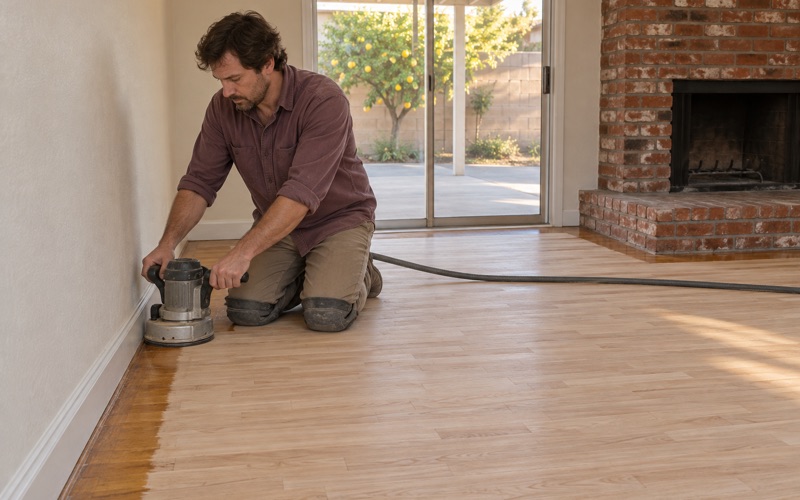
Older homes near the Village deserve the slower path. We set the drum sander to take as little wood as possible, work the grit sequence in stages, and switch to an orbital sander along edges where boards have thinned. Trowel filling closes small gaps and nail holes without the patchy look that heavy wood filler leaves.
For owners who want the character kept, a hardwax oil or a low-sheen waterborne polyurethane keeps an older floor looking its age. Either way, the product we choose has to fit the SCAQMD Rule 1113 limit for wood coatings, and we tell the owner which one is going down and how long it needs to cure.
Foothill Streets and Planning Floor Work With the City
Glendora sits in the foothills of the San Gabriel Mountains, with the South Hills to the south, and its streets run from the valley floor up toward the slopes. Citywide, 86.1 percent of owner households live in a detached house, and that is where most of the floor projects we take on here begin. Detached houses let us stage equipment and containment without sharing walls or hallways with neighbors.
Working in a Very High Fire Hazard Zone
Under the 2025 CAL FIRE maps, the city reports 5,149 acres, or 27.3 percent of Glendora, in a Very High Fire Hazard Severity Zone. The city’s statement does not name the neighborhoods involved, so we do not guess. The designation matters to us less for the floor than for how we handle what the job leaves behind.
Oil-modified polyurethane and hardwax oil leave rags that can heat up as they dry, a hazard anywhere and one we take seriously on foothill lots. Those rags are laid flat or sealed in a metal container and hauled away the same day, never tossed in a yard bin beside dry brush. Sanding dust is bagged and removed too.
Where Building and Safety Fits In
Glendora’s Building and Safety Division works out of 116 E. Foothill Blvd. and handles plan review, inspections, and permits through the city’s Civic Access portal. We leave the permit question to the division rather than answering it from memory, and on projects that touch the subfloor, stairs, or framing we call before we schedule. The division’s number is (626) 914-8222, weekdays from 8:00 a.m. to 5:00 p.m.
Planning the Household Around the Floor
Before sanding starts we seal doorways and vents, run dustless sanding equipment, and hand over a written cure schedule. It lists when each coat goes down, when socks are fine on the floor, when furniture can return, and when rugs can go back, so a family can plan meals, pets, and work around real dates.
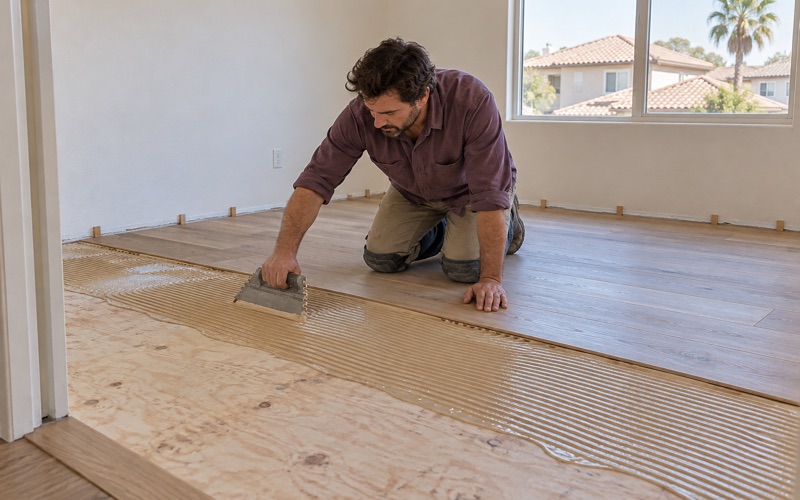
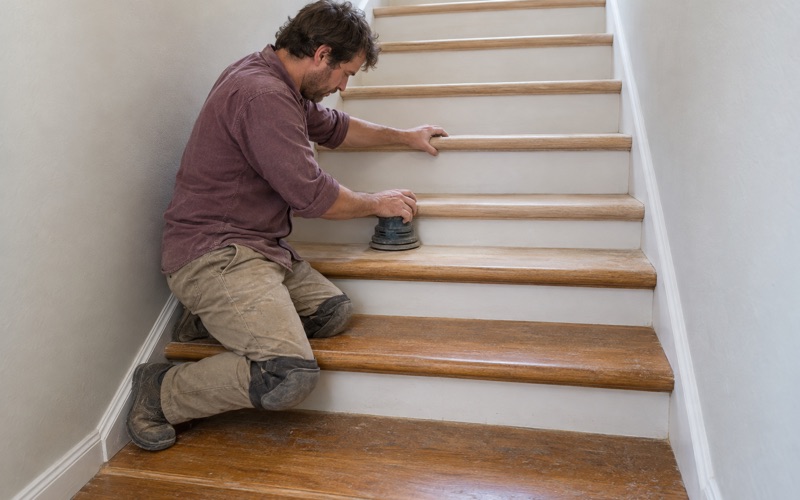
Stairs are priced by the tread and riser, not folded into a square-foot figure, because every stair nosing and riser is its own small job. Where we find a concrete slab under a room, it is tested for moisture and the reading is written down before any glue-down installation. Townhome and condo owners get association rules checked before anything is ordered.
- 20+ Years in Wood Floors
- Build Year Checked First
- Written Cure Schedules