Upland Wood Flooring has put more than 20 years into wood-flooring in Grand Terrace, and most of the floors we see here sit in houses that families have lived in for decades. That shapes the first visit. Before any quote, we ask when the house was built, how long it has been owned, and what has already been done to the boards.
A floor that has carried one household for forty years tells its own story. Traffic lanes run from the front door to the kitchen, finish has worn through at the sink, and older patches may not match the boards around them. We read those marks first, because they decide whether a floor needs a screen and recoat, a full sanding, or board repair before either.
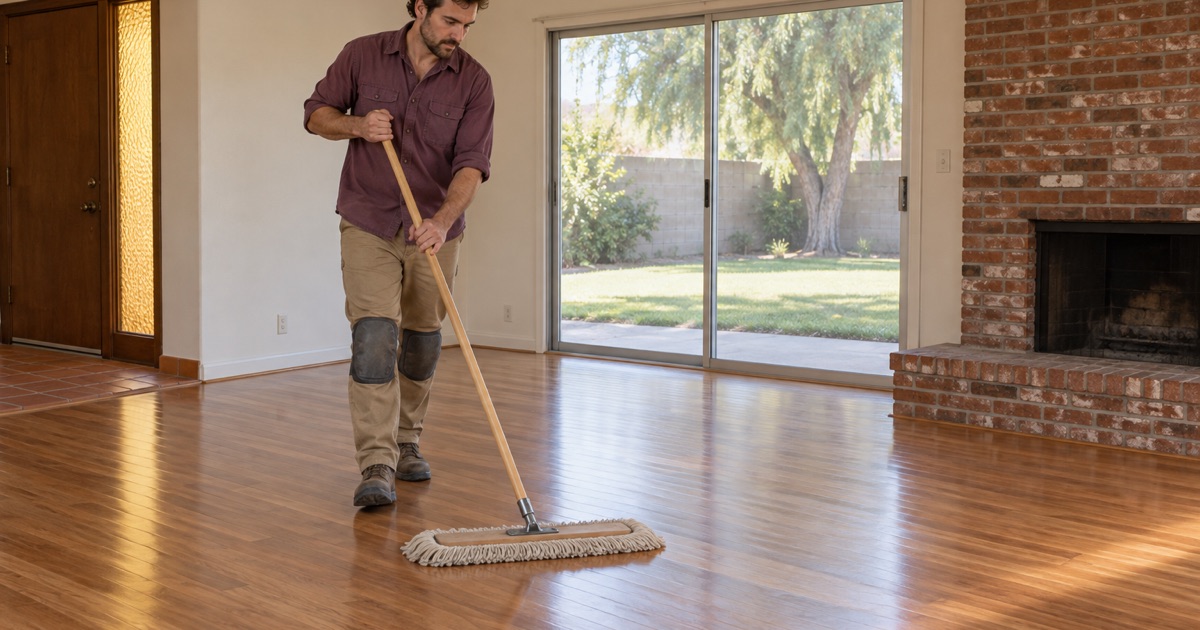
We also plan around the people living there. Dust containment and a written cure schedule let a household know which rooms close, for how long, and when furniture can go back. Finishes are chosen to meet South Coast AQMD Rule 1113, the wood coatings limit that governs what can legally go down in this air basin.
Floors in Houses Older Than the City
Grand Terrace incorporated on November 30, 1978, as the 16th city in San Bernardino County, with 82 percent of the vote in favor. Much of its housing was already standing by then. Census estimates count 2,828 of the city’s 5,069 housing units, or 55.8 percent, as built before 1980, so a typical floor job here happens in a house that went up under county rule.
Checking the Build Year Before Sanding
Our first step on any of these floors is confirming the year the house was built. The EPA RRP rule applies when painted surfaces are disturbed in homes built before 1978, and a floor job can reach baseboards, door casings and stair trim that may carry old paint. Knowing the date before a sander starts decides how that trim is handled.
Grand Terrace makes the check more than a formality, since its incorporation date and the 1978 cutoff fall in the same year. A house built just before the city existed and one built just after can look alike from the curb. We confirm the date from the owner’s paperwork or public property records rather than guessing from the style of the house.
What Sanding Reveals in an Older House
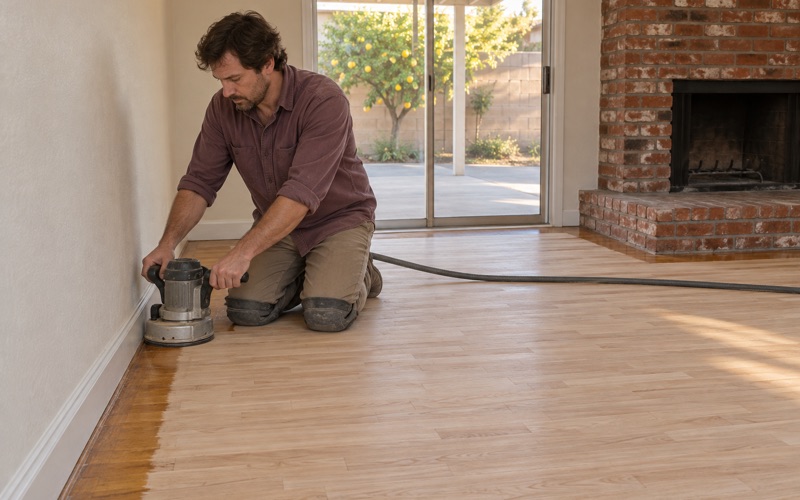
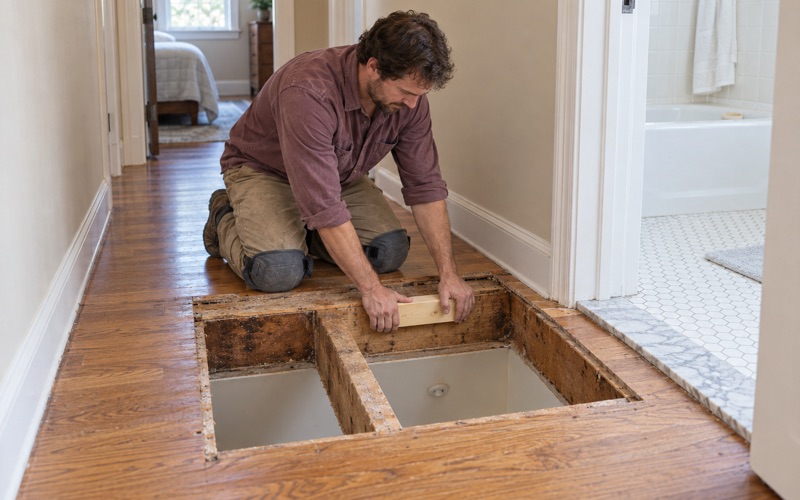
Solid hardwood of this age often has sanding left in it, but the first pass tells us how much. We look for board gapping from decades of seasonal movement, cupping near exterior doors, and hollow spots where boards no longer sit tight. Each one gets addressed before the grit sequence starts, so the finished floor does not show them.
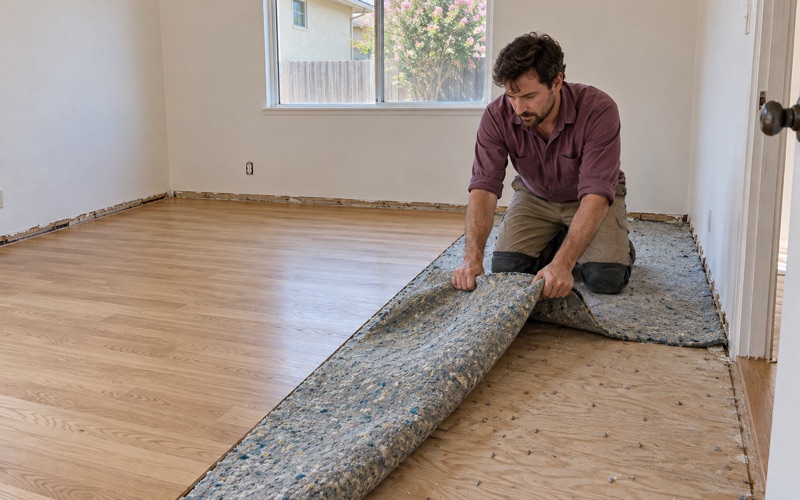
Where carpet or vinyl was laid over wood in a later remodel, pulling it up comes first. We check for tack strip holes, staples and adhesive residue, and we look for black mastic, an old adhesive that is handled carefully rather than sanded. Original boards that survive are repaired and matched, not torn out wholesale for a new floor.
Signs of Insects in Aging Boards
Wood that has been in place for decades gives insects time to work. When we see drywood termite frass collecting along a baseboard or the pinhole exit marks of powderpost beetle, we stop and tell the owner before sanding, because refinishing over active damage only hides it. Affected boards are cut out and replaced with stock matched to the species and width.
Looking for wood-flooring closer to Sierra Madre? See Wood-Flooring Services in Sierra Madre.
Grand Terrace’s 1960s and 1970s Houses
The decades just before incorporation account for a large share of what stands here today. The ACS figures show 999 units built in the 1960s and 1,399 in the 1970s, while only 337 date from the 1950s and 84 from the 1940s. That puts most of the city’s pre-1980 housing in two decades, which narrows what we expect to find under the finish.
Identifying What Is Already There
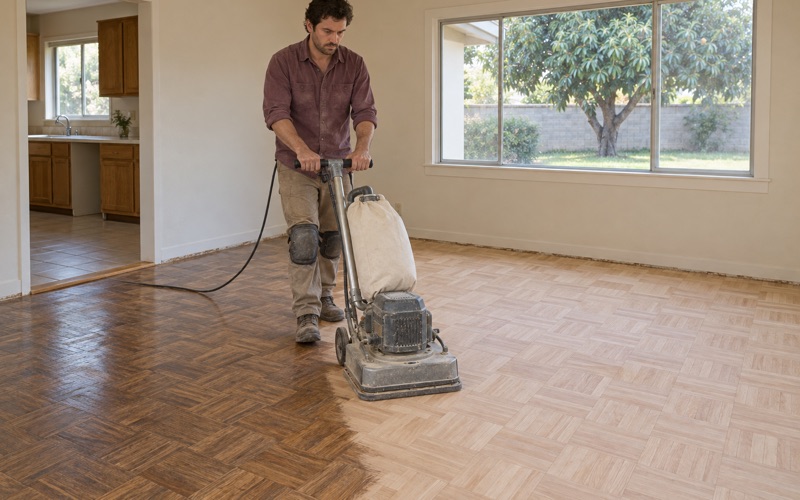
Houses from these years may have strip oak, parquet, or wood that was covered and forgotten, and we do not assume which until we look. Red oak and white oak take stain differently, and parquet squares need a different sanding approach than long strips. Identifying the species and cut, plain sawn or quartersawn, comes before any color sample.
Finish history matters as much as species. A floor refinished once or twice since the 1970s may have plenty of wood above the tongue, while one sanded hard every few years may not. We measure what is left at a floor register or threshold, and if a full sanding would go too deep, we say so and recommend a screen and recoat.
Stairs, Trim and Transitions
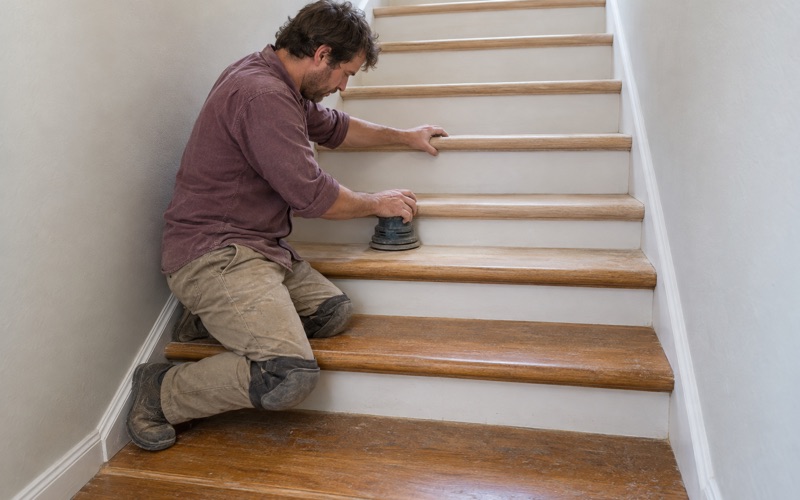
In houses with a staircase, the steps have usually taken more wear than any room. We price stairs by the tread and riser rather than folding them into a square-foot figure, since each step is sanded, edged and finished by hand. Worn stair nosing can be replaced to match the treads above and below.
Transitions get the same attention. Where an older hardwood floor meets tile or a newer floor, we fit a reducer or T-molding at the right height, and we reset quarter round and baseboard that had to come off. Those small pieces are often what makes a refinished room in a forty-year-old house look finished rather than patched.
Choosing a Finish for a Lived-In Floor
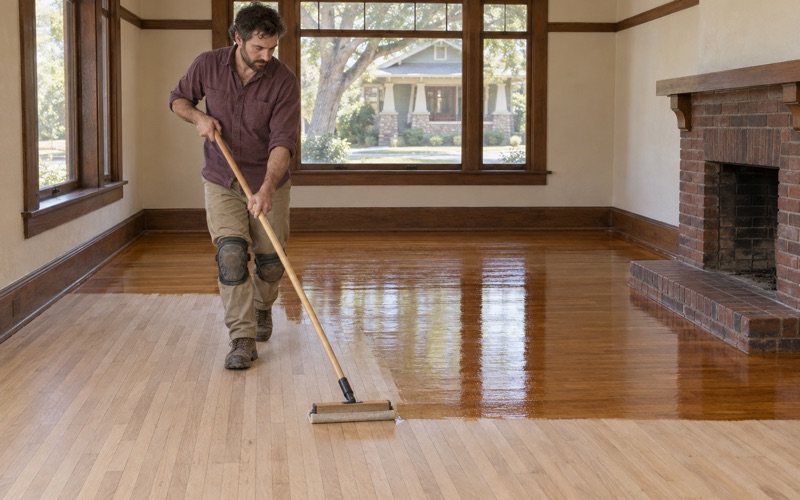
A floor that will see another decade of family traffic needs a finish picked for wear, not just looks. Waterborne polyurethane dries clear and fast, oil-modified polyurethane warms the color of red oak, and a hardwax oil can be spot-repaired later. Sheen level matters too, since a satin or matte finish hides the scuffs a gloss floor shows.
From Orchard Sections to Neighborhoods
The land under these houses has a longer history than the houses themselves. By 1904, Charles Patton and M.L. Howell had bought 300 acres, split the land into sections of 8 to 20 acres, and named their tract Grand Terrace. The severe freeze of 1913 destroyed many groves, and today that same ground holds the streets and houses we work in.
No Assumptions from the Address
A tract that began as large orchard sections was not built out all at once, and the housing figures show it. Alongside the older houses, the census counts 1,373 units from the 1980s, 362 from the 2000s and 208 from the 2010s. We do not guess a floor’s era from the neighborhood; we confirm it house by house.
That spread changes the work as much as the date does. A newer house may have an engineered floor, where we measure the wear layer before promising any sanding, since a thin one cannot take a full refinish. An older house may have solid tongue and groove that can often be sanded again, so the two get very different quotes.
Concrete, Moisture and Glue-Down Work
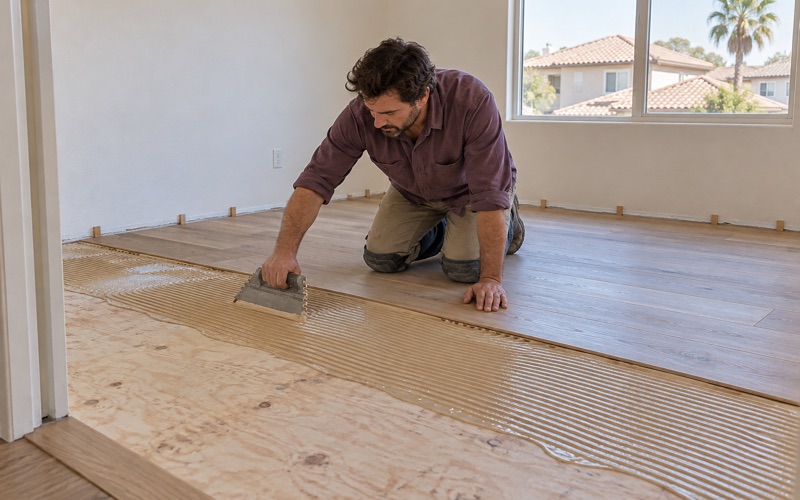
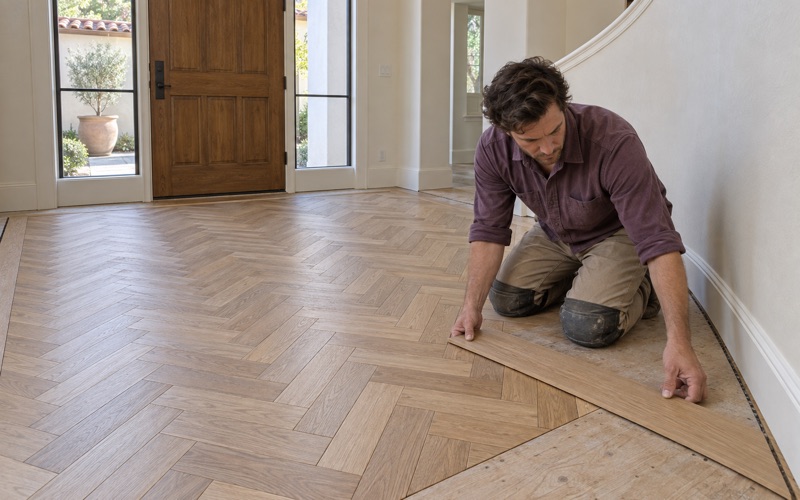
Where an engineered floor is going down over concrete, we test the slab for moisture first and write the reading down. Depending on the job that means in-situ relative humidity testing or a calcium chloride test, and the result decides whether a moisture membrane goes under the urethane flooring adhesive. Laying a glue-down installation on a guess invites cupping and delamination later.
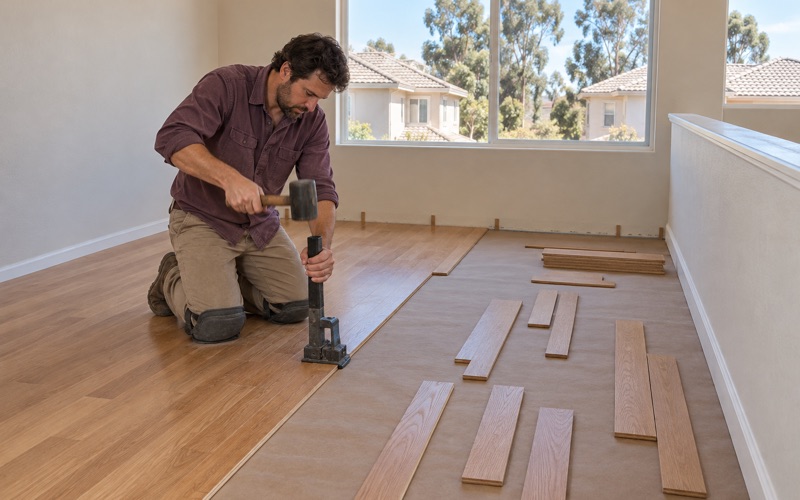
Over a wood subfloor, the checks are different. We look at the plywood or OSB subfloor for soft areas and fasteners that have worked loose, and we fasten new boards in a nail-down installation using a flooring nailer and cleats or staples. An expansion gap at the walls, hidden later by baseboard, gives the floor room to move with the seasons.
Between Blue Mountain and the La Loma Hills
Grand Terrace goes by The Blue Mountain City, named for the mountain of over 2,300 feet to its east, with the La Loma Hills to the west. For forecasts it falls in the National Weather Service’s Inland Empire valleys zone. What matters on a floor job is the house’s own indoor humidity, so new boards acclimate in the rooms where they will be laid.
Long-Held Houses, Repeat Refinishing and Repair Help
Owner-held detached houses define much of Grand Terrace. Of 3,051 owner households, 2,536, or 83.1 percent, live in detached houses, and owners hold 64.4 percent of occupied homes overall. In a house one family has kept for decades, the floor has often lived through several rounds of furniture, pets and remodels. That history is what we plan the job around.
Pet Stains, Leaks and Board Replacement
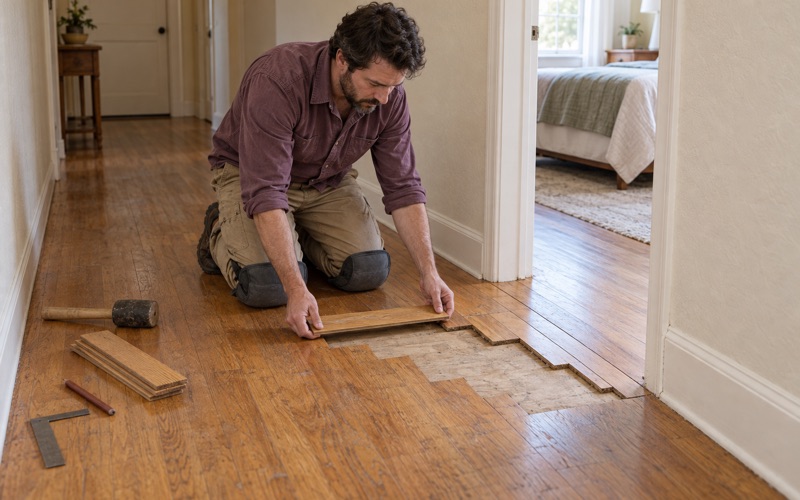
Pet urine stains are common in floors that have hosted a few generations of dogs and cats, and they often go deeper than sanding can reach. We test a stained area before quoting, and where the gray or black mark stays, we replace those boards and weave the new ones into the old so the repair does not read as a patch.
Water damage gets a different order of work. Before any board comes out, we confirm the leak source is fixed and take moisture meter readings across the area, because replacing wet boards over a live leak repeats the job. When an insurance claim is involved, we document water, smoke or ash damage room by room for the adjuster.
Repair Programs the City Points Owners Toward
The city’s Housing Programs & Resources page lists no city-run rehabilitation grant, and instead refers residents to partner programs. Neighborhood Partnership Housing Services offers a Healthy Homes Grant for home safety repairs, aimed at low-income senior homeowners and homeowners with permanent mobility disabilities. The page does not state grant amounts, and flooring is not named among the repairs.
For owners who want to handle small fixes themselves, the city also points to Neighborhood Housing Services of the Inland Empire and its Homes N’ Hammer workshop, a four-hour session on minor home repairs such as plumbing, electrical and drywall. Floors are a different kind of project, and a senior owner can call us for a walkthrough and a written scope.
- 20+ Years in Wood Floors
- Build Year Checked First
- Written Cure Schedules