Upland Wood Flooring brings more than 20 years to wood-flooring in Jurupa Valley, where a floor job is as often a repair inside an older house as it is an upgrade. Boards cup over an old slab leak, a hallway goes soft underfoot, or a room carpeted decades ago turns out to hold oak nobody has looked at since.
Before any sander touches a floor, we confirm the year the house was built. The EPA RRP rule reaches painted surfaces disturbed in homes built before 1978, and baseboards, thresholds and old stair trim get disturbed during refinishing, so the build year shapes how we set up the room and contain dust. Nothing is sanded on a guess.
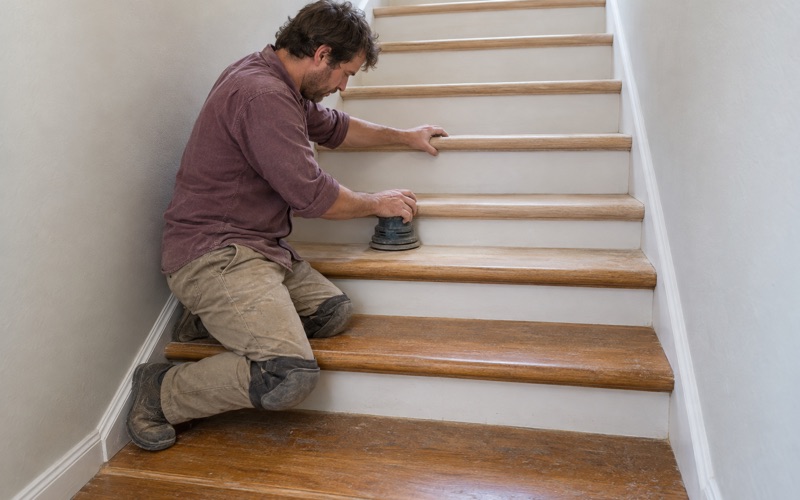
We also measure an engineered floor’s wear layer before promising a sanding, and stairs are priced by the tread and riser instead of being folded into a square-foot rate. Finishes are picked to meet SCAQMD Rule 1113, the wood coatings limit that governs what can legally go on a floor in this air basin. Jurupa Valley sits inside South Coast AQMD’s jurisdiction, so the rule applies to every job here.
Floors in Older Jurupa Valley Houses
Half the Housing Predates 1980
The 2024 five-year Census estimates put the age of the stock in plain view. Of 29,248 housing units in Jurupa Valley, 14,979, or 51.2 percent, were built before 1980, and 6,297, or 21.5 percent, went up before 1960. No single decade accounts for more than about a fifth of the total, so the city holds a genuine spread of eras rather than one tract generation.
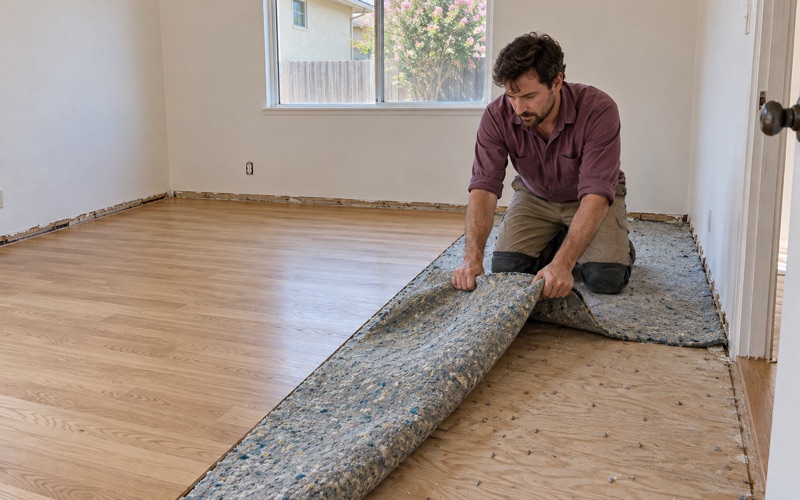
That spread matters on the floor. A house from the 1950s may hold solid hardwood strip under carpet or linoleum, while a later house may have been carpeted from the day it was finished. We pull a corner or a floor register cover before quoting, because what is underneath decides whether the job is a refinish, a repair or a new floor.
Houses From the 1940s and Earlier
The count reaches back further than many people expect. Jurupa Valley has 987 units built in 1939 or earlier, and 1,421 more from the 1940s. Floors that old were usually face-nailed or blind-nailed tongue and groove, often red oak or white oak, and many have been sanded several times already, which leaves less wood above the tongue for another pass.
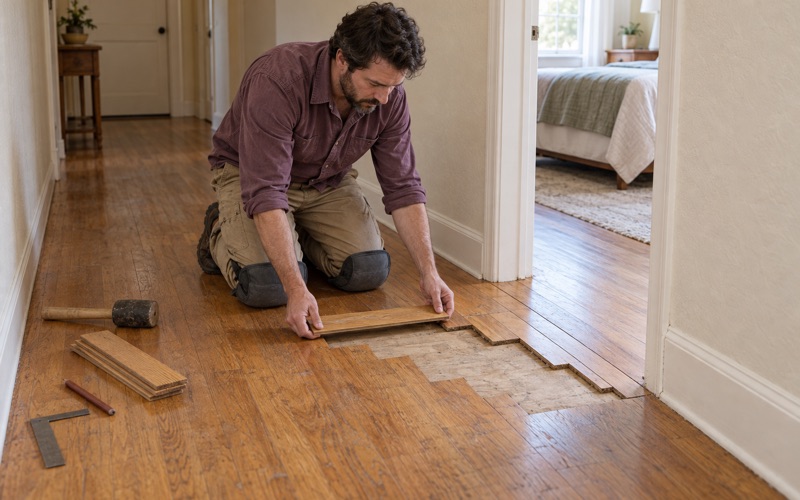
On those floors we check the remaining thickness at a floor vent before choosing a grit sequence, and we favor a lighter cut when the tongue is close to showing. Damaged boards are repaired and matched from salvaged stock where we can, rather than tearing out a room of original oak to fix three bad pieces. Drywood termite frass or powderpost beetle holes get identified before any patch goes in.
Stains, Dust and Cure Time
Pet urine stains are the other common find once carpet comes up in an older room. Light surface marks often sand out, but urine that has soaked into the grain and turned the wood black usually does not, and those boards are cut out and replaced with matched stock before the floor is sanded as one surface.
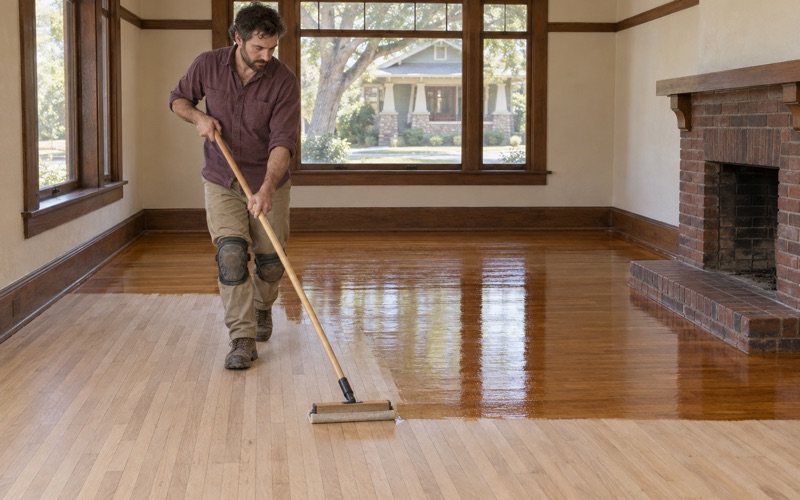
An older house is usually lived in while the work happens. We seal doorways, run dust containment on the sanders, and hand over a written cure schedule so the household knows which rooms are off limits and for how long. Waterborne polyurethane generally lets furniture come back sooner than an oil-modified finish, which is often the deciding factor for a family staying put.
Looking for wood-flooring closer to Azusa? See Azusa Wood-Flooring.
When a Floor Is a Health-and-Safety Repair
What the City’s Rehabilitation Program Names
The City of Jurupa Valley runs a Housing Rehabilitation Program funded with CDBG money from HUD. Qualified owners may receive grants of up to $15,000, and the eligible work covers code violations, substandard conditions and health-and-safety issues, a list that names roofing, plumbing, electrical, heating, flooring and painting. The home must be owner-occupied and the household’s income must fall within the CDBG limits.
Eligibility is the city’s decision, not ours. Grants are first-come, first-served, and a home that received one within the past 10 years is not eligible again. If a floor problem in your house looks like it might qualify, the city’s housing staff are the ones to ask before any work is scheduled. We can describe the condition of the floor in writing, which is useful whichever route you take.
Soft Spots, Trip Edges and Lifted Boards
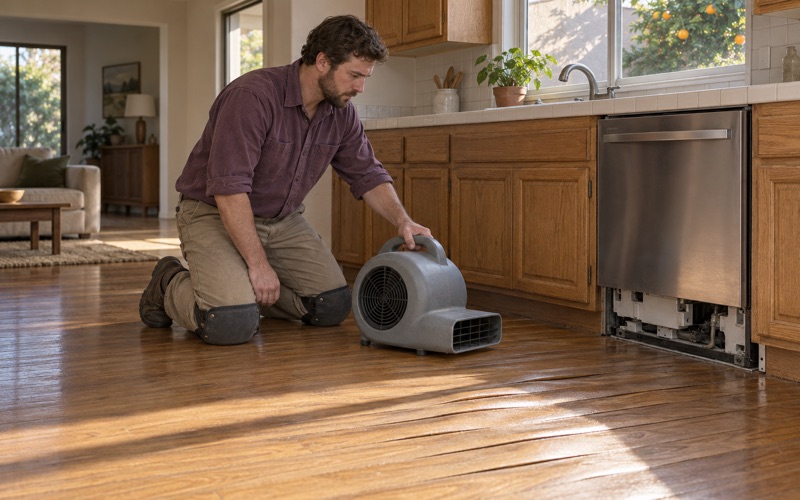
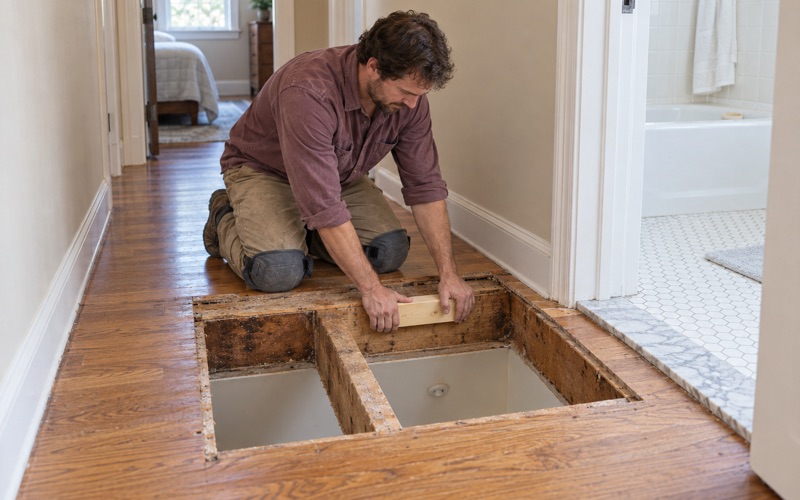
What turns a worn floor into a safety problem is usually specific. A soft spot where the subfloor has rotted near a toilet or a water heater, boards that have buckled into a ridge across a doorway, or a loose threshold that catches a foot are all conditions we see in older houses. Each one has a cause below the surface that has to be found first.
Before we replace water-damaged boards, we confirm the leak source and take moisture meter readings across the area, because new wood laid over a live leak can cup again. Rotted sections of subfloor are cut back to sound material and patched before any flooring goes down, and loose boards are refastened with cleats rather than surface screws. The readings are written down so you can see them.
Rented Houses
Not every house is lived in by its owner. Of 28,053 occupied units, 29.9 percent are renter-occupied, and 57.3 percent of renter households live in a detached house. Because the rehabilitation grant is limited to owner-occupants, floor repairs in those rented houses are the landlord’s to plan, usually timed around a vacancy so sanding and cure time do not overlap a move-in.
Nine Communities and the Manufactured Homes Among Them
One City Since 2011
Jurupa Valley incorporated on July 1, 2011, bringing together nine communities: Jurupa Hills, Mira Loma, Glen Avon, Pedley, Indian Hills, Belltown, Sunnyslope, Crestmore Heights and Rubidoux. The area had been building houses for decades before there was a city, which is why two streets a few miles apart can sit a generation apart in age. The city now covers about 44 square miles.
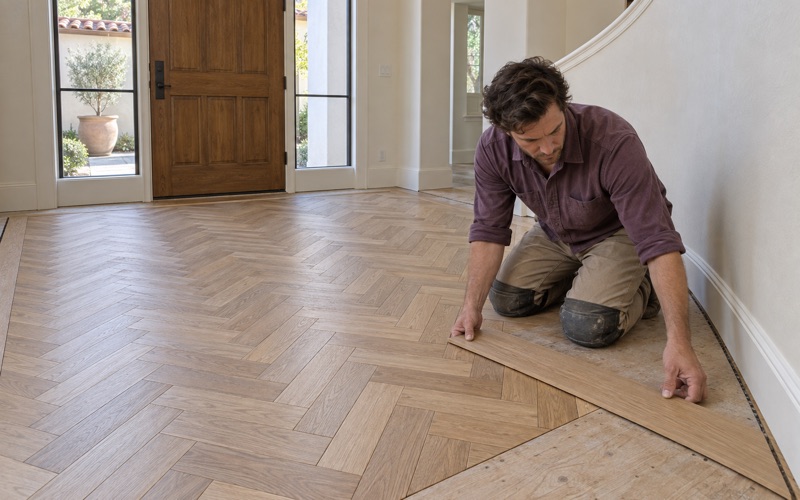
For a floor, the address tells us less than the build year does. Where an older house has been added onto, the addition often meets the original floor at a height change, and we handle it with a reducer or a leveled transition rather than a rough ramp. Matching new boards to old oak in those rooms is patient work with stain samples.
Manufactured Homes Owned by Their Residents
Mobile homes make up 1,783 of the city’s housing units, about 6.1 percent, and 1,384 owner households, 7.0 percent of all owners, live in one. That is a meaningful number of households who own the home but whose floor sits on a structure unlike a site-built house, with lighter subfloor panels and framing that responds differently to a heavy floor.
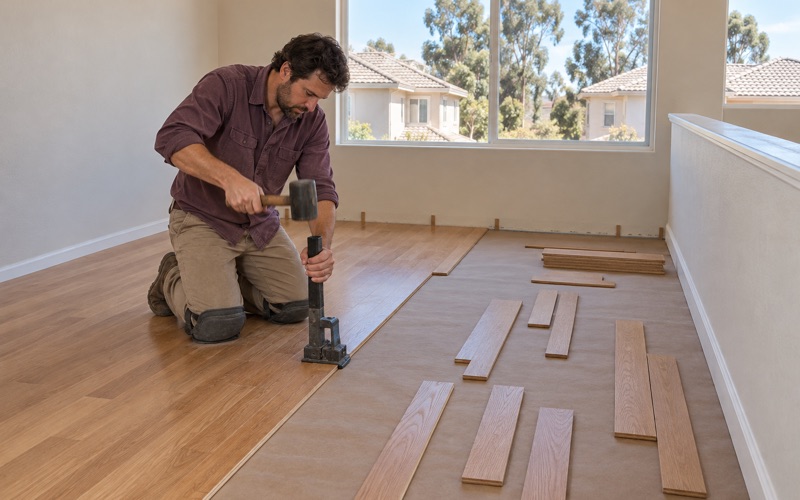
In a manufactured home we check the decking for soft spots around plumbing first, since that is where water damage tends to start. Solid hardwood is rarely the right answer there; a floating engineered floor over a suitable underlayment keeps weight down and tolerates small movement, and prefinished boards avoid a long cure in a home with limited space to move furniture.
The MORE Program
The city also runs the Manufactured Housing Opportunity and Revitalization Program, known as MORE, funded by a $3 million HCD grant to help income-qualified owners of manufactured homes fix code violations and health-and-safety problems. Its listed work covers plumbing, roofing, electrical, heating, accessibility and energy upgrades, and flooring is not named on that list. Applications were closed with a waitlist open when we last checked, so confirm the current status with the city.
That matters for sequencing. If a leaking supply line under a manufactured home is repaired first, through MORE or otherwise, the floor over it can then be replaced once the decking has dried and tested sound. We schedule our part after the leak is closed and confirmed, not before. Moisture readings from the decking go into the written estimate.
Semi-Rural Lots, Dry Air and Finish Choices
The Equestrian Overlay
The city’s first locally prepared General Plan, adopted September 7, 2017, includes an Equestrian Lifestyle Protection Overlay and puts weight on preserving the semi-rural, small-town character of Jurupa Valley. The city also still contains rural farming and other agricultural activity. On a property where horses are kept, the floor nearest the back door takes grit and boots every day.
Grit is what dulls a finish fastest, so on those lots we steer toward harder species and tougher coatings in entry rooms and kitchens. Hickory and white oak carry a higher Janka hardness than red oak, and a matte or satin sheen level hides fine scratches that gloss would show quickly. A mat at each door does as much as any product.
Dry Stretches and Board Movement
Dry inland air also affects how a wood floor behaves. The NWS forecast zone covering Jurupa Valley is CAZ048, the Inland Empire valleys, and during dry stretches solid boards can show board gapping that closes again as humidity returns. We let new wood acclimate in the house before installation and leave the expansion gap at the walls that the boards need.
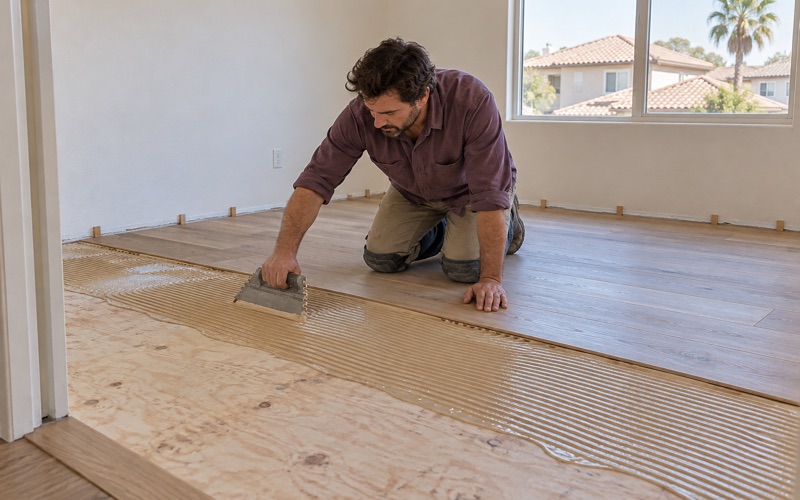
Where an engineered floor is going onto concrete, we test the slab for moisture first, with in-situ relative humidity testing or a calcium chloride test, and record the result. A high reading means a moisture membrane or a urethane flooring adhesive rated for it, or a different plan altogether, rather than gluing down and hoping.
Refinish, Recoat or Replace
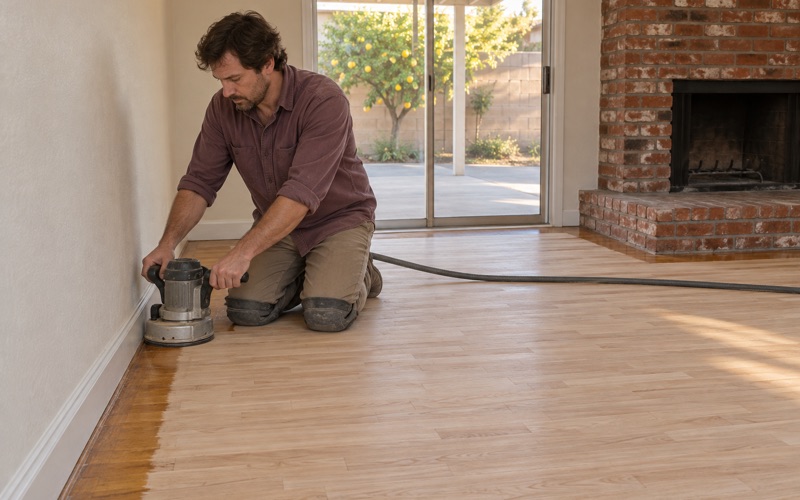
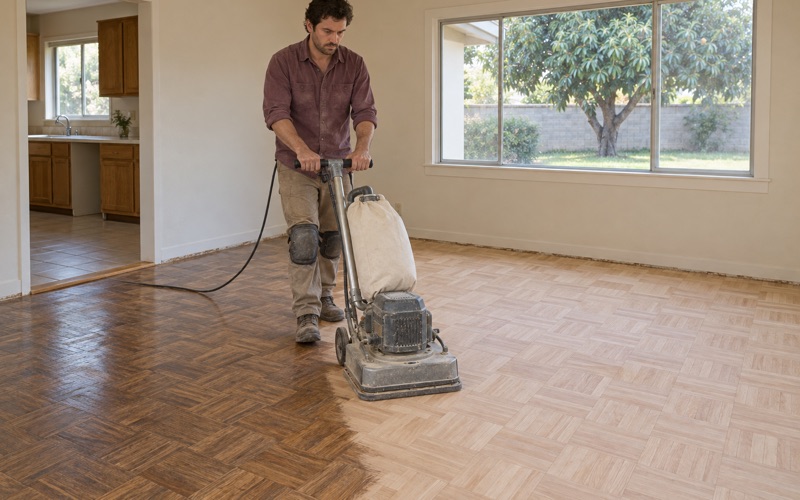
Plenty of floors in pre-1980 houses need less than owners fear. If the finish is worn but the wood is sound, a screen and recoat restores protection with far less dust, and a full sanding with an orbital sander or drum sander is saved for floors with deep scratches, gray traffic lanes or a color the owner wants changed.
Inside the air district’s coatings limit, the practical choices are a waterborne polyurethane, a compliant oil-modified product, or a hardwax oil. Waterborne dries clear and fast, oil-modified warms toward amber over time, and hardwax oil can be spot-repaired in a worn doorway without sanding the whole room, though it asks for more regular upkeep.
Replacement makes sense when the damage runs below the boards: delamination in an engineered floor with a thin wear layer, hollow spots over a failed glue bond, or crowning and cupping that follows a slab leak or a plumbing failure. In those cases the cause is fixed first, the substrate is dried and verified, and then the new floor goes down. If insurance is involved, we document the damage room by room for the adjuster.
- 20+ Years in Wood Floors
- Build Year Checked First
- Written Cure Schedules