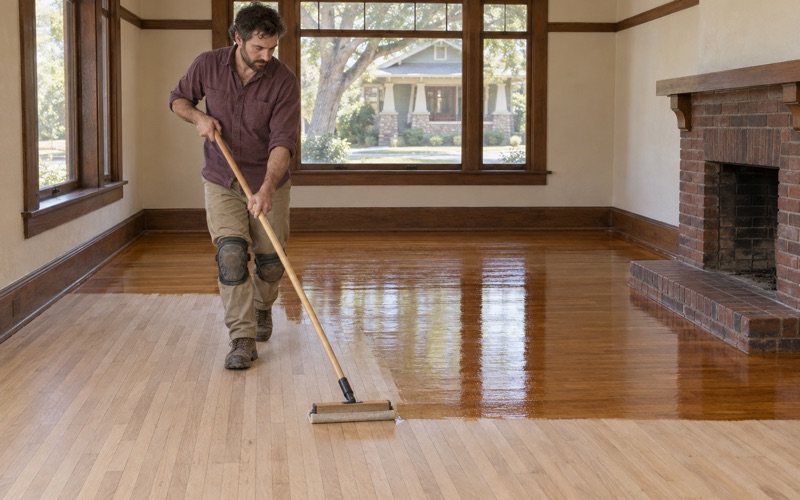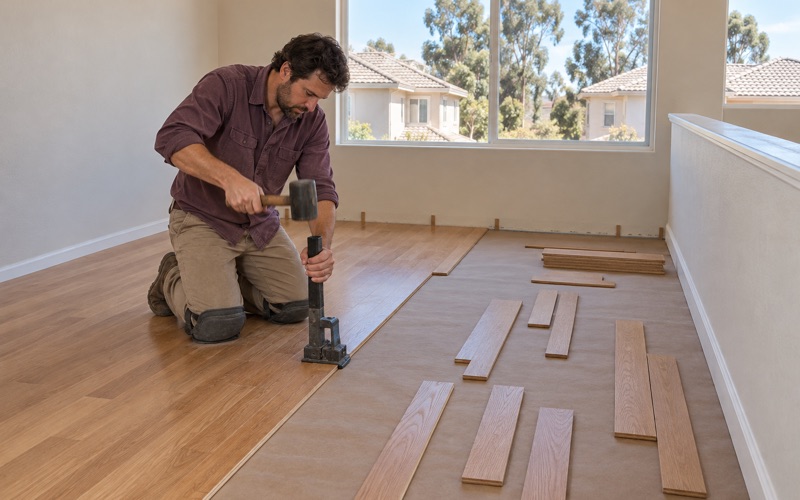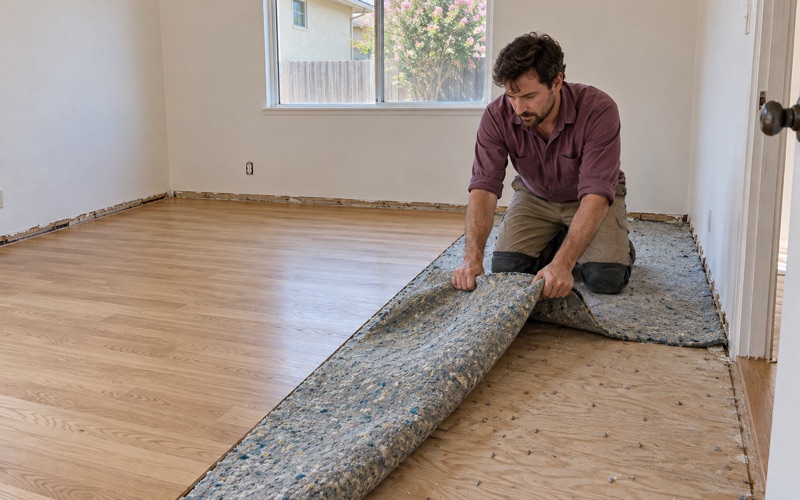
Upland Wood Flooring has handled wood-flooring in La Verne for more than 20 years, and the jobs that go best start with a question about the house rather than the boards. Is the structure underneath sound, dry and free of pests? When it is, a new floor or a full refinish can last decades. When it is not, the floor becomes the first casualty of whatever was missed.
That is why our visits begin below the finish. We look for cupping, crowning and hollow spots, check the subfloor where we can reach it, and take moisture meter readings before quoting anything. If the trouble is a failed pipe or damaged framing, we say so plainly and point you toward that repair first, because sanding over an unresolved problem wastes your money.
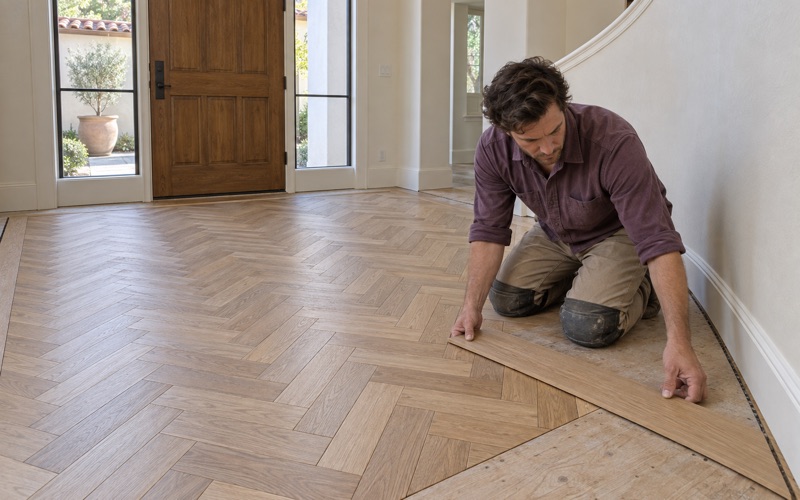
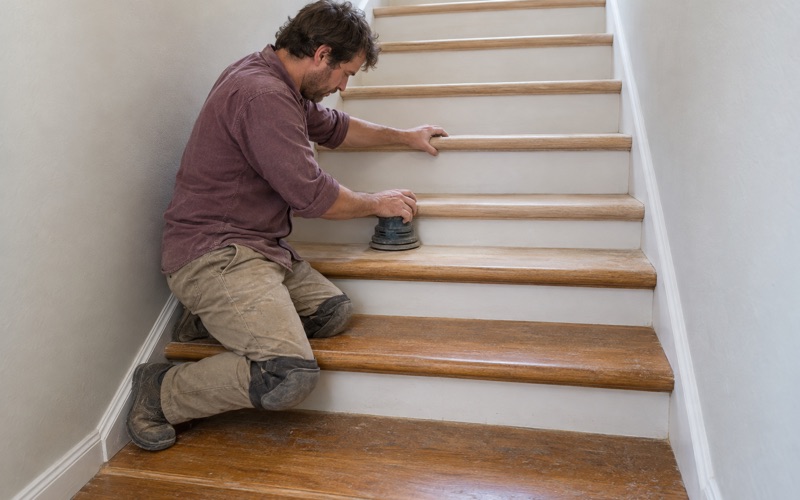
Once the house is ready, we cover the full range: sanding and refinishing, board repair, stair treads and risers priced individually, and new solid hardwood or engineered installations. Every quote names the method, the finish and the order of work before anyone moves furniture. Nothing is promised until we have seen the floor.
Floors After the Repairs Underneath Them
What La Verne’s Rehabilitation Program Put First
As PublicCEO reported in May 2022, La Verne’s City Council allocated $500,000 of its federal ARPA money to a Housing Rehabilitation Program for low- and moderate-income homeowners who live in the property as their primary residence. Willdan Engineering was awarded the contract to administer it on May 2, 2022, and grants went out after an inspection, first come, first served.
The program’s order of priority is the useful part for anyone planning a floor. Roof comes first, then foundation, electrical wiring, plumbing, and heating and cooling, with termite and rodent elimination after those. Flooring is not on that list, and we have not confirmed whether the program is taking applications in 2026, so check with the city’s Community Development Department at 3660 D Street before counting on it.
Where the Floor Belongs in the Sequence
We think the city’s list is a sound way to order any home project, grant or no grant. A roof leak stains a fresh finish, a settling foundation can open board gapping, and a plumbing repair often means cutting into the floor itself. Doing the flooring last means each of those trades can open what they need without undoing our work.
When a repair has already happened, we check what it left behind. A replaced drain line or rewired circuit can leave patched subfloor, mismatched heights or damp framing, and our moisture meter readings are written down before any new boards go in. If water was the original problem, we confirm the leak source is fixed before replacing a single board.
Why the Order Matters in Older Houses
According to the Census Bureau’s 2024 five-year American Community Survey, 7,454 of La Verne’s 12,020 housing units were built before 1980, or 62.0 percent. Houses of that age have often been through at least one round of plumbing, roofing or wiring work, and each round is a chance for the subfloor to be cut, patched or wetted.
That age also brings the lead question. We confirm the build year before any sanding, because the EPA RRP rule covers painted surfaces disturbed in homes built before 1978, and baseboard, stair and trim paint in a house that old can be in the mix. Knowing the year first decides how the room is set up.
Looking for wood-flooring closer to Ontario? See Ontario Wood-Flooring.
Termite and Rodent Damage and the Boards Above It
What We Look For Before Quoting
Termite and rodent elimination sits on the city’s list for a reason: both can leave damage that shows up in floors. We look for drywood termite frass, small pellets that collect along baseboard or under furniture, and for boards that sound hollow or give under a heel. Powderpost beetle holes in older solid hardwood get the same close look.
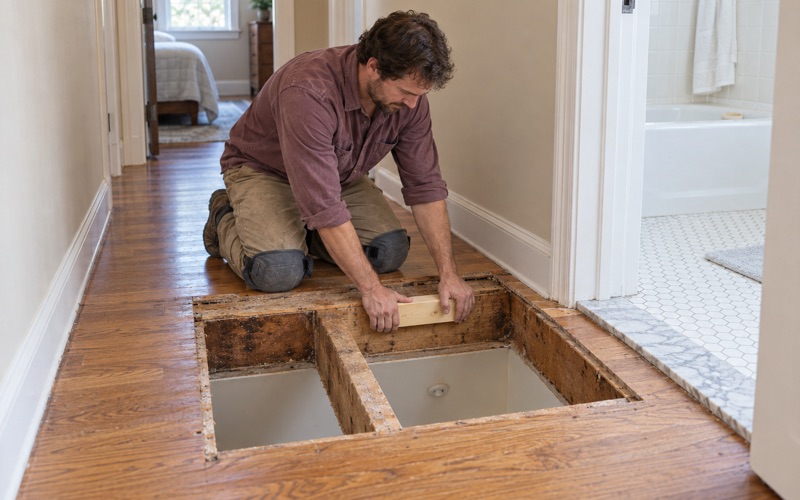
Rodents do a different kind of harm. Gnawed edges, nesting under a floor and stains from droppings or urine can reach the underside of boards and the subfloor itself. We cannot always see that from above, so where a floor sounds wrong we lift a board or check from any accessible space below before we price the repair.
Treatment First, Then Board Work
We do not treat pests, and we will not replace boards over an active colony. If we find frass or fresh damage, we stop, show you what we found and suggest you have a pest control company confirm and treat it. Once treatment is done, we can remove the damaged boards and see how far the problem runs.
Sometimes it stops at the top boards. Other times the tongue and groove edges are hollowed, the plywood or OSB subfloor is soft, or a floor joist needs attention from a framing carpenter. We give you that picture in writing so the structural piece can be handled before any new flooring is ordered.
Repairing Instead of Replacing
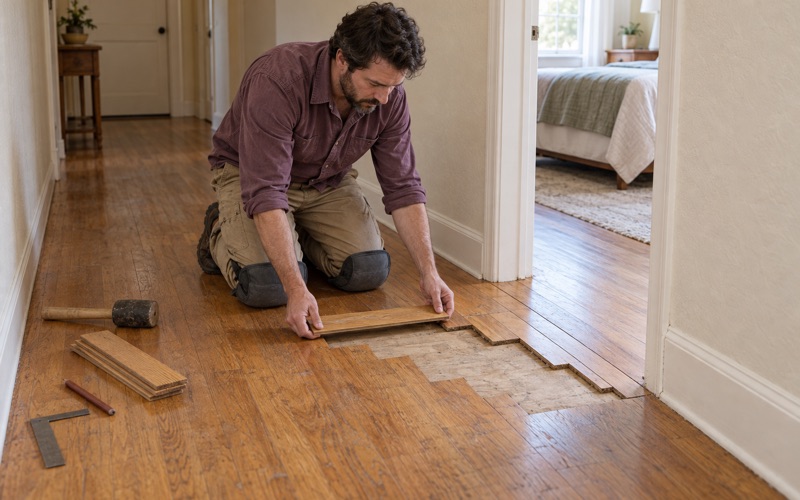
When damage is limited to a patch, we would rather cut out the bad boards and weave in matching ones than tear up a whole room. In an older house that means finding the right species, often red oak or white oak, and the right width and cut, whether plain sawn, rift sawn or quartersawn.
Once the new pieces are in, a full sanding and a fresh finish across the room blends them with the original floor. Done this way, the repair disappears and the rest of the old boards stay where they have been for decades. It often costs less than replacing the whole room, too.
Refinishing La Verne’s 1970s and 1980s Houses
A City Built Mostly in Two Decades
The 1970s were La Verne’s biggest building decade, with 3,878 of its housing units, or 32.3 percent, dating from those ten years. Add the 2,441 units from the 1980s and more than half the city’s homes, 52.6 percent, went up between 1970 and 1989. The city itself is much older, founded as Lordsburg in 1887 and incorporated in 1906, but most of today’s houses date from that later boom.
Floors in houses of that era vary. Some have solid hardwood, sometimes hidden under carpet with tack strip nailed around the edges, and others have had engineered planks installed during a later remodel. Before we promise a refinish, we identify which one you have, because the answer decides everything that follows.
Solid Boards and Engineered Wear Layers
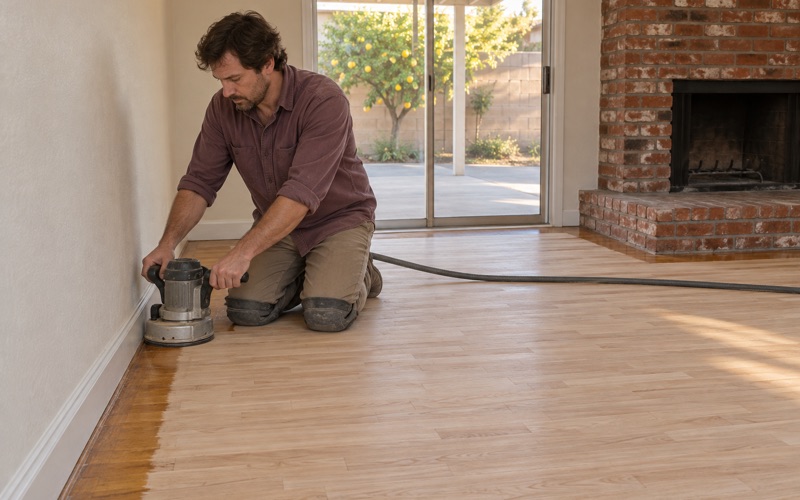
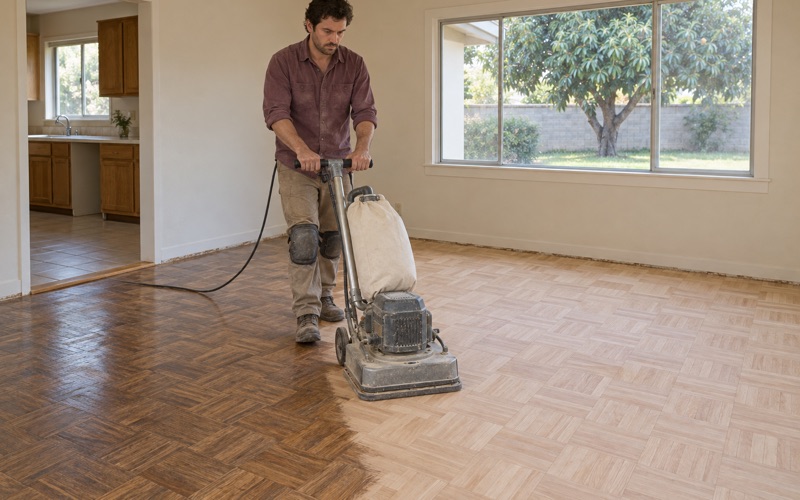
Solid hardwood can usually take several full sandings over its life, and pulled-up carpet often reveals boards that need only tack strip holes filled, some wood filler in the gaps and a careful grit sequence with a drum sander and orbital sander. Pet urine stains are the exception, since deep ones often mean replacing those boards.
Engineered flooring is different. Its engineered wear layer is the slice of real wood over a plywood core or HDF core, and a thin one cannot survive a full sanding. We measure it first, and if there is not enough to sand, a screen and recoat with the buffer may be the right call instead.
Finishes and a Plan for the Household
La Verne sits in the South Coast Air Quality Management District, so every stain and topcoat we apply has to meet SCAQMD Rule 1113’s limits on wood coatings. That often points us toward waterborne polyurethane or a compliant hardwax oil, and we talk through sheen level with you before the first coat goes down.
Sanding makes dust, so we seal off the work area and run dustless sanding equipment where the floor allows it. You get a written cure schedule showing when socks, then furniture, then rugs can return, which matters when a household is already living around roof or plumbing work finished weeks earlier.
Park Homes, Fire Zones and Where to Begin
La Verne’s Mobile Home Parks
The city counts eight mobile home parks holding 1,742 mobile homes, and Census Bureau survey data puts 1,469 owner households in mobile homes. Mobile home owners were eligible for the rehabilitation program as well, under the same list of priorities. We follow that order in a park home just as we do in a detached house.
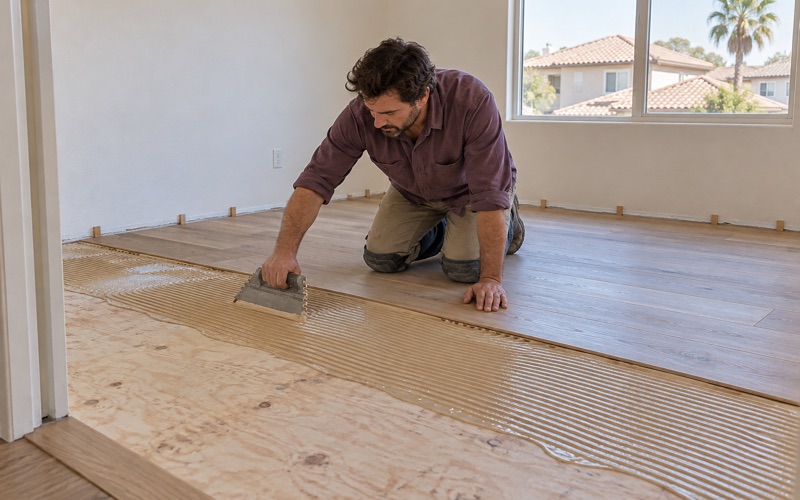
Floors in manufactured homes are usually built differently from site-built houses, often with a thinner subfloor over the frame, so we check the decking for soft spots and water damage near sinks, tubs and water heaters before choosing a product. A floating installation over the right underlayment is often a better fit than nail-down solid hardwood. We also ask about any park rules before materials are ordered.
Foothill Fire Zones and Smoke Damage
La Verne sits below the San Gabriel Mountains foothills, and portions of the city fall in Moderate, High and Very High Fire Hazard Severity Zones. The city runs its own fire department, and Rustic Canyon Estates is its first Firewise USA community. When smoke, ash or firefighting water reaches a floor, we document the damage room by room for your adjuster.
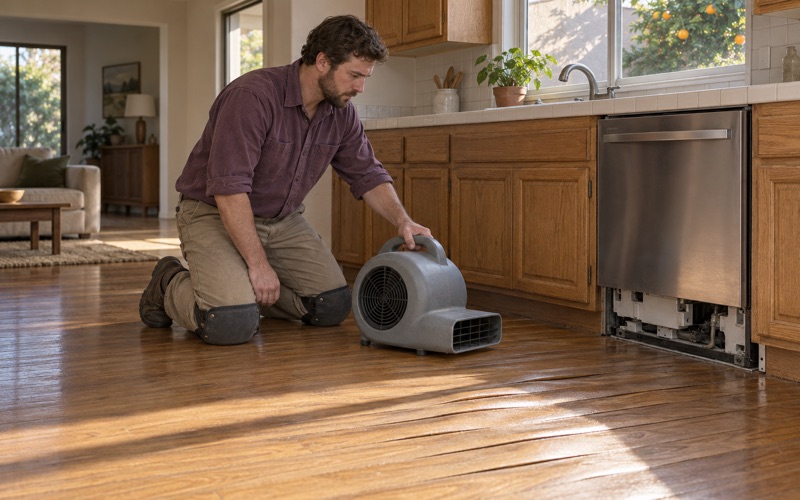
Water from hoses soaks into boards and subfloor the same way a plumbing leak does, and it can bring cupping, crowning or buckling days later. We take moisture readings until the floor has dried, then decide with you which boards can be sanded and refinished and which have to come out.
Starting With a Walkthrough
If you are planning structural repairs, call us before they begin, not after. We can walk the floors with you, note what the other trades are likely to disturb, and give you a written plan for the flooring that picks up where their work leaves off. In a park home or a 1970s house, that plan starts with what is under the boards.
- 20+ Years in Wood Floors
- Build Year Checked First
- Written Cure Schedules