Upland Wood Flooring has spent more than 20 years on wood-flooring in Norco, sanding, repairing and installing hardwood inside houses that owners tend to keep for a long time. Most of what we see here is detached, owner-held and older than it looks from the street, so the first job is reading the house before we quote it.
That reading starts with the build year, confirmed before any sanding, because the EPA RRP rule reaches painted surfaces disturbed in homes built before 1978 and plenty of Norco houses fall on that side of the line. It continues with the finish, which has to fit SCAQMD Rule 1113, the wood coatings limit that governs what can legally go down in this air basin.
From there the work is ordinary craft done carefully: the engineered wear layer measured before a refinish is promised, stairs priced by the tread and riser, and original boards patched and matched instead of torn out. We seal off the work area against dust and hand over a written cure schedule, so a household knows which rooms it gets back and when.
Floors inside Norco’s animal-keeping properties
Norco is known as Horsetown USA, and in much of the city horse trails take the place of sidewalks. That identity shapes the lots and the corrals, but it stops at the back door. Inside, the houses we work in are ordinary homes with ordinary floor questions: what species is down, how much wood is left, and what went wrong.
Detached, owner-held houses
The census numbers make the point plainly. Of 5,363 owner households in Norco, 5,276 live in detached houses, which is 98.4 percent, and 81.1 percent of all occupied homes are owner-occupied. That means most floors we refinish here belong to the person paying for them, not a landlord or an association. Choices about sanding depth, stain and sheen are made by someone who lives with the result.
Owner-held houses also carry layers of past decisions. We may find red oak under carpet that went down decades ago, white oak strip laid next to a later addition, and prefinished engineered planks floated over whatever the previous owner left. Each surface gets a moisture meter reading and a close look for cupping, crowning or board gapping before we say what it can take.
Large lots, ordinary interiors
Norco’s zoning is built around animal keeping, with agricultural low-density districts such as A-1-20 covering a large share of the city according to published summaries of the code. We treat lot size as background, not a floor fact. A big parcel changes where the truck parks and how far the dust collector hose runs, and little else about the job inside.
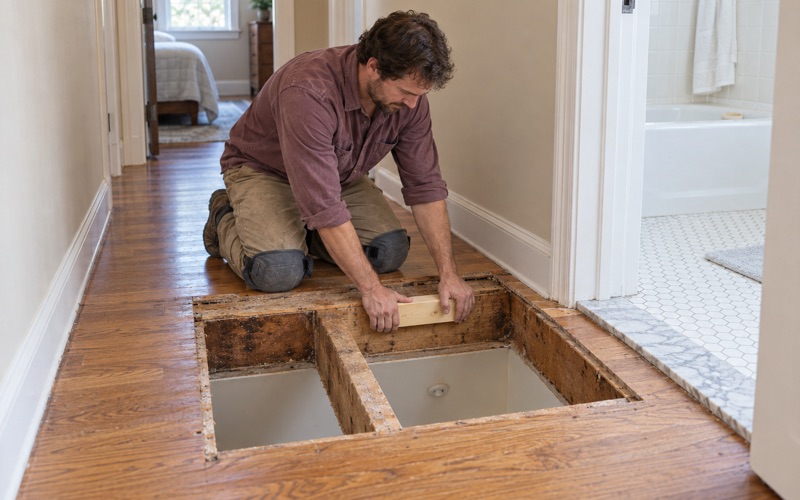
Indoors, the problems we diagnose are the same ones found in any older detached house: pet urine stains near a door, finish worn through along a hallway, hollow spots where a glue bond has let go, and buckling after a plumbing leak. When water is involved, we confirm the leak source and take a moisture reading before a single damaged board is replaced.
New floors on owner-held lots
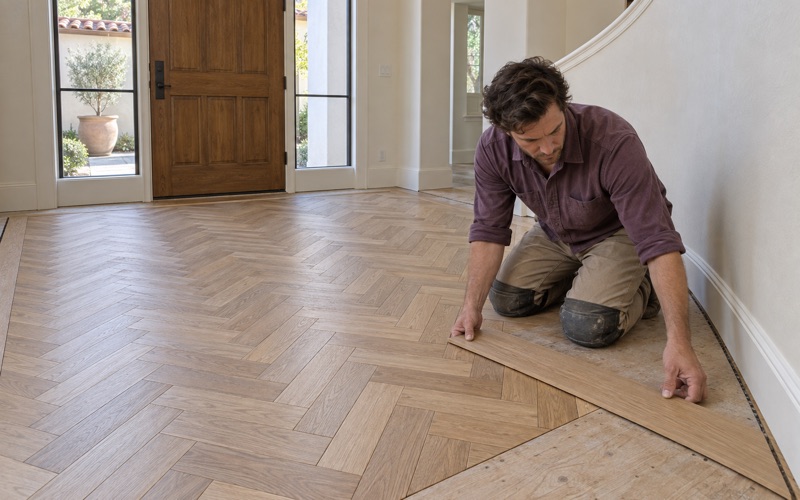
When an owner decides to replace rather than refinish, the conversation turns to species and construction. White oak and hickory rank higher on the Janka hardness scale than many softer choices, and quartersawn or rift sawn boards move less with seasonal humidity than plain sawn stock. We walk through those tradeoffs with samples on the actual floor, under the actual light.
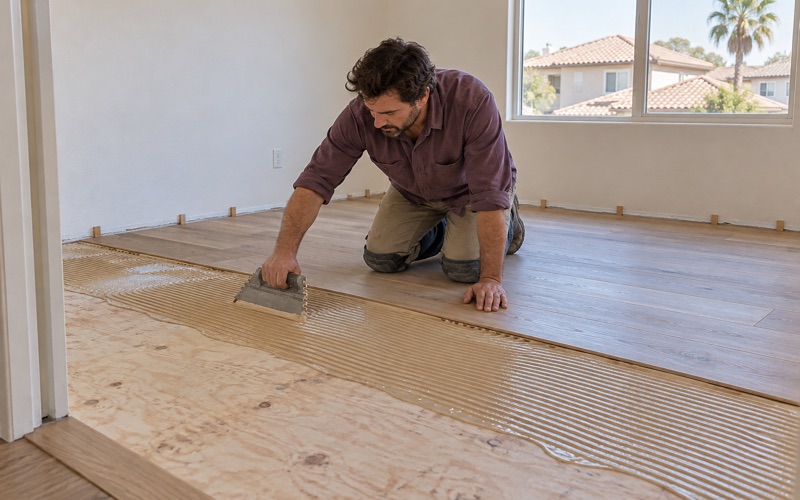
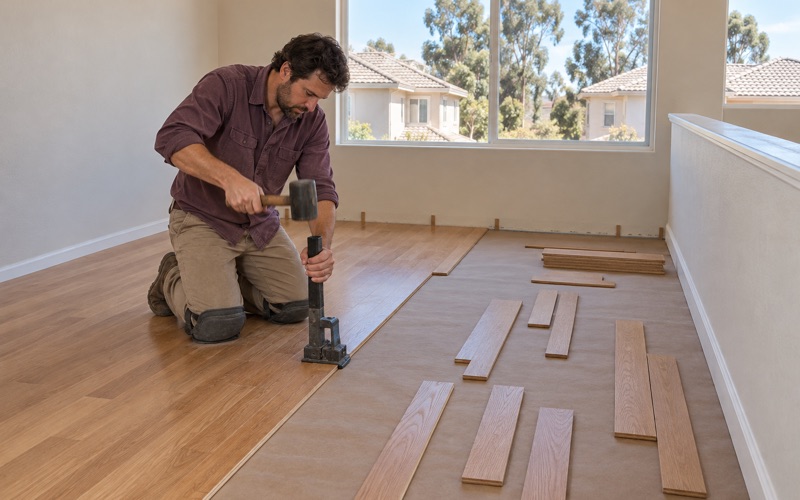
Installation method follows the subfloor we find, not an assumption about the house. Over wood, a nail-down installation with flooring cleats or staples is standard for solid hardwood. Over concrete, an engineered floor goes down with urethane flooring adhesive only after in-situ relative humidity testing or a calcium chloride test, and the reading goes on paper. A floating installation over underlayment suits some rooms and budgets.
Looking for wood-flooring closer to West Covina? See Wood-Flooring Services in West Covina.
What the Equestrian Historic District covers and leaves alone
Norco incorporated on December 28, 1964, and became a charter city in 2003 to protect animal-keeping rights. In October 2021 the City Council adopted an Equestrian Historic District taking in about 6,000 residential properties, every one in the city’s animal-keeping zones. The city describes it as adding no requirements or obligations for owners beyond existing zoning.
A district about land use, not interiors
Architecture-based historic districts usually come with design review. Norco’s is thematic: it recognizes the equestrian way of life through the zones where animals are kept, rather than through how any single house looks. That is why we plan a refinish or a new floor inside one of these properties the same way we would anywhere else in the city.
What still applies is everything that applied before 2021. Building questions go to City of Norco Building & Safety at 2870 Clark Avenue, and we point owners there rather than guessing on their behalf. Pre-1978 paint near baseboards and door casings still falls under the federal lead rule when our work disturbs it, district or no district.
The 23 houses singled out
In September 2021 the city’s Historic Preservation Commission heard a consultant’s finding that about 23 private properties in Norco were eligible for individual historic designation. The commission recommended the council consider fee waivers and a Mills Act program for owners. Those properties are a separate question from the thematic district, and they are the houses where original fabric deserves the most care.
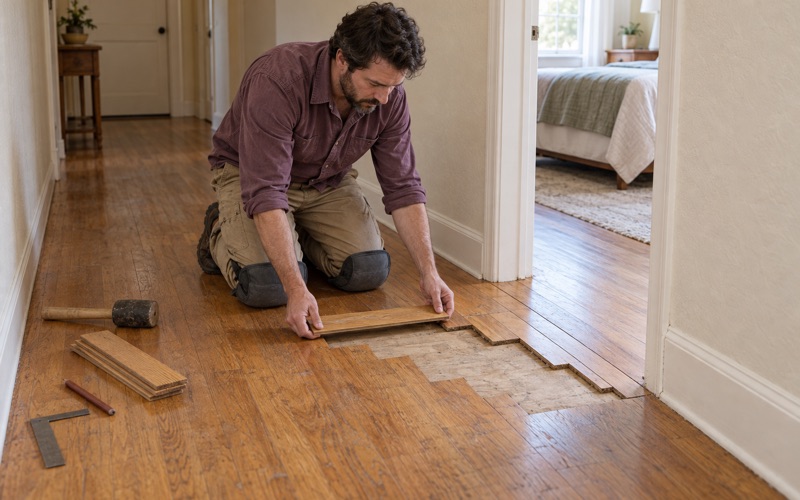
If you own one of them, or simply a house old enough to still have its first boards, we repair and match rather than replace. That can mean weaving in salvaged strips of the same species, trowel filling open seams, and choosing a stain after water popping a test patch, so the old floor keeps its grain and character instead of reading as new.
Refinishing Norco’s 1970s houses and the older stock
Of Norco’s 6,842 housing units, 4,572 were built before 1980, or 66.8 percent, and the single largest decade is the 1970s with 2,236 units. Another 1,097 went up in the 1960s. For a flooring contractor that age profile matters more than any other number here, because it shapes lead precautions, the likely original floor, and how many sandings a board has already seen.
Houses from the 1970s
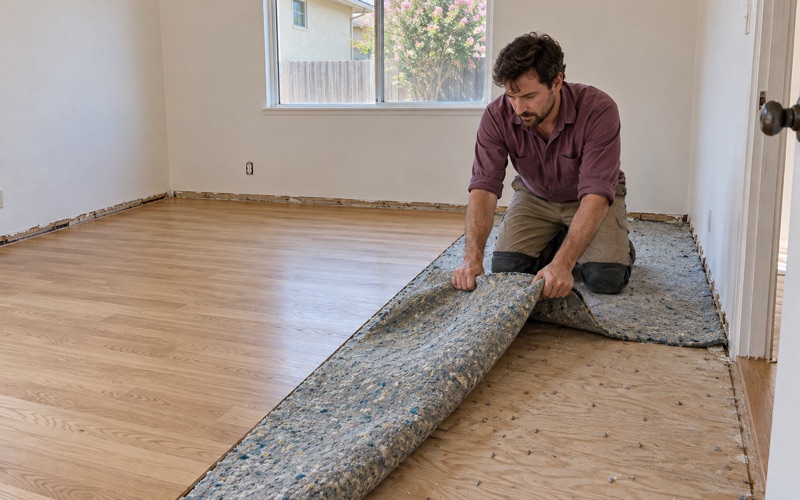
A house from the 1970s falls squarely before 1978, so we confirm the build year first and treat painted trim, baseboards and door casings with lead-safe work practices whenever sanding or removal will disturb them. Many homes of that era were carpeted wall to wall, and pulling carpet often means lifting tack strip and filling the nail holes it left in the wood.
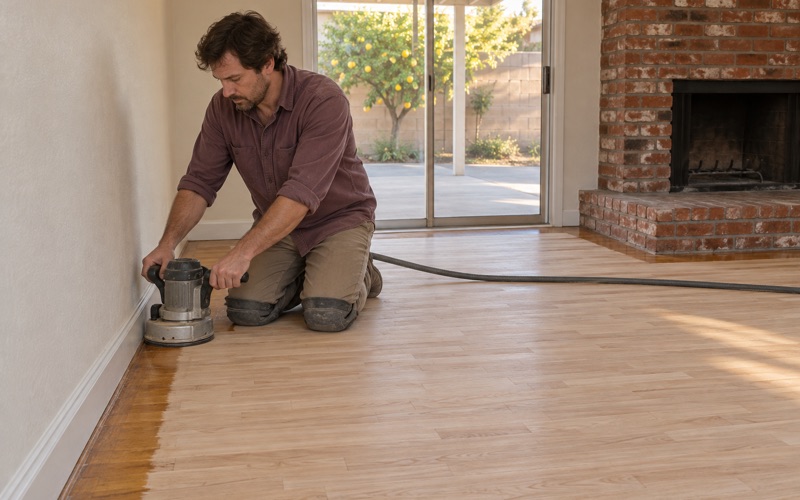
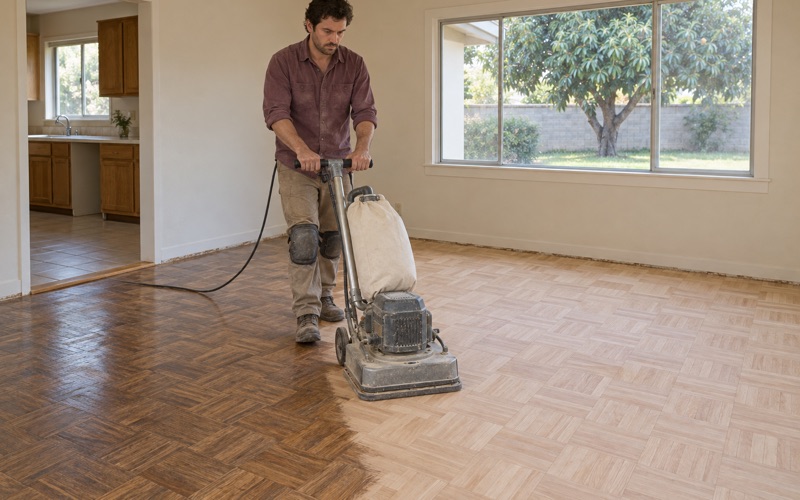
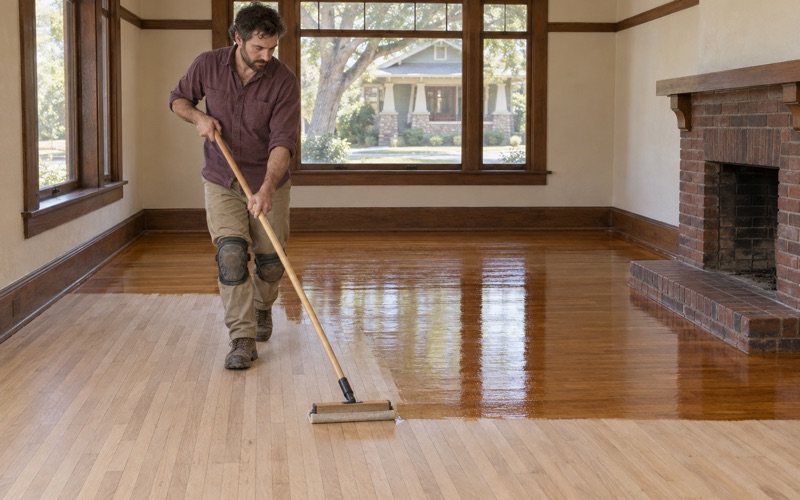
Where solid hardwood is underneath, we run a drum sander through a measured grit sequence, then an orbital sander to erase drum marks and a buffer between coats, with dustless sanding equipment pulling debris straight to a collector. Where an engineered floor was added later, we measure the engineered wear layer first, because a thin veneer can take a screen and recoat but not a full sand.
The pre-1960 houses
Older still, 929 Norco units date from the 1950s, 132 from the 1940s and 178 from 1939 or earlier, about 18.1 percent of the housing together. The oldest reach back toward the era when the North Corona Land Company, the source of the city’s name, planned a settlement of independent small farmers. Floors this old may be narrow strip oak, sometimes buried under a later layer.
Layers are where old houses surprise people. Black mastic under vinyl or parquet can be hiding the original boards, and drywood termite frass or powderpost beetle exit holes sometimes show up once the covering comes off. We probe for soft wood, check the subfloor and floor joists where we can reach them, and replace only the boards that cannot be saved.
Seasons and finishing days
Norco sits in the National Weather Service forecast zone for the San Bernardino and Riverside County Valleys, the Inland Empire zone the San Diego office covers. We read that forecast before a finishing schedule is set, because humidity swings between seasons change how fast coats dry and how boards behave in the days after a sanding.
Boards in a house that has stood fifty years have been through many of those cycles, so we check moisture content before coating and leave a margin in the cure schedule. Hardwax oil and oil-modified polyurethane cure on different clocks than waterborne products, and we explain those clocks before a family moves its furniture back in.
Rented Norco houses between tenants
Norco’s 1,253 renter households make up 18.9 percent of occupied homes, and most of them are not in apartments. Of those renters, 1,009 rent a detached house, which is 80.5 percent. So the rental floors here are mostly whole houses built in the same decades as the owner-occupied houses around them. A tenant turnover is often the only window when every room is empty at once.
Working to a turnover date
A landlord between leases usually has a date, not a wish list. We quote the house room by room, note which rooms need a full sand and which only a recoat, and lay out the days for sanding, coats and cure in writing. That schedule tells the owner when cleaners, painters and the next tenant can realistically come through the door.
Finish choice matters more on a rental. An aluminum oxide finish on prefinished boards resists daily scuffing, while a site-finished floor coated in waterborne polyurethane can be screened and recoated at the next turnover without a full sand. Anything we apply on site stays inside the Rule 1113 limits, and we pick a satin or matte sheen level that hides wear between tenants.
Damage between leases
Turnovers are also when damage surfaces: gouges from a move-out, delamination on a cheap engineered plank, or cupping near a kitchen where a slow leak went unreported. For an insurance claim we document water, smoke or ash damage room by room so the adjuster sees the same record we do. Tenant-caused damage and a covered loss are different conversations, and we keep the notes separate.
When boards do need replacing, we let new stock acclimate inside the house before installing it, matching species and cut to what stays, whether that is red oak strip or wide plank white oak. Leaving a proper expansion gap at the walls and finishing with quarter round or baseboard keeps the repair from announcing itself to the next tenant who walks in.
- 20+ Years in Wood Floors
- Build Year Checked First
- Written Cure Schedules