Upland Wood Flooring has spent more than 20 years on wood-flooring in Pomona, and many of the floors we open up here sit in houses built around the middle of the last century. That age shapes the job from the first moisture reading to the last coat of finish, so we treat it as the starting fact rather than a detail.
A mid-century floor is often solid hardwood, typically red oak or white oak in narrow strips, and it has frequently been sanded before, carpeted over, patched after a leak, or all three. Before we promise a refinish, we look at how much wood remains above the tongue and groove, where the boards have cupped or gapped, and what has been glued or tacked on top.
We keep dust contained while we work and explain each step before it starts, so the household knows which rooms are off limits and for how long. The sections below cover what we find in these houses, how we choose between sanding and replacing, and how older-house repairs, rentals and mobile homes change the plan.
Floors in Pomona’s 1940s and 1950s Houses
Pomona’s largest block of housing is postwar. Census estimates show 3,409 homes built in the 1940s and 10,353 in the 1950s, together 13,762 units, or 31.0 percent of the city’s 44,373 housing units. The 1950s alone is Pomona’s biggest building decade, larger than any other decade in the count. So the everyday floor job here is in a mid-century house.
What a Postwar Floor Usually Looks Like
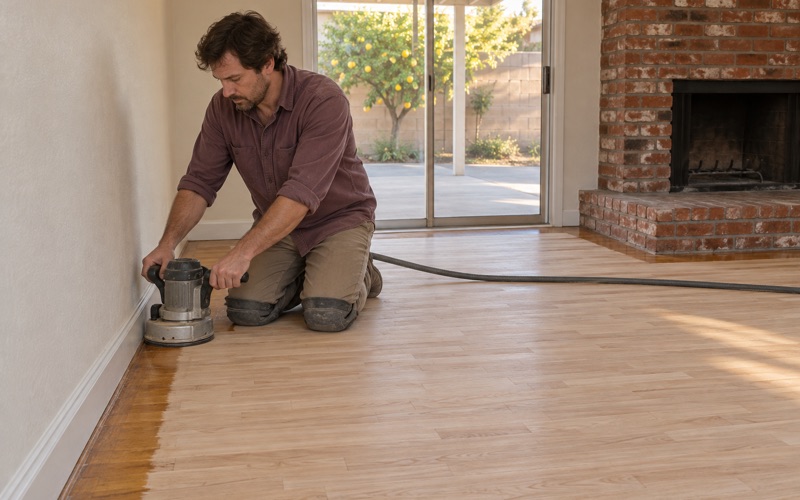
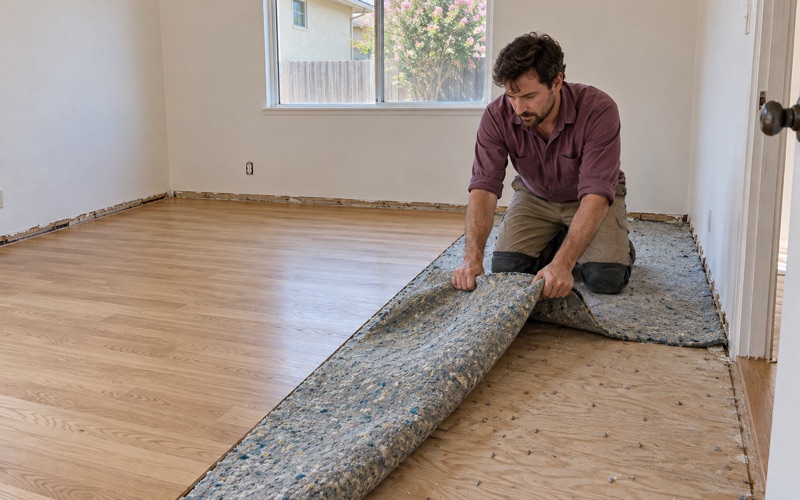
In houses of this era we often find narrow strip hardwood hidden under wall-to-wall carpet, held down by tack strip that runs along the baseboard. Pulling that carpet tends to reveal staple rows, tack holes near the walls, and pet urine stains that soaked through the pad. None of that rules out a refinish, but each one changes the grit sequence and the repair list.
Kitchens and baths in these houses were often remodeled more than once, so we see strips of original oak meeting later tile, vinyl or laminate at odd lines. Where an old resilient floor was glued down, black mastic can sit beneath it, and we identify what we are dealing with before any scraping or sanding touches it.
Signs of Age We Check For
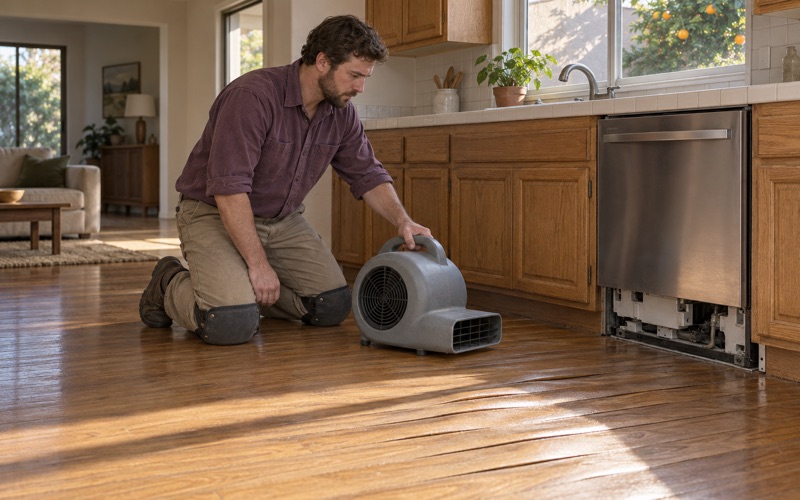
Decades of seasons leave marks. We walk the floor for cupping and crowning, listen for hollow spots, and note any buckling near exterior doors or plumbing walls. Board gapping that opens in dry months and closes in damp ones is normal movement; gaps that stay open, or boards that rock underfoot, point to a fastening or moisture problem we trace before quoting.
We also look closely at edges and thresholds for drywood termite frass or the fine exit holes of powderpost beetle, since old wood in older houses is where both turn up. If we find either, we say so and recommend the owner bring in pest control before new boards are woven in, because patching over active damage only moves the problem.
Looking for wood-flooring closer to San Dimas? See Wood-Flooring Services in San Dimas.
Refinishing or Replacing a Mid-Century Floor
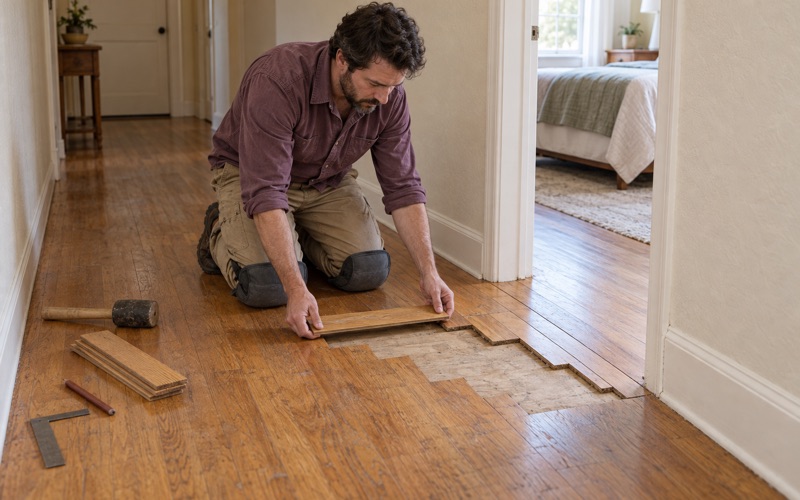
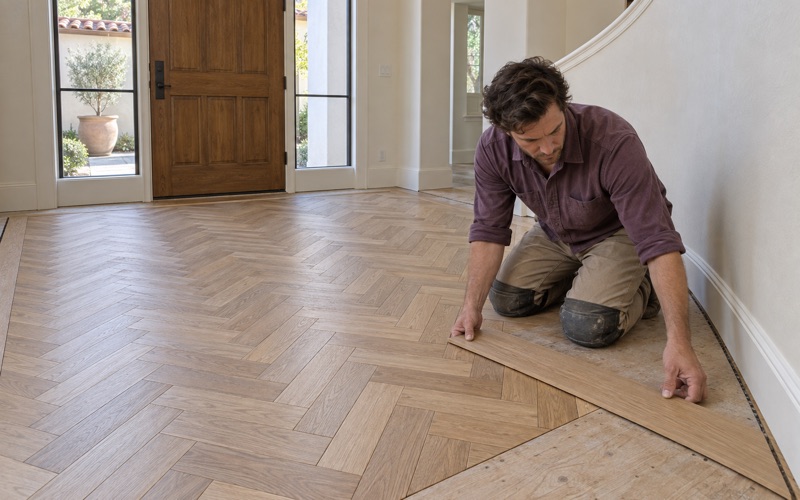
Original boards from the 1940s and 1950s are often worth keeping. Strip oak of that age has long since settled into the house, and matching it with new stock takes care. Our default is to repair and weave in matched boards where damage is local, and to replace a whole room only when the remaining wood cannot carry another sanding.
How Much Wood Is Left
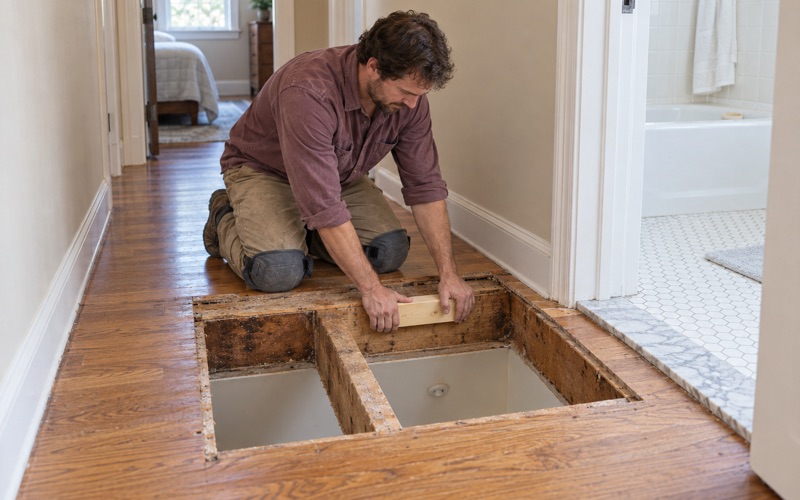
Solid hardwood can be sanded several times, but a floor that has already been through two or three full sandings may be thin above the tongue. We pull a vent cover or a threshold to see the board’s profile, and if the wood over the tongue is too thin for a full sanding, we tell the owner before any quote is final.
Where a later remodel added engineered planks, a different rule applies. We measure the engineered wear layer before promising anything, because a thin veneer over a plywood core or HDF core may only take a screen and recoat. Where delamination has started, sanding is off the table and replacement is the honest answer. We would rather lose a sanding job than sand through to the core.
Replacing Boards That Cannot Be Saved
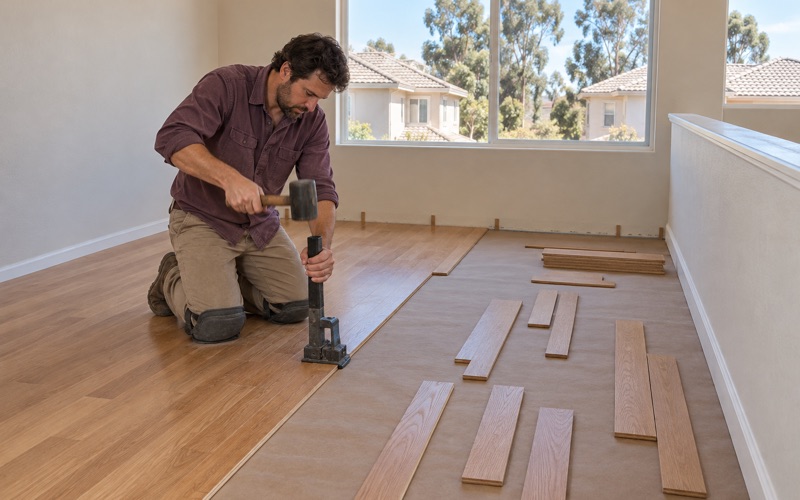
When a room does need new wood, we match species, width and cut as closely as the stock allows, whether that is plain sawn red oak or a quartersawn or rift sawn white oak that shows a straighter grain. Wide plank products can look out of place beside narrow postwar strip, so we talk through that choice before anything is ordered.
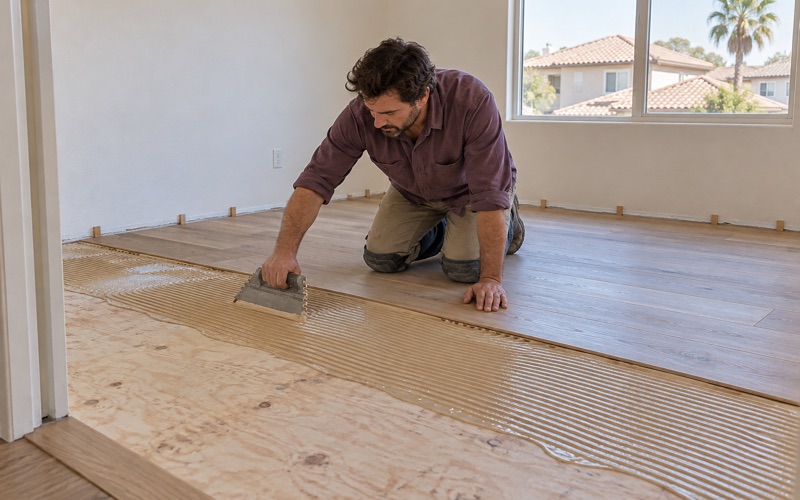
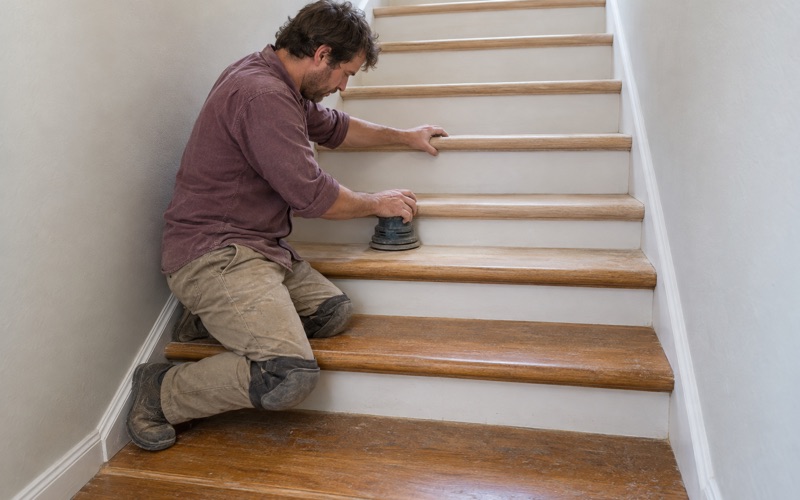
If new flooring is going over a concrete slab anywhere in the house, such as an added room, we test the slab for moisture before an engineered floor is glued down and write the reading on the job record. Stairs are quoted by the tread and riser rather than folded into a square-foot price, since each one is handled separately.
Finishes, Stain and Cure Time
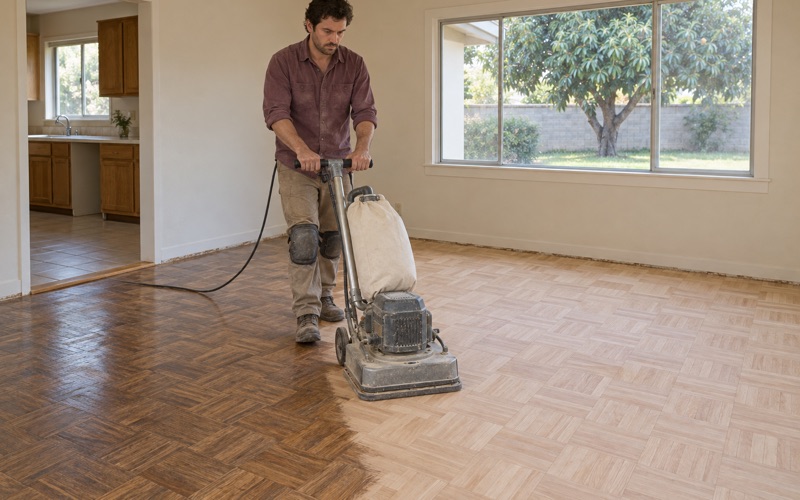
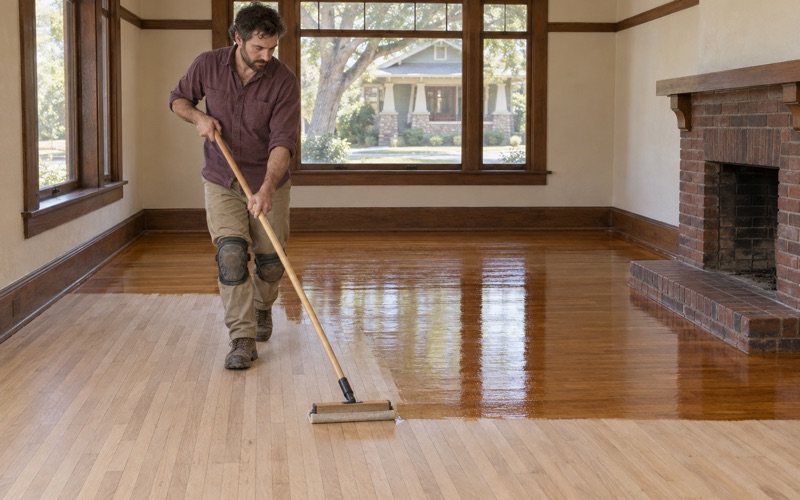
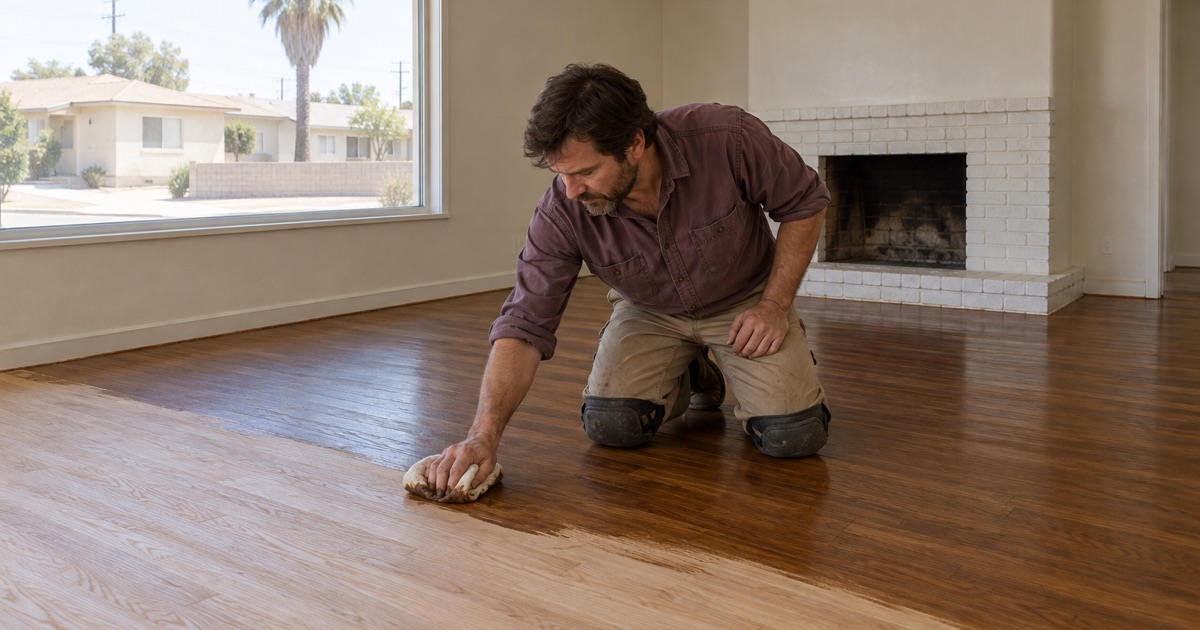
Pomona falls under the South Coast AQMD, so every finish we apply has to meet SCAQMD Rule 1113’s limits for wood coatings. Waterborne polyurethane is a common choice for site-finished floors because it dries clear and keeps the pale tone many owners want on white oak; where a warmer look suits red oak, we talk through floor stain and water popping before the first coat.
Finish choice also sets the schedule. The written cure plan we leave shows when socks are fine, when furniture can return and when rugs can go down, which matters when a household has no spare room to shift everything into. Hardwax oil and oil-modified polyurethane each run on a different clock, and we spell that out.
Older-House Repairs, Lead-Era Paint and City Programs
Pomona’s Pre-1980 Housing
The postwar decades are only part of the picture. Census estimates put 65.6 percent of Pomona’s housing units before 1980, so most homes in the city date from years when lead-based paint may still coat trim, doors and baseboards. That matters to a floor job, because sanding and scraping at the edges disturb exactly those surfaces.
Before any sanding, we confirm the house’s build year. The EPA RRP rule reaches renovation work that disturbs paint in homes built before 1978, and a floor refinish can do that at the baseboard and quarter round. Knowing the year up front lets us plan containment and cleanup around it instead of discovering the question halfway through.
Rehabilitation Loans and Improvement Grants
The City of Pomona backs owners of older houses through its Housing Services programs. A Substantial Rehabilitation Loan, a deferred loan of up to $60,000, is aimed at correcting code violations or completing urgent maintenance. A Housing Improvement Grant of up to $5,000 is offered for exterior improvements and interior health and safety repairs, with 20 percent forgiven each year the owner stays in good standing.
We want to be plain about what those programs are. The city’s own description names items such as painting and window or door work where lead-based paint hazards are found. Flooring is not named, and we cannot apply for or promise either program on anyone’s behalf. Owners should confirm eligibility and current funding directly with Housing Services.
Where they touch our work is sequencing. If a qualifying owner is using city funds to correct a code issue or a safety repair elsewhere in the house, we can schedule floor work around that project so fresh finish is not scuffed or dented by trades that come after it. Floors usually go last for that reason.
Who Reviews Construction in Pomona
Projects that require building permits in Pomona are reviewed and inspected by the Building and Safety Division at City Hall, 505 South Garey Avenue. When a floor job is tied to a remodel or structural repair, we suggest owners ask that office what the project requires first. Owners in one of Pomona’s three designated residential historic districts can put the same question to the Historic Preservation Commission.
Rented Houses and Mobile Homes in Pomona
Floors Between Tenants
Pomona is close to evenly split on tenure: of 42,623 occupied units, 46.0 percent are renter-occupied, and 5,914 of the rented homes are detached houses. Those rentals draw on the same aging housing stock as owner-occupied homes, so a landlord’s floor raises the same thin-board and old-finish questions, just on a tighter turnover window.
Between tenants, a screen and recoat can refresh a sound floor quickly when the finish is worn but not through to bare wood. Where pet urine stains have gone black or boards have cupped near a kitchen, we price the board replacement separately so the owner can decide what to fix now and what to plan for later.
Tenants do not always report a slow leak right away. We confirm the leak source and take a moisture reading before replacing boards, and we document water damage room by room when an adjuster is involved, so the owner has a record and the new boards are not laid over a problem that is still active.
Manufactured Homes in Pomona Parks
Pomona has 1,773 mobile homes, and the city lists a Cal-Home Manufactured Housing Rehab Loan of up to $25,000 for mobile homes in Pomona parks. As with the other programs, flooring is not named in what we have seen, so owners should ask the city directly about what qualifies. Checking current funding in the same call saves a wasted application.
Floors in a manufactured home call for a different plan than a site-built house. The subfloor is typically a panel product rather than hardwood, so we check its condition and flatness first, then choose between a floating installation over underlayment and a glue-down engineered floor. Prefinished engineered planks also keep dust and on-site finishing to a minimum in a smaller space.
Getting a Pomona Floor Quoted
A useful first visit covers the whole floor, not just the worst room. We look at thresholds, closets and the edges under baseboards, check moisture where there is staining, and note anything glued, tacked or stapled on top, so the written quote reflects the house as it is rather than a best guess made from the doorway.
For a townhome or condo, we check the association’s rules and any approval it requires before flooring is ordered. Once those questions are settled, we set a start date, walk the household through the order of rooms, and leave the written cure schedule on site. Smoke, ash or water losses get the same room-by-room documentation described above.
- 20+ Years in Wood Floors
- Build Year Checked First
- Written Cure Schedules