
Upland Wood Flooring helps homeowners replace carpet with hardwood in Upland, CA, with more than 20 years of wood floor experience, serving surrounding cities including San Antonio Heights, Claremont, Montclair, Rancho Cucamonga and La Verne. We remove the carpet, pad and tack strip, then either restore the hardwood hiding underneath or install new solid or engineered wood.
The first question on every carpet-to-hardwood project is what is under the carpet. It might be original oak that only needs repairs and a refinish, a plywood or OSB subfloor ready for new wood, or a concrete slab that needs moisture testing first. We check before we quote.
Upland’s largest building periods were the 1970s and 1980s, which together account for close to 44 percent of the city’s housing. Many houses from those decades had oak strip flooring covered by wall-to-wall carpet at some point, and some of those floors are still there.
What Is Under the Carpet
Checking Before the Quote
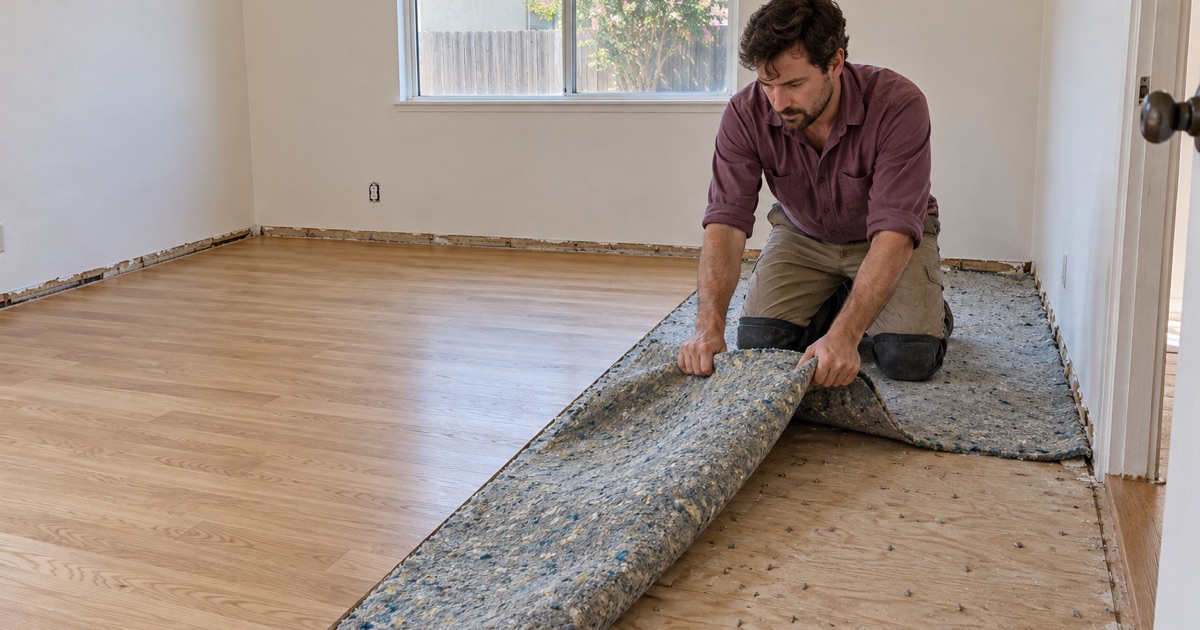
We lift the carpet in a closet corner or at a floor register to see what is underneath without disturbing the room. That small check tells us whether we are looking at finished hardwood, a rough subfloor or concrete, and it lets us give an accurate price rather than a broad estimate.
Where carpet covers several rooms, we check more than one spot. Houses that were remodeled over the years sometimes have hardwood in some rooms and plywood or a slab addition in others.
Hidden Oak Floors
Where oak strip flooring is hiding under carpet, it is often in better shape than owners expect. Carpet protects the wood from sun, traffic and spills. The usual problems are tack strip nail holes around the edges, staples from the pad, and paint drips from past remodels.
Those are repaired before sanding. Tack strip holes are filled or covered by baseboard, staples are pulled, and damaged boards near doorways are replaced with matching wood. After a full sanding and new finish, the room often looks like it was always meant to be hardwood.
Plywood, OSB or Concrete
Where the carpet was laid over a bare subfloor, we check the plywood or OSB for soft spots, stains from old leaks and loose fasteners. Pet urine that soaked through the carpet often reaches the subfloor, and odor can return through a new floor if the panel is not treated or replaced.
On a slab, we look for cracks, uneven areas and signs of moisture. Old adhesive and tack strip are removed and the slab is prepared for testing before any flooring decision is made.
Removing Carpet the Right Way
Carpet, Pad and Tack Strip
We cut the carpet into manageable strips and remove it with the pad. Tack strip is pried up carefully along the walls, since it is nailed or glued down and can damage the wood or subfloor if removed roughly. Every staple from the pad is pulled.
Any pad stuck to a wood floor is scraped off before sanding. Adhesive residue on a slab is removed so the new flooring or its adhesive can bond properly.
Old Adhesives and Black Mastic
Under older carpet or vinyl, some houses have black mastic from an earlier floor. Some of those adhesives contain asbestos. South Coast AQMD Rule 1403 governs asbestos in renovation work, so suspect mastic is tested by a qualified inspector before anyone sands, scrapes or grinds it.
We do not disturb suspect material until the result is known. If abatement is needed, it is handled properly before our flooring work continues.
Installing New Hardwood
Solid or Engineered
Over a wood subfloor, solid hardwood can be installed nail-down and sanded many times over its life. Over a slab, engineered hardwood is the usual choice, glued down or floated. We compare both for your rooms and explain the trade-offs, including the wear layer thickness on engineered products.
We bring samples of species such as white oak, red oak, hickory and maple, and we help you choose a plank width and color that suits the house. Seeing the samples on your own subfloor, in your own light, is the surest way to judge them.
Slab Testing and Subfloor Prep
Before wood goes onto concrete, we test the slab with in-situ relative humidity testing or a calcium chloride test and write the reading down. If it reads too wet, a moisture membrane, more drying time or a floating installation over a vapor retarder comes first.
Over wood subfloors, we check flatness and refasten or replace damaged panels. A flat, sound base is what keeps the new floor quiet and free of hollow spots.
Condos and Townhomes
Many associations have rules about replacing carpet with hard flooring, especially in upstairs units, where footfall noise reaches the neighbors below. Some require a specific acoustic underlayment or formal approval. We check the association’s rules and approvals before flooring is ordered.
Finishing the Room
Height, Transitions and Doors
Hardwood usually sits at a different height than carpet and pad. We plan transitions at doorways and where the floor meets tile, using a reducer, T-molding or threshold at the right height. Doors are trimmed where needed so they clear the new floor.
Baseboards are reinstalled or replaced, and quarter round covers the expansion gap. Those finishing details are what make the new floor look like it belongs in the house.
Stairs From Carpet to Wood
Carpeted stairs are often part of the same project. We remove the stair carpet and install new hardwood treads, risers and stair nosing, or refinish existing wood treads if they are suitable. Stairs are priced by the tread and riser, and each step is fitted individually.
Finish and Cure Schedule
Site-finished floors are sanded and coated with waterborne polyurethane, oil-modified polyurethane or hardwax oil chosen to meet South Coast AQMD Rule 1113. We leave a written cure schedule so the household knows when each room is ready again.
- 20+ Years in Wood Floors
- Build Year Checked First
- Written Cure Schedules