Upland Wood Flooring handles wood-flooring in Santa Fe Springs for property owners who rent out homes and apartments, and we have been sanding, repairing and laying hardwood for more than 20 years. This page is written for owners who work to a landlord’s calendar rather than a homeowner’s wish list. That changes how we schedule, how we choose a finish, and how quickly a unit goes back to a tenant.
A rented floor carries different pressures than an owner’s floor. It has to stay safe and sound for whoever lives on it, it has to survive the next move-out, and the work has to fit inside a narrow vacancy window or around a household still living in the unit. We plan every job around those three limits before we quote a board or a coat.
Before any sanding starts, we confirm the building’s year of construction, because the EPA RRP rule reaches painted surfaces disturbed in homes built before 1978. We also select finishes that meet SCAQMD Rule 1113, which sets the wood coatings limits for this air basin. Both checks happen at the estimate, so a landlord knows the plan before a tenant is told a date.
Santa Fe Springs Inspects Every Rental Once a Year
A 1995 Ordinance Still in Force
In 1995 the City Council passed Santa Fe Springs Municipal Code Section 150.095, which requires every residential rental property in the city to be registered and inspected annually. The stated purpose is to keep rental units in lawful health and safety condition. Since 2006 the Residential Rental Inspection Program has operated under the direction of the Department of Fire-Rescue.
Two kinds of housing sit outside the program: owner-occupied dwellings and mobile home parks. If you live in the house you own, the annual visit does not apply to you. If you rent that same house to someone else, or rent out a unit in a complex, it does, and the inspection becomes a fixed point on your year.
How Many Households That Touches
The reach is wide for a small city. Of 5,716 occupied housing units in Santa Fe Springs, 2,250 are renter-occupied, which is 39.4 percent, according to the Census Bureau’s 2024 five-year American Community Survey. That is roughly two households in every five living under a lease, and most of those units fall inside the annual inspection cycle.
Residential land is a small share of the map here. Less than ten percent of the city’s nine square miles is designated residential, according to the city’s housing element, so the rental stock is concentrated rather than scattered. For a landlord with more than one unit, that concentration makes it practical to schedule floor work for several units in a single visit.
What the Program Does and Does Not Say
The city’s published description of the program speaks to health and safety. It does not list floors or floor coverings, and it does not state a fee, so we do not claim to know what an inspector will look at underfoot. What we can do is keep a rental floor in sound, safe condition so it is one less thing on the owner’s list.
We are an independent flooring company with no tie to Fire-Rescue, and no contractor can promise an inspection outcome. Our role is practical: lifted boards, loose nosing on a stair, a split threshold or a failing finish get found and fixed on a schedule the owner sets. The inspection itself stays between the owner and the city.
Looking for wood-flooring closer to La Palma? See La Palma Wood-Flooring.
Planning Floor Work Around the Inspection Calendar
Working Backward From the Annual Visit
Because the inspection repeats every year, a landlord can treat floor work as a yearly maintenance line rather than an emergency. We usually suggest a walk-through a couple of months ahead of the expected visit. That leaves time to order matching boards, cure a finish fully, and let a tenant plan around a day or two of disruption.
The walk-through is simple. We note cupping near kitchens and baths, board gapping along exterior walls, hollow spots under traffic lanes and any finish worn through to bare wood. Each item goes on a written list with a suggested fix, so the owner can decide what happens now and what waits for the next turnover.
Turnover Versus the Inspection Window
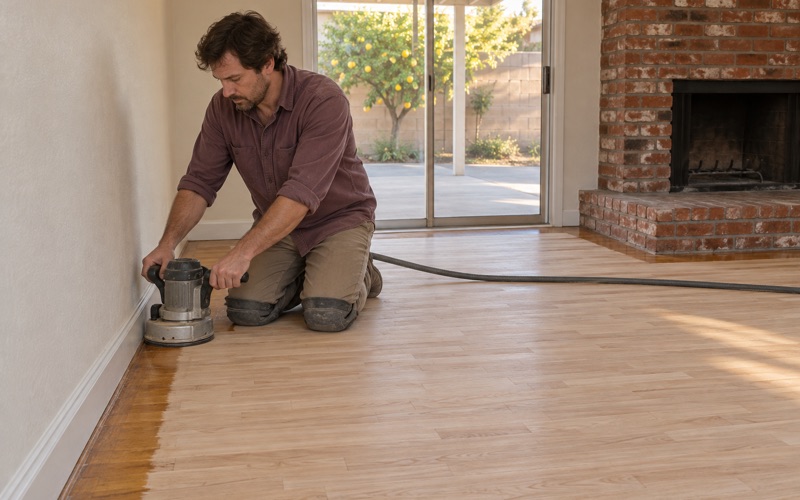
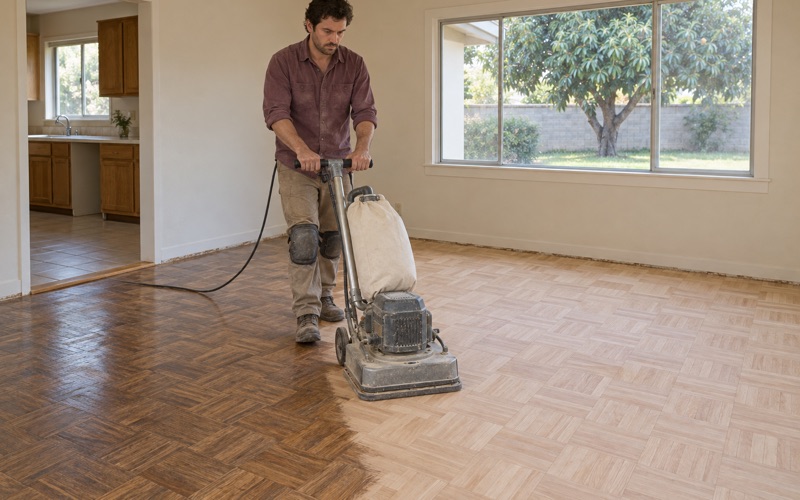
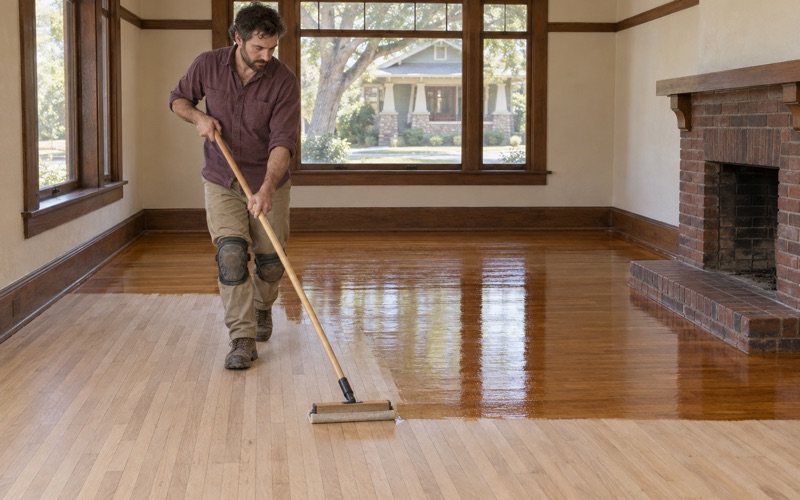
A vacancy is still the easiest time to refinish. With the unit empty we can run a drum sander through the full grit sequence, apply stain if the owner wants a color change, and give the finish its complete cure before furniture returns. A full sand and three coats of waterborne polyurethane usually fits inside a short vacancy.
When no vacancy lines up before the inspection, the calendar pushes toward lighter work in an occupied unit. A screen and recoat, spot board replacement or new stair nosing can be done in a day or two. We write a cure schedule for every job so the tenant knows exactly when to walk on the floor and when rugs can go back.
Finishes That Suit the Air Basin and the Lease
With the air-district question settled at the estimate, the finish choice for a rental comes down to durability and odor. We lean toward waterborne polyurethane in a satin or matte sheen level. It has low odor during application, dries quickly between coats, and hides light scuffs better than a gloss finish would.
Oil-modified polyurethane and hardwax oil have their place, but a longer cure and stronger smell make them harder to schedule around a tenant. On prefinished floors with an aluminum oxide finish, we test a hidden spot first, because a recoat will not bond to that factory surface without the right preparation.
Rented Houses and Townhomes
Single-Family Rentals
Not every Santa Fe Springs rental is an apartment. The same ACS tables count 441 renter households in detached houses and 94 more in one-unit attached homes. Floors in these houses take the wear of a full household, yet the owner may see them only at the annual inspection or a move-out.
Much of the city’s housing dates from the 1950s, the decade that accounts for 45.3 percent of all units, and a rented house of that age may still hold its original solid hardwood. Where those boards are sound, we repair and match them rather than replacing the room, which keeps cost and vacancy time down.
Lead-Era Houses and Sanding
About 69.2 percent of the housing in Santa Fe Springs was built before 1980, which is why the build-year check at the estimate matters so much here. In an older rental, baseboards, door casings and stair risers are the painted surfaces most likely to be disturbed when a floor is sanded or boards are pulled.
For an occupied house, containment matters as much as the finish. We seal off the work area, use dustless sanding with vacuum extraction, and clean before we leave each day. The tenant gets a written schedule showing which rooms are closed, when coats go down, and when furniture can move back.
Attached Units and Association Rules
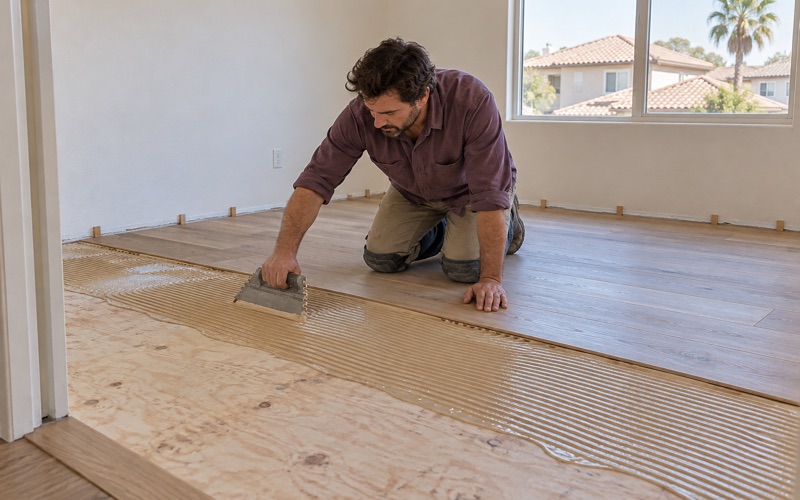
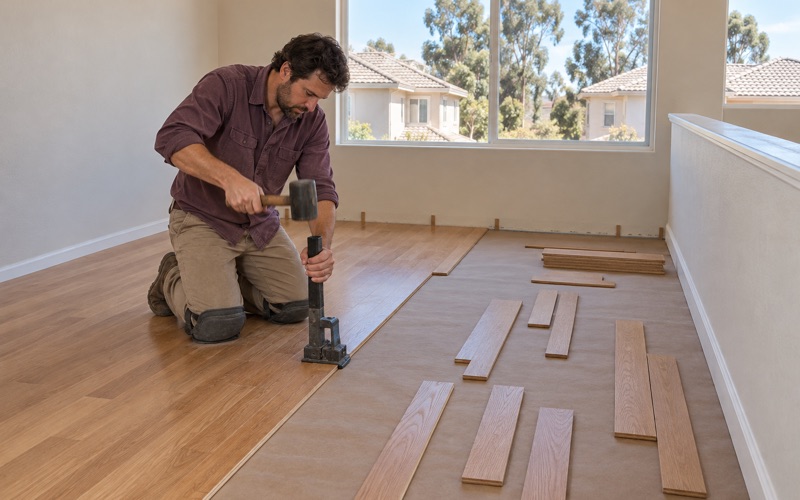
Rented townhomes add a second approval layer. If the unit belongs to a homeowners association, its rules on flooring type and underlayment can decide what goes in before anything is ordered, so we check those rules with the owner first. A floating engineered floor over acoustic underlayment is a common answer when a shared wall or ceiling is involved.
Large Apartment Buildings and Repair, Recoat or Replace
Turnover in Fifty-Plus-Unit Buildings
The biggest block of renters in Santa Fe Springs lives in large complexes. The ACS counts 840 renter households, 37.3 percent of all renters in the city, in buildings of fifty or more units. In those buildings, floor work is driven by turnover volume, and consistency from one unit to the next matters as much as the result in any single apartment.
We help property managers set a standard for each floor plan: one species, one stain, one sheen and a matching reducer or T-molding at the kitchen transition. Keeping a written record of those choices means a unit refinished this spring will match one done three years from now, and replacement boards can be pulled from the same stock.
Stairs, Slabs and Sound
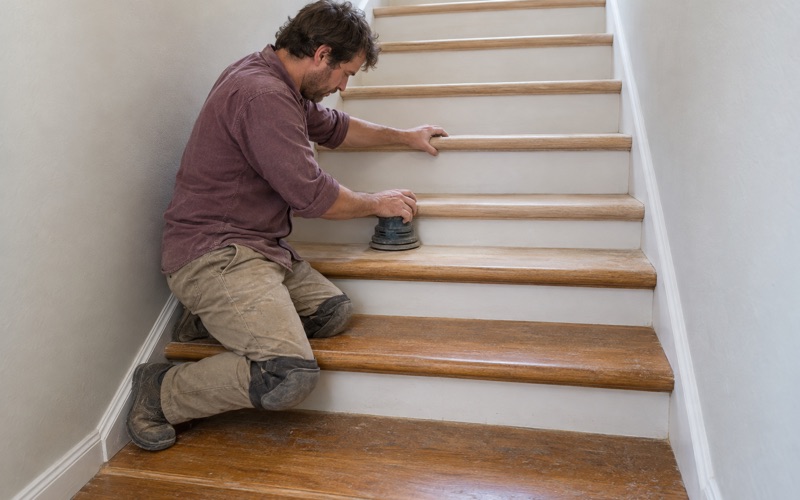
Apartment floors above the ground level bring stair and sound questions. We price stairs by the tread and riser, since each step is its own small job with nosing, returns and finish edges. Where engineered flooring is glued to a concrete slab, we test the slab for moisture first and write the reading down rather than guessing.
Sound between floors is a building decision as much as a flooring one, and we do not quote a rating number for it. We follow the building’s own requirements for underlayment and installation method, and we check the engineered wear layer before promising any future sanding, because a thin one limits how many refinishes a unit can take.
Choosing the Right Level of Work
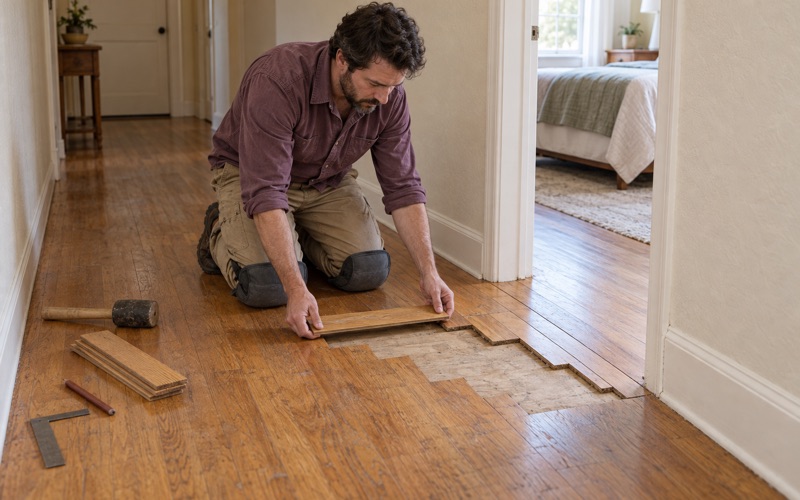
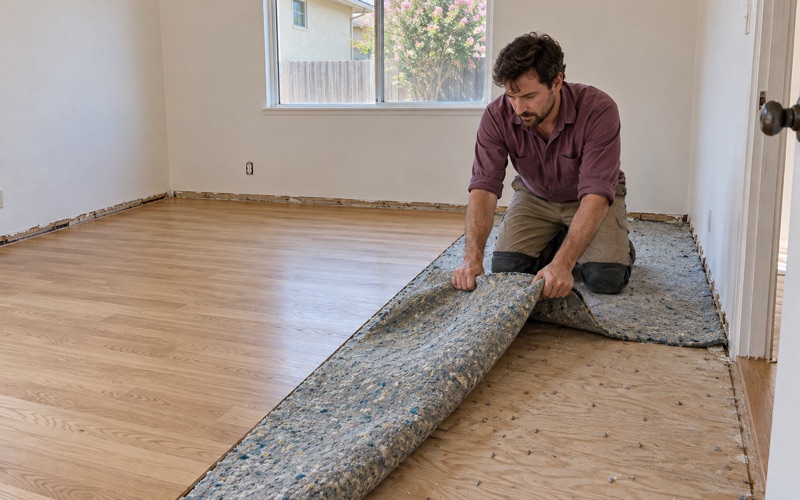
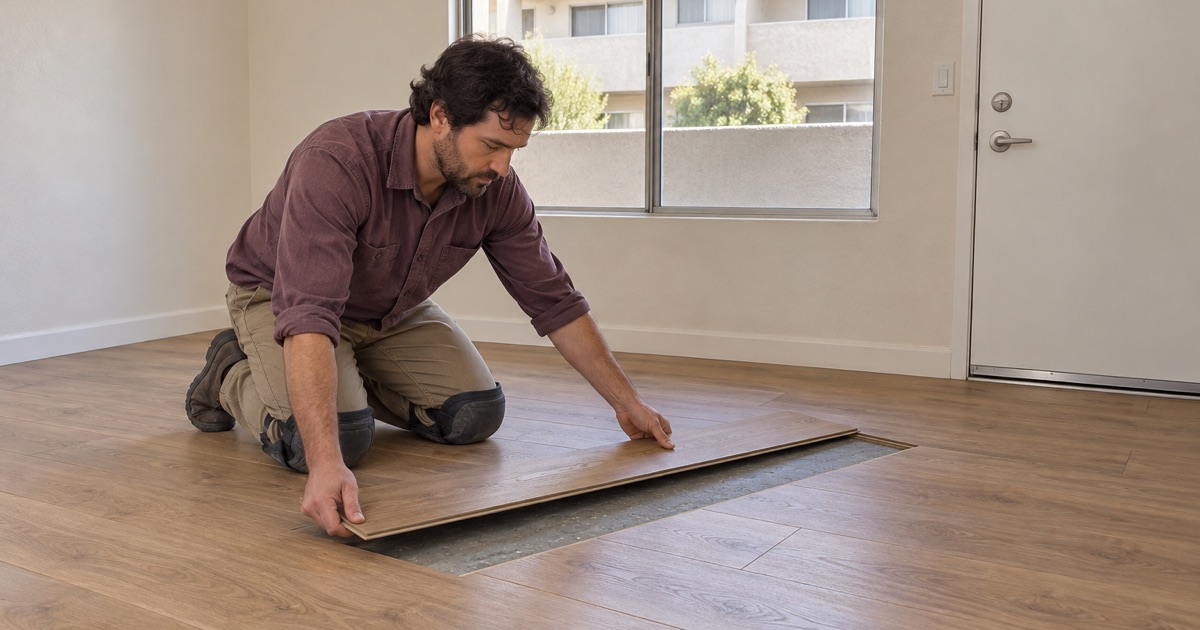
In an occupied rental, the lightest fix that holds is usually the right one. A screen and recoat refreshes a finish that is scratched but not worn through. Spot replacement handles a few damaged boards, pet urine stains or a patch of delamination. A full sand is saved for floors where the finish is gone or the damage is widespread.
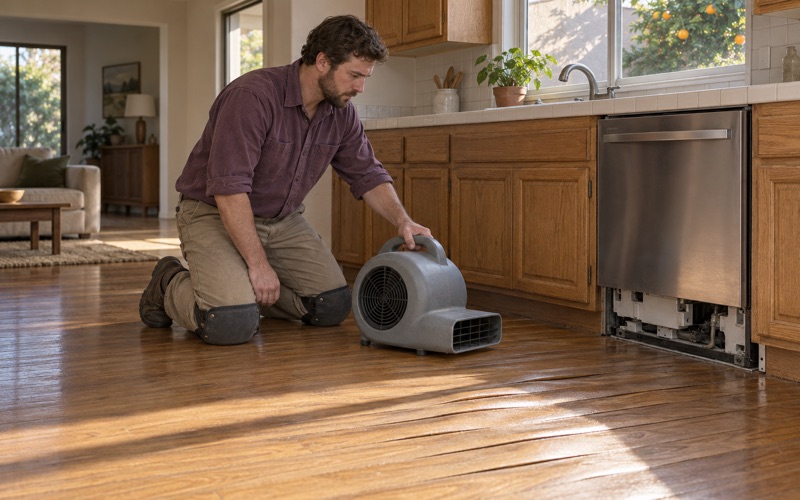
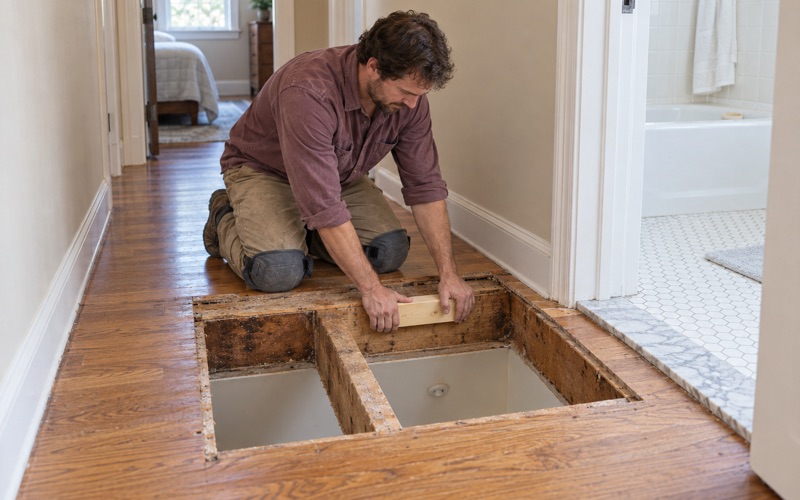
Water damage gets its own sequence. We confirm the leak source and take a moisture reading before replacing any boards, because new wood laid over a wet subfloor will cup or buckle again. When an insurance claim is involved, we document the damage room by room for the adjuster, so the owner has a clear record for the file.
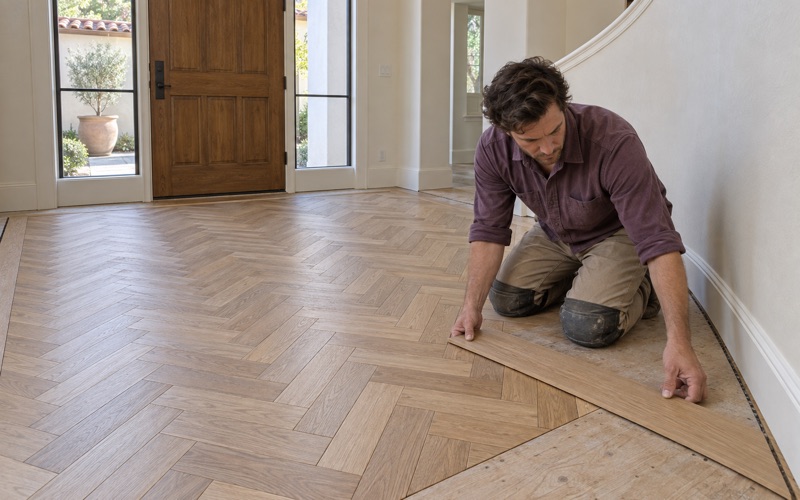
Replacement makes sense when a floor has failed across a whole unit or the owner wants a more durable surface for years of tenants. California’s statewide rent cap in Civil Code 1947.12 limits increases over any 12-month period, so a floor that lasts through several tenancies deserves to be weighed against repeated patching.
- 20+ Years in Wood Floors
- Build Year Checked First
- Written Cure Schedules