
Upland Wood Flooring provides subfloor repair in Upland, CA with more than 20 years of wood floor experience, serving surrounding cities including San Antonio Heights, Claremont, Montclair, Rancho Cucamonga and La Verne. We repair soft spots, rot, squeaks and uneven sections in plywood and OSB subfloors, and prepare slabs, so the wood floor above has a sound base.
A wood floor is only as good as what it sits on. Most floor failures we see, from squeaks and hollow sounds to cupping and gaps, start below the finished boards. Replacing or refinishing the floor without fixing the subfloor means paying for the same problem twice.
We find the cause before repairing anything. Moisture, leaks, insects, loose fasteners and uneven framing all damage subfloors in different ways, and each calls for a different repair.
Signs of Subfloor Trouble
Soft Spots and Bounce
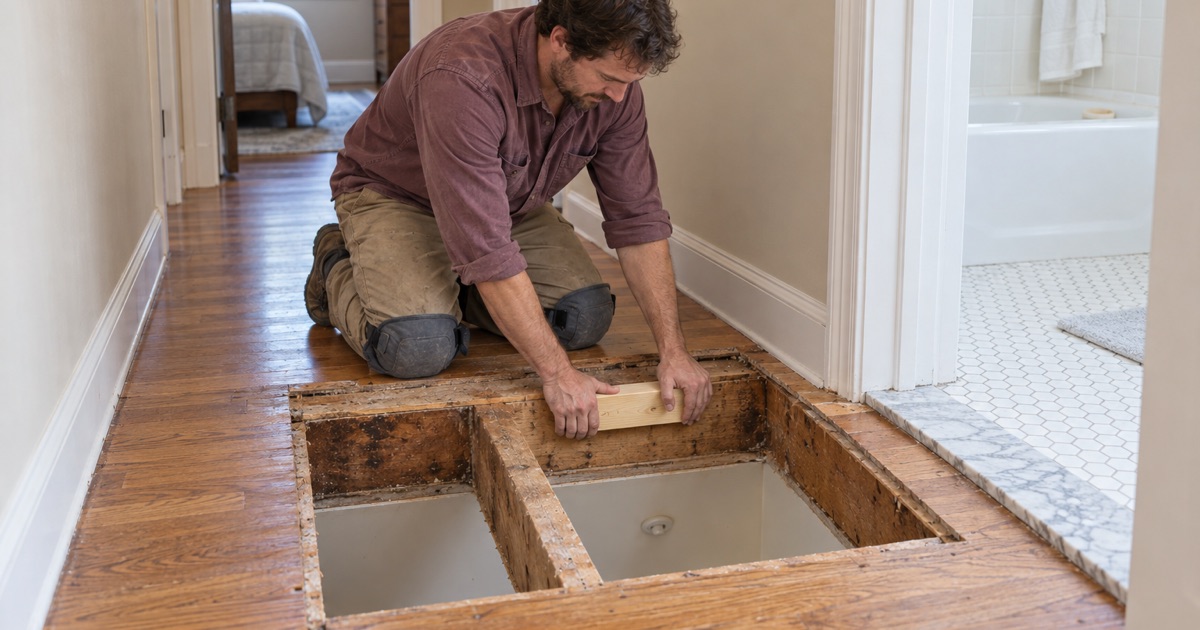
A spot that gives underfoot or a floor that bounces when you walk usually means the subfloor panel has weakened or pulled away from the floor joists. Water is the most common cause, especially near toilets, tubs, dishwashers and exterior doors. Over time a soft spot grows as the damaged material breaks down.
We probe the area and take moisture meter readings to see how far the damage reaches. Soft plywood or OSB is cut back to sound material and framing, rather than covered with a thin patch that will fail again.
Squeaks and Movement
Squeaks come from movement: boards rubbing against each other, nails sliding in their holes, or a subfloor panel moving against a joist. A floor that squeaks everywhere was often under-fastened, while a squeak in one spot usually points to a local problem such as a gap over a joist.
Where we can reach from below, we fix squeaks with screws, construction adhesive and shims between the joists and the subfloor. From above, we refasten the subfloor through the finished floor and conceal the fasteners. Fixing squeaks before a refinish means the new finish sits on a quiet floor.
Water, Rot and Insect Damage
Leaks and Rotted Panels
Slow leaks under sinks, toilets and appliances can soak a subfloor for months before anyone notices. OSB swells and loses strength when it stays wet, and plywood can delaminate as its layers separate. Rot eventually follows in both.
Before any repair, we confirm the leak source is fixed and the framing and surrounding panels have dried. Damaged sections are removed, framing is checked, and new panels of matching thickness are installed with adhesive and screws. The finished wood floor is then relaid or replaced over sound material.
Termite and Beetle Damage
Drywood termites and powderpost beetles damage structural wood as well as finished flooring. Frass along the baseboard or small exit holes in the boards can mean the subfloor or joists are affected below. The damage can hollow out wood that still looks sound from the surface.
Once a pest professional has treated the infestation, we open the floor where needed, remove damaged subfloor and assess the framing. Replacement panels and any blocking go in before new or relaid flooring is installed.
Flattening and Leveling
Uneven Plywood and OSB
Wood floors need a flat base. High seams, dips between joists and panels that have swelled at the edges all telegraph through new flooring as bumps, gaps or hollow spots. Flooring manufacturers set flatness tolerances that the subfloor must meet for the warranty to apply.
We check flatness with a long straightedge, sand down high seams, and fill low areas with a suitable patch. Swollen panel edges are planed or replaced. In some cases, a new layer of plywood over the old subfloor gives the cleanest result.
Framing Behind the Subfloor
Sometimes the subfloor is fine and the problem is a joist that has sagged, cracked or been cut for plumbing. We can often correct minor framing issues by adding blocking or sistering a new member alongside the old one. Those repairs give the subfloor proper support again.
Where damage is structural or widespread, we recommend the right trade and coordinate our flooring work around their repair. We will not lay a new floor over framing that is not sound.
Preparing Slabs for Wood
Filling, Grinding and Crack Checks
On a slab house, the concrete is the subfloor. Low spots are filled with a patching or leveling compound, high spots are ground down, and cracks are checked for movement. A flat slab is essential for glue-down installation, where hollow spots form wherever the boards cannot reach the adhesive.
Old adhesive, tack strip and flooring residue are removed before any leveling. Where black mastic is present, it is tested for asbestos before anyone scrapes or grinds it, since South Coast AQMD Rule 1403 governs asbestos in renovation work.
Moisture Before Wood
Concrete holds moisture, and a slab that reads too wet will break adhesive bonds and cup the boards above. We test with in-situ relative humidity testing or a calcium chloride test and write the reading down. If it is too high, a moisture membrane, more drying time or a floating installation over a vapor retarder comes before any wood.
A slab that reads wet in one area and dry everywhere else deserves a closer look. That pattern can point to a slab leak or water entering from outside, and laying wood over it would only hide the problem until the boards cup.
Subfloor Checks Before New Hardwood
When Carpet or Vinyl Comes Up
Replacing carpet or vinyl plank with hardwood is the moment to find subfloor problems, because the subfloor is fully exposed. We look for stains from old leaks, soft areas near bathrooms and kitchens, loose panels and nails that have backed out. Pet urine that soaked through carpet often reaches the subfloor too, and odor can return through a new floor if the panel is not dealt with.
Fixing those problems now costs far less than lifting a finished hardwood floor later. We repair or replace damaged panels, refasten loose ones and flatten the surface before the first board goes down.
Fastening for Nail-Down Floors
Solid hardwood is usually installed nail-down with flooring cleats or staples, so the subfloor has to hold fasteners well. Thin, delaminated or damaged panels let the floor loosen and squeak over time. Flooring manufacturers and the NWFA Installation Guidelines set minimums for subfloor type and thickness.
Where the existing subfloor falls short, we add a layer of plywood or replace sections so the new floor has a solid base to fasten into. That extra step is what keeps a new floor quiet and tight for years.
- 20+ Years in Wood Floors
- Build Year Checked First
- Written Cure Schedules