Upland Wood Flooring has spent more than 20 years on wood-flooring in Vincent and the surrounding valley, and most of the floors we see here belong to owners who have no plan to move. That changes the job. A floor that will carry the same household for another decade or two has to be judged on footing first, then on looks.
We start every visit by reading what is already underfoot. Solid hardwood from the original build, a later glue-down engineered floor, sheet goods laid over old boards, or carpet on tack strip each asks for a different plan. We note where the floor changes height, where people turn and pivot, and which rooms see bare feet or socks.
From there we explain the tradeoffs in plain terms: finish sheen, board texture, rugs, and the thresholds between rooms. Nobody should have to guess why one surface costs more than another, or why a surface that looks best in a showroom may be the wrong pick for a hallway walked at night.
Floors for Owners Who Plan to Stay in Vincent
Vincent, also known as East Irwindale, is an unincorporated census-designated place in the central San Gabriel Valley, and it should not be confused with the unrelated Vincent elsewhere in Los Angeles County. It is a community of owners, and census figures put owner occupancy at 77.9 percent of occupied homes. That shapes how we plan a floor here.
What 98.8 Percent Detached Means for a Floor
Of the 3,032 owner households counted in the ACS 2024 five-year estimates, 2,996 live in detached houses, which works out to 98.8 percent. For flooring, that means nearly every owner decides alone. There is no association board approving products and no shared ceiling below, so the choice of species, finish and underlayment rests with the household.
It also means the floor has to outlast a lot of change inside one house. The hallway that carried children running to school may later need to carry a walker or a cane. We plan for that second life now: a finish that keeps some grip, transitions that do not catch a toe, and boards laid tight enough to stay flat.
Solid Hardwood Worth Keeping
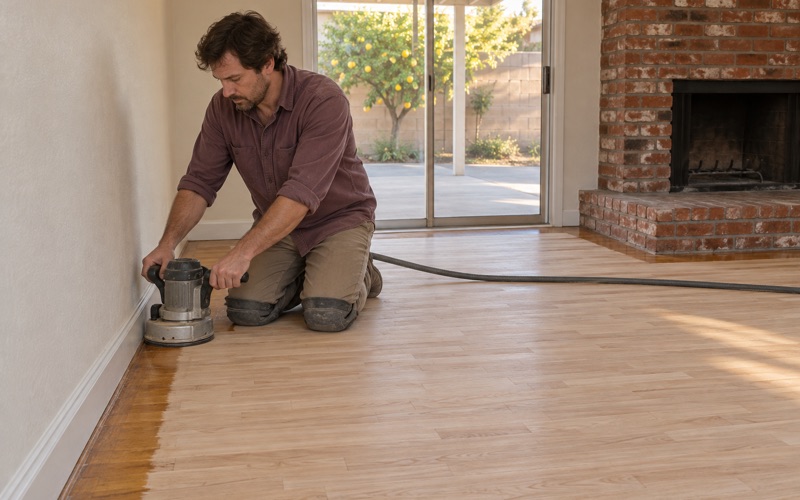
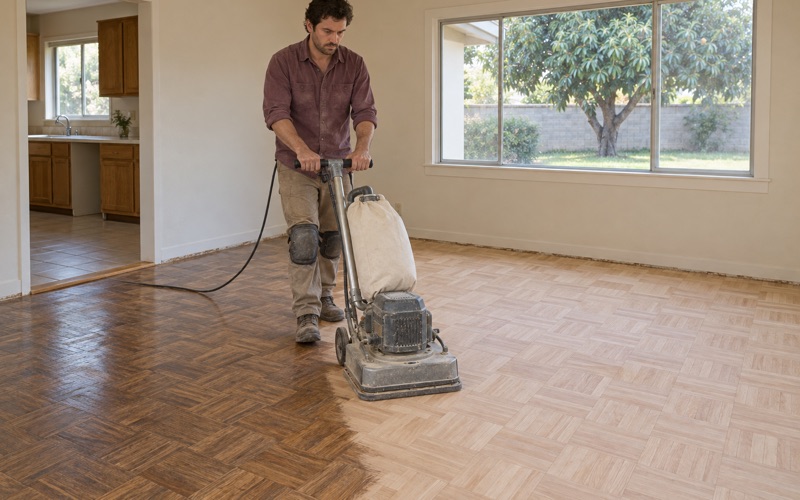
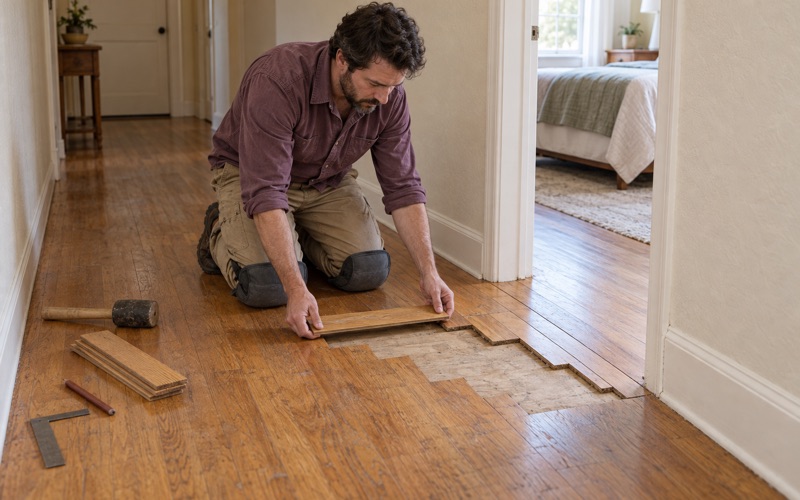
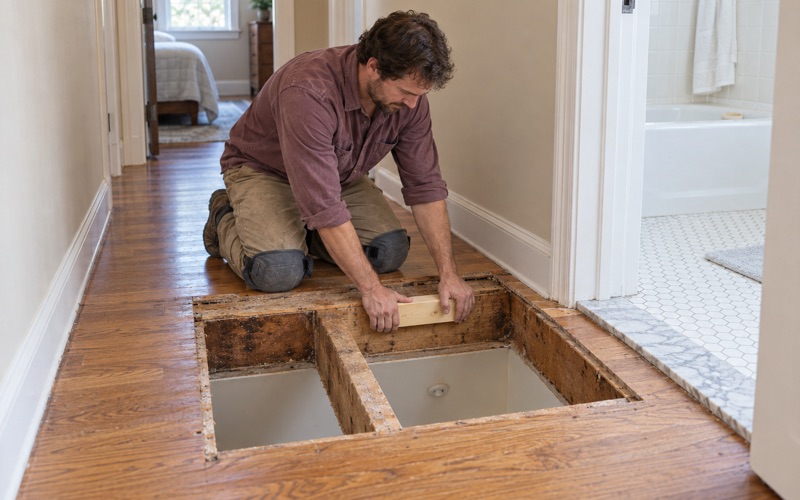
Where an older house still has its original solid hardwood, whether red oak, white oak or something less common, we lean toward repair over replacement. We pull damaged boards and weave in matching tongue and groove stock where pet urine stains, a leak or old furniture left their mark, then sand the whole field so the repair blends. A sound floor rarely needs to be torn out.
Before we promise a sanding, we check what is left to sand. Solid boards that have been refinished several times can run low above the tongue, and an engineered floor with a thin wear layer cannot take a full refinish at all. We measure first, then tell you honestly whether a screen and recoat, a full sand or new boards fits.
Looking for wood-flooring closer to Grand Terrace? See Wood-Flooring in Grand Terrace.
Footing, Sheen and the Surface Underfoot
A refinished wood floor can look beautiful and still feel slick in socks. Much of that comes down to choices made at the end of the job, not the species. This is where we spend the most time with owners who expect to stay, because the right answer is rarely the glossiest one in the sample box.
Choosing a Sheen Level
Sheen level describes how much light the topcoat reflects, from matte and satin up through semi-gloss and gloss. We will not quote a slip-resistance number for any of them, because we have no tested figure to stand behind. What we can say is that matte and satin hide scuffs, cut glare from low sun, and keep a hallway from looking wet.
Glare matters more than people expect. A shiny floor catching window light can hide a step down or a rug edge, especially for eyes that are not as sharp as they were. We bring sample boards finished in two or three sheens and set them in your own light before anyone commits.
Finish Chemistry and Texture
Every finish we apply is chosen to fit South Coast AQMD Rule 1113, the wood coatings rule that decides which products are legal in this air basin. Within that limit, waterborne polyurethane, oil-modified polyurethane and hardwax oil each wear differently. Hardwax oil leaves a softer, more open surface, while a urethane film builds a harder shell that mops easily.
Texture helps too. A wire-brushed face on new boards gives the foot a little more to read than a glassy, fully smooth surface. We weigh that alongside Janka hardness: hickory and maple resist dents better than red oak, which matters under a dropped cane tip, a walker glide or a rolling chair.
Keeping a Floor Clean Without Making It Slick
Maintenance can undo a good finish. Polishes and oil soaps sold for wood can leave a film that turns slippery and blocks the next recoat. We leave every household with a short care sheet naming the cleaner that suits its finish, and a realistic interval for a screen and recoat before the topcoat wears through.
Thresholds, Rugs and Transitions in Older Vincent Houses
Vincent’s housing is old by California standards. Of 3,927 housing units in the ACS 2024 five-year count, 94.2 percent were built before 1980, and 71.6 percent went up in the 1950s alone. Houses of that age have often been remodeled piecemeal, and each remodel can leave an edge where one floor meets another.
Height Changes Between Rooms
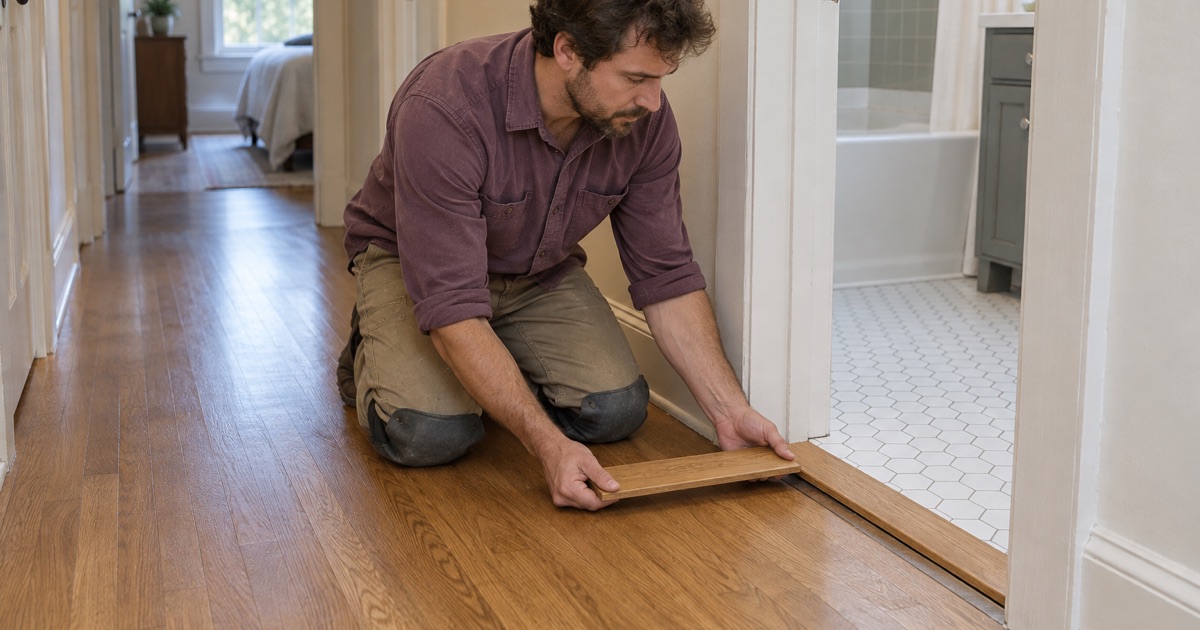
A kitchen tiled over the old boards, a bathroom raised with a new mortar bed, carpet in a bedroom on its own pad: each sits at a different height. The result is a lip at the doorway, sometimes capped with a tired metal strip. For owners staying put, those lips are the first thing we flatten or taper.
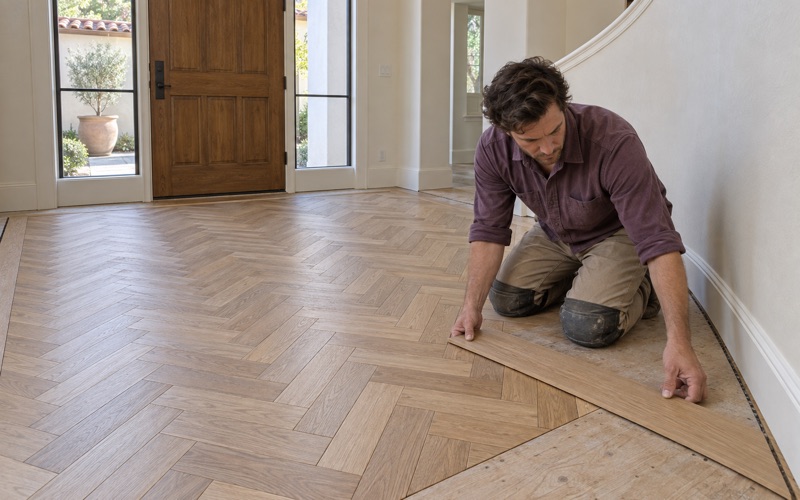
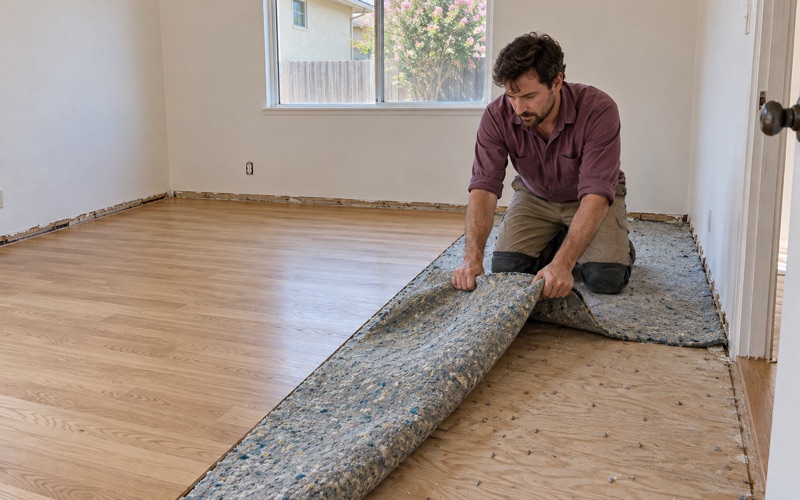
The fix depends on the gap. A small difference takes a low-profile reducer. Where two wood floors meet at the same height, a flush T-molding or a seamless weave of boards removes the edge entirely. When we pull old carpet, we lift every tack strip and fill the nail holes, so nothing is left to catch a slipper.
Rugs, Runners and Stairs
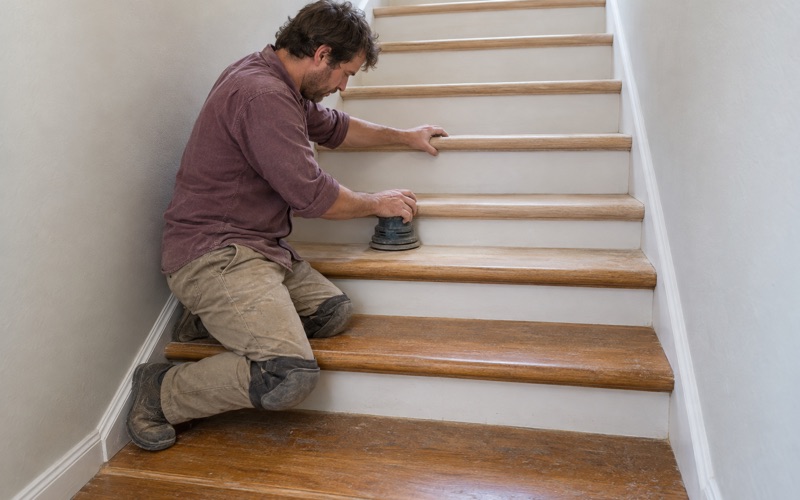
Loose rugs on a smooth finish are one of the easier hazards to fix. We suggest fewer, larger rugs on a gripping pad, or none in the main walking path. Where a house has steps, even a single step down into a family room, we quote stair treads and risers by the piece and can add a contrasting nosing so the edge reads clearly.
Lead-Era Paint and Old Adhesives
With nearly every house here predating 1980, we confirm the build year before any sanding. The EPA RRP rule reaches paint disturbed in pre-1978 homes, and baseboards, shoe molding and door casings removed for a transition are often painted. When we find black mastic under old tile or sheet goods, we stop and plan around it rather than grind it.
The County Senior Grant and a Refinish-or-Replace Decision
Because Vincent is unincorporated, the county, not Azusa or Covina, governs it, whatever the mailing address says. Homes south of Arrow Highway carry Covina 91722 addresses and those north of it carry Azusa 91702, yet building questions go to Los Angeles County Public Works, Building and Safety, under the Title 26 Building Code.
Where the Senior Grant Program Fits
County status matters for one more reason. LA County Planning places East Irwindale in the First Supervisorial District, and the LACDA Senior Grant Program offers up to $20,000 to homeowners over 62 in unincorporated areas of Districts 1, 2, 4 and 5. Its list of eligible work includes wheelchair ramps, grab bars, widened doorways and non-slip floor covering.
We want to be precise about what that means. The program’s geography includes this community, but eligibility is decided by application, and the item it lists is non-slip floor covering, which is not the same thing as a new wood floor. If an owner is weighing an application, we can describe the floor work clearly, and the county decides what, if anything, it supports.
When Refinishing Is Enough
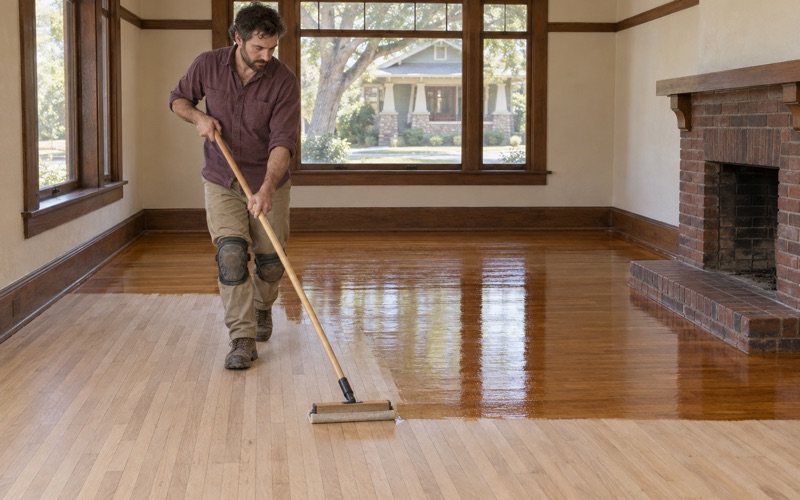
In a pre-1980 house with sound solid hardwood, a full sand with a drum sander and orbital sander, a careful grit sequence, and a low-sheen finish often gives an owner everything they need. Before the first coat, we fill gaps, fix hollow spots, and replace boards where old leaks or drywood termite frass point to damage.
Refinishing also keeps the work short, which suits a household living at home. We seal off the work area, run dustless sanding where the floor allows it, and give you a written cure schedule showing when socks, shoes, furniture and rugs can return to each room.
When Replacement Makes Sense
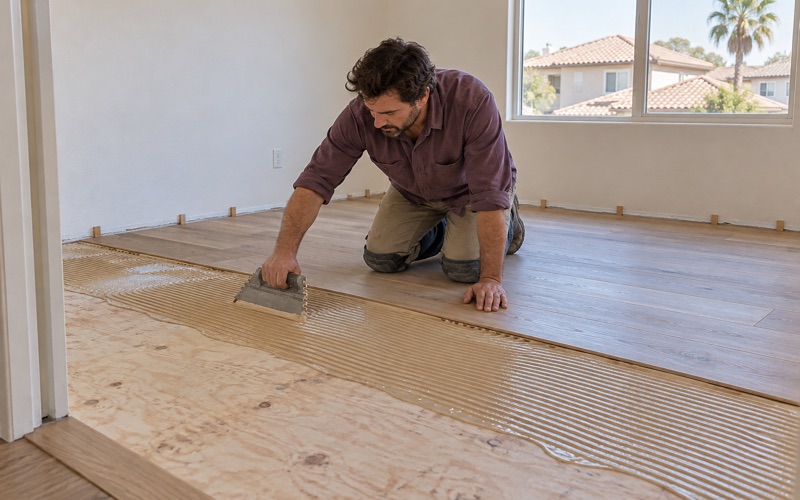
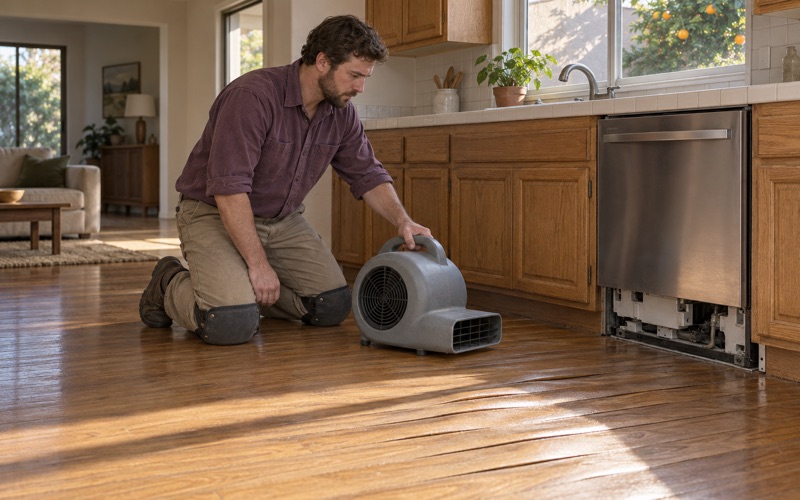
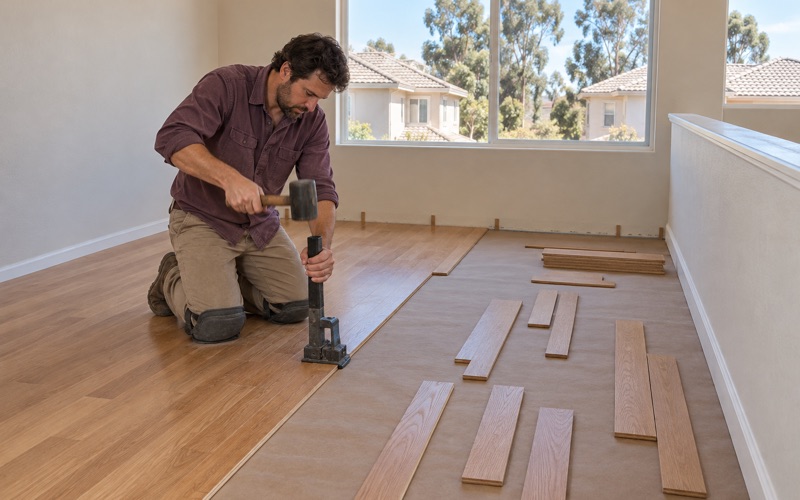
Replacement earns its cost when the old floor is past saving, when carpet or sheet goods cover a bare subfloor, or when an owner wants one continuous surface through rooms that never matched. We confirm any leak source and take a moisture meter reading before replacing water-damaged boards, and where a concrete slab is involved, we test it and write the reading down before gluing an engineered floor.
For a house its owners plan to keep, we favor a tight nail-down or glue-down installation over a floating floor that can flex and sound hollow, and a wide plank in a species hard enough for the years ahead. Wood flooring in Vincent done this way is less about a trend and more about a surface you trust every morning.
- 20+ Years in Wood Floors
- Build Year Checked First
- Written Cure Schedules