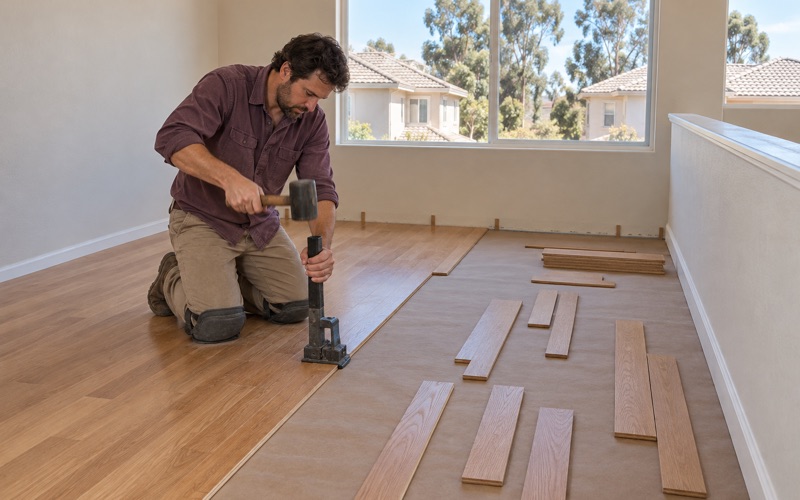
Upland Wood Flooring has handled wood-flooring in Walnut for more than 20 years, and a typical job here starts with a house that has already lived through decades of foot traffic. The oak may have been sanded once or never, and the first question is how much of it can still be saved rather than replaced.
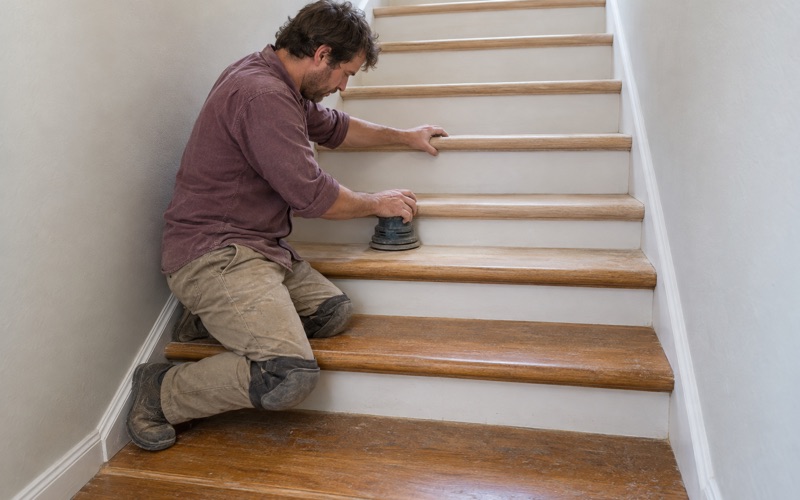
We start every visit by confirming the year the house was built, because homes finished before 1978 fall under the EPA RRP rule whenever painted surfaces are disturbed. Baseboard, quarter round and stair risers can carry old paint, so that date decides how we set up containment before a drum sander ever touches the floor.
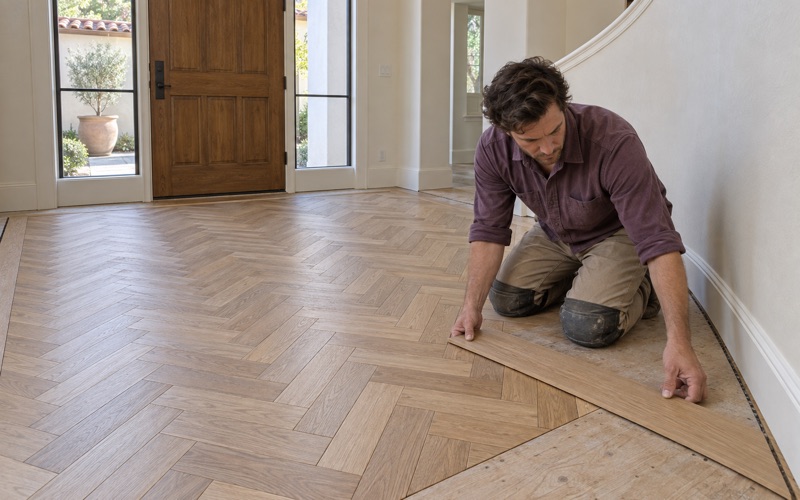
From there the work follows the wood. We measure what an engineered floor has left in its wear layer before promising a sanding, repair and match original boards instead of tearing out a room, and seal doorways with dust containment so the rest of the house stays livable while we sand.
Floors in Walnut’s 1960s and 1970s Houses
A Third of the City Predates the Boom
Census figures show how much of Walnut is older than its reputation. The ACS 2024 five-year estimates count 1,326 homes built in the 1960s and 1,892 in the 1970s, which together make 3,218 of the city’s 9,230 housing units, or 34.9 percent. Roughly one house in three was standing before the growth decade began.
Houses of that age are where we expect to find site-finished solid hardwood that has been refinished before, or carpet laid over the original boards at some point. Either way, the wood underneath has decades on it, and the thickness left above the tongue and groove is what decides whether another full sanding makes sense.
Reading a Floor That Has Been Sanded Before
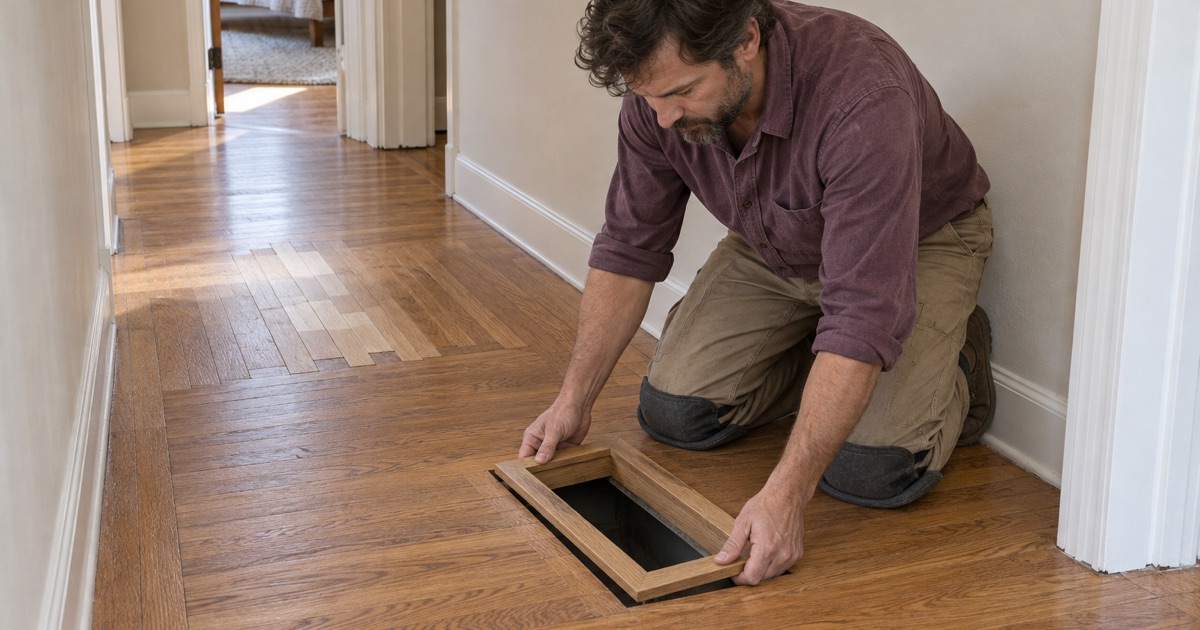
A floor that has already been through a drum sander carries the history in its thickness. We pull a floor register or a threshold where we can and look at the profile of the tongue and groove, because the wood above the tongue is the only part a sander can remove without reaching the nails.
When a floor has little left, we say so and switch plans. A screen and recoat with a buffer can refresh a worn finish without cutting into the wood at all, and it buys years on a floor that cannot survive another aggressive grit sequence. The catch is that a recoat will not fix gray, water-stained wood or deep pet urine stains.
What Sits Under Old Carpet
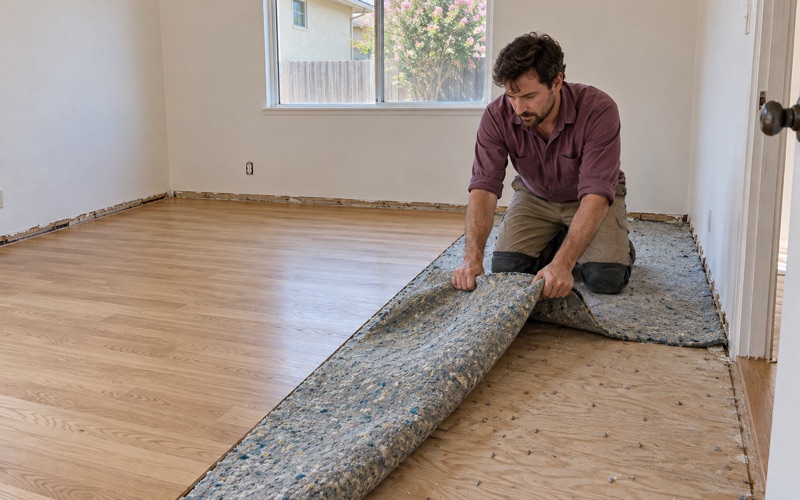
Carpet laid over oak is a common find in houses of this age. The tack strip nailed around the perimeter leaves a line of holes along every wall, and an old pad can leave adhesive or staining behind. We fill those holes with wood filler matched to the species, then sand and finish the room as one surface.
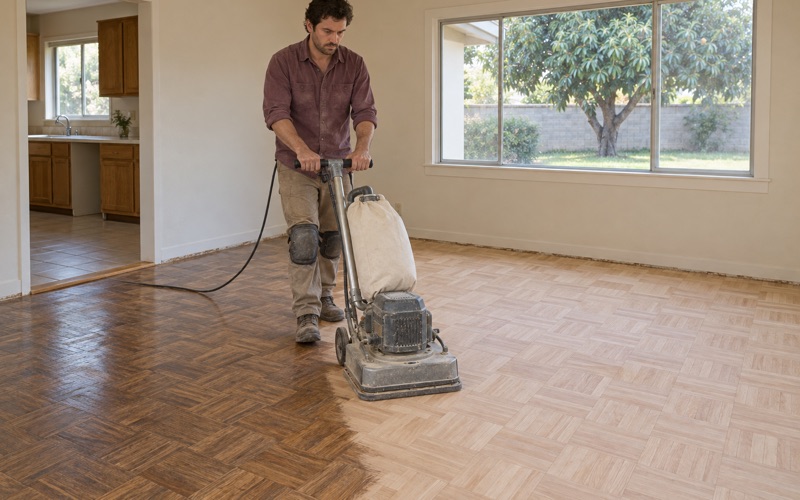
Some rooms hold a surprise instead: parquet, or a wood floor set in black mastic. Old black adhesives can contain asbestos, so we do not sand or scrape one until it has been identified. Either discovery changes the scope, so we settle it before we quote the room.
Species and Grain in Older Oak
Strip oak was a common choice for houses of that period, but we confirm the species before ordering any patch stock. Red oak shows a pinkish cast and open grain, while white oak reads browner and takes stain more evenly. Quartersawn or rift sawn boards need matching by cut as well as species, since their figure differs from plain sawn.
Janka hardness matters when a room needs new boards woven into old ones. Hickory or maple patches in an oak floor would wear at a different rate and look out of place, so we match species first and then match width, which in older houses can be narrower than stock sold today.
Looking for wood-flooring closer to Chino Hills? See Wood-Flooring in Chino Hills.
The Town Before the 1980s Boom
From Lemon to a 1959 City
Walnut sits in the San Gabriel Valley of eastern Los Angeles County, on the southern slopes of the San Jose Hills. Its post office opened in 1895 under the name Lemon and took the name Walnut in 1908, after Rancho Los Nogales. The city incorporated on January 19, 1959. Those first two decades as a city produced the 1960s and 1970s houses described above.
The housing here is overwhelmingly detached. In Walnut, 8,737 units are one-unit detached houses, 94.7 percent of the stock, and 83.8 percent of occupied homes are owner-occupied. For floors, that means a project here is usually in a single-family house where the owner decides the finish, the schedule and how much original wood to keep.
A Town of 12,000 Before the Growth
According to the City’s Housing Element, Walnut grew by more than 130 percent during the 1980s, from about 12,000 residents to over 29,000. The Census count of 4,419 units built in that decade reflects that growth. The town that came before it, about 12,000 people, lived largely in houses from the 1960s and 1970s and a handful of earlier ones.
That split matters when we look at a floor. A pre-boom house is now roughly forty-five to sixty-five years old, and its hardwood has usually been through at least one refinish, a carpet era, or both. The 1980s houses are a different generation of flooring questions, so we date the house before we plan the job.
Who to Call at City Hall
Questions about building rules on an older house go to the City of Walnut Community Development Department’s Building & Safety Division at 21201 La Puente Road. It handles plan review, permit issuance and field inspections under the California Building Code. We tell owners to ask the City directly about any floor work that involves structure.
Because Walnut is an incorporated city, those questions go to Walnut’s own Building & Safety counter rather than to Los Angeles County. The division schedules its inspections by phone at 909-598-5241, and its hours run Monday through Thursday, 7am to 6pm. We would rather an owner hear it from them than from us.
Termite Damage and Older Wood Floors
Frass, Tunnels and Hollow Spots
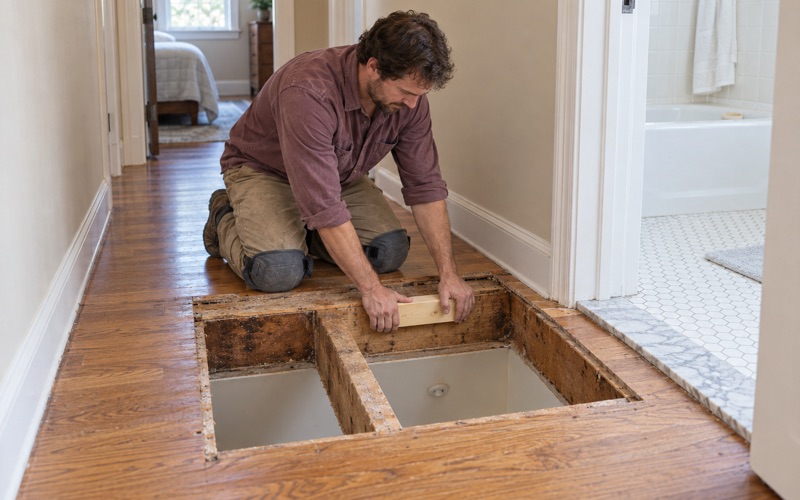
We never assume a Walnut floor has insects. We look, because a house that has stood for half a century has had time for trouble to find it. Drywood termite frass shows up as small, hard pellets piled under a board edge or along a baseboard, and it is worth pointing out to us before any sanding.
Powderpost beetle damage looks different, with fine flour-like dust and tiny round exit holes in the face of the wood. Either kind of damage can leave hollow spots that sound dull under a tapping tool and flex underfoot. Finding them early keeps a sander from breaking through a weakened board in the middle of a room.
Treatment Comes Before Flooring
We are flooring people, not pest control operators. When we find frass or exit holes, the next call is to a pest professional, and the floor waits until the treatment is done. Replacing boards over an active colony only gives the insects fresh wood. Once the pest work is finished, we probe the subfloor around the damage before we price a repair.
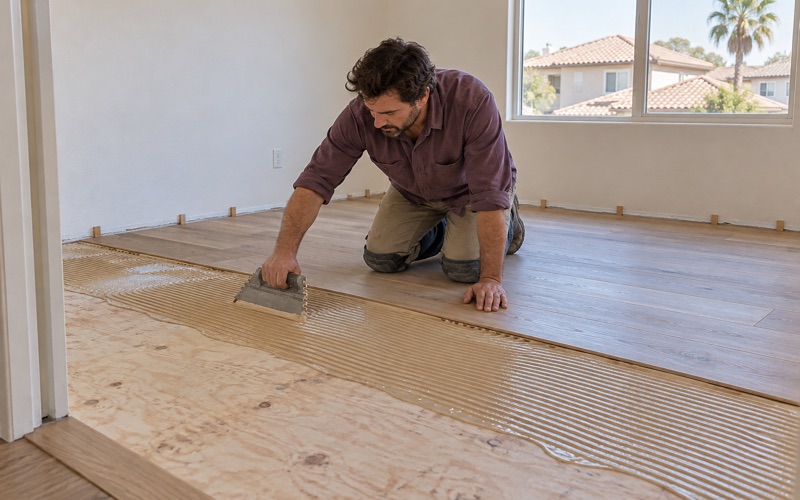
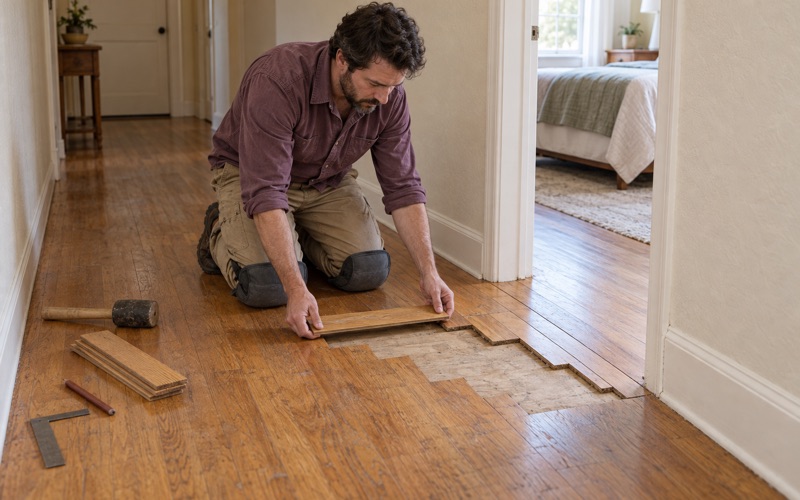
The repair itself is usually local. We cut out the damaged boards, weave in new tongue and groove stock of the same species and width, and sand the patch together with the surrounding floor so the grain and color read as one. On red oak and white oak that match is achievable; on wide plank it takes more hunting.
When the Damage Is Water, Not Insects
Soft, dark boards are not always an insect story. A slow plumbing leak can rot wood and cause cupping or buckling that looks similar at first glance. Before we replace anything, we confirm the leak source is fixed and take and record a moisture meter reading, so the new boards go into dry conditions.
Water damage in an owner’s house can end in an insurance claim. We document water, smoke and ash damage room by room, with photos and readings, so the adjuster sees the same floor we do. That record also keeps the repair scope honest when some boards can be dried and saved and others cannot.
The City’s Rehabilitation Program and a Long-Held House
What the Program Offers
The City of Walnut runs a Housing Rehabilitation Program funded through federal CDBG dollars. According to the City’s 2024 brochure, qualifying low- to moderate-income owners of single family detached houses can receive grants of up to $12,500 and zero-percent deferred loans of up to $30,000, repaid on sale, transfer of title or refinance. Funding is first come, first served.
The money is meant to correct hazardous structural conditions, remove blight or improve access for disabled residents. The listed improvements include roofing, electrical, HVAC, doors and windows, and termite and pest control. Flooring is not on that list, and we play no part in applying for or approving the money; that belongs to the City and its screening committee.
Why the Termite Line Matters for Floors
The pest control line is the one that touches our work. An owner who qualifies may be able to address a termite problem through the program, and once that treatment is complete the floor can be repaired on solid footing. We plan the flooring as a separate job, paid separately, and time it after the pest work.
The program is aimed at the same kind of house the older neighborhoods are built from: detached and owner-occupied. The 2024 income limit for a household of four was $110,950, and the City’s program page caps grant and loan combined at $45,000. Owners should confirm current terms with the City directly.
Refinishing a House You Have Owned for Decades
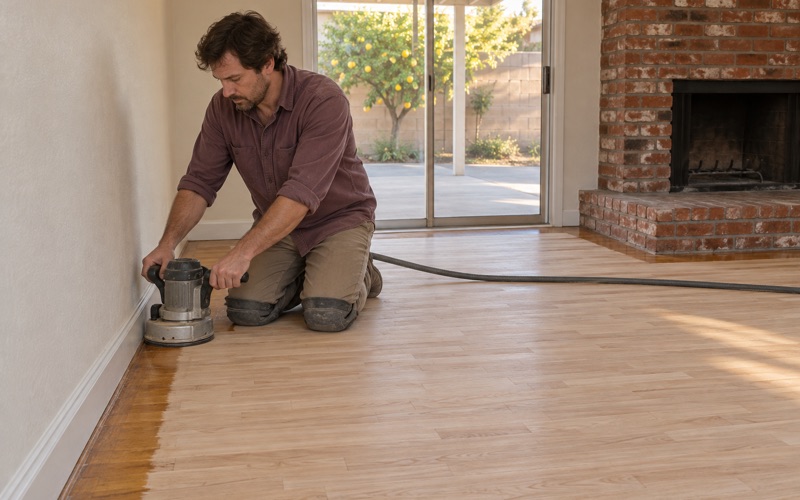
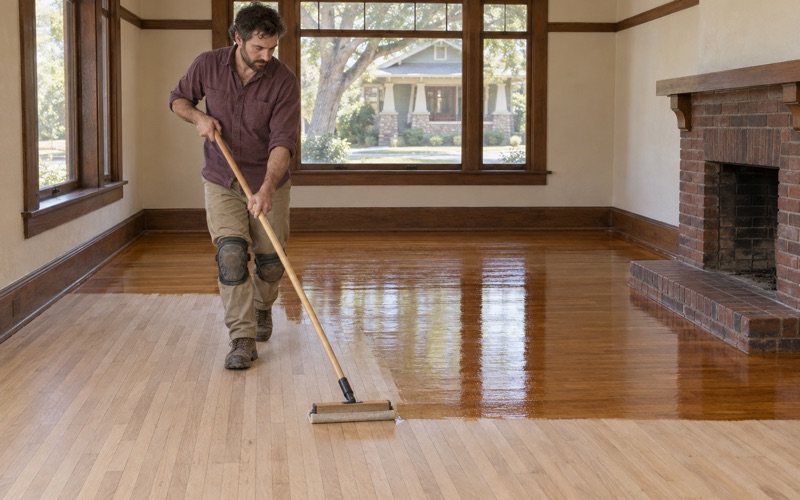
A long-held house usually wears its floors unevenly. Hallways and kitchen entries go gray while bedroom corners under furniture still look new, and old finish repairs rarely match. A full sanding through a careful grit sequence, from coarse paper on the drum sander to finer passes with an orbital sander, brings the whole floor back to one level.
Finish choice comes next. We work with waterborne polyurethane, oil-modified polyurethane and hardwax oil products that fit South Coast AQMD Rule 1113’s limits for wood coatings, and we walk owners through sheen level before the first coat. Stain samples go down on the actual floor, since fifty-year-old oak takes color differently than new boards.
Stairs get their own line on the quote, priced by tread and riser, because the hand work on nosing and risers is slower than open floor. An owner who has lived in a house for decades also has a full household to work around, so our written cure schedule says when each room can take socks, then furniture, then rugs.
- 20+ Years in Wood Floors
- Build Year Checked First
- Written Cure Schedules